



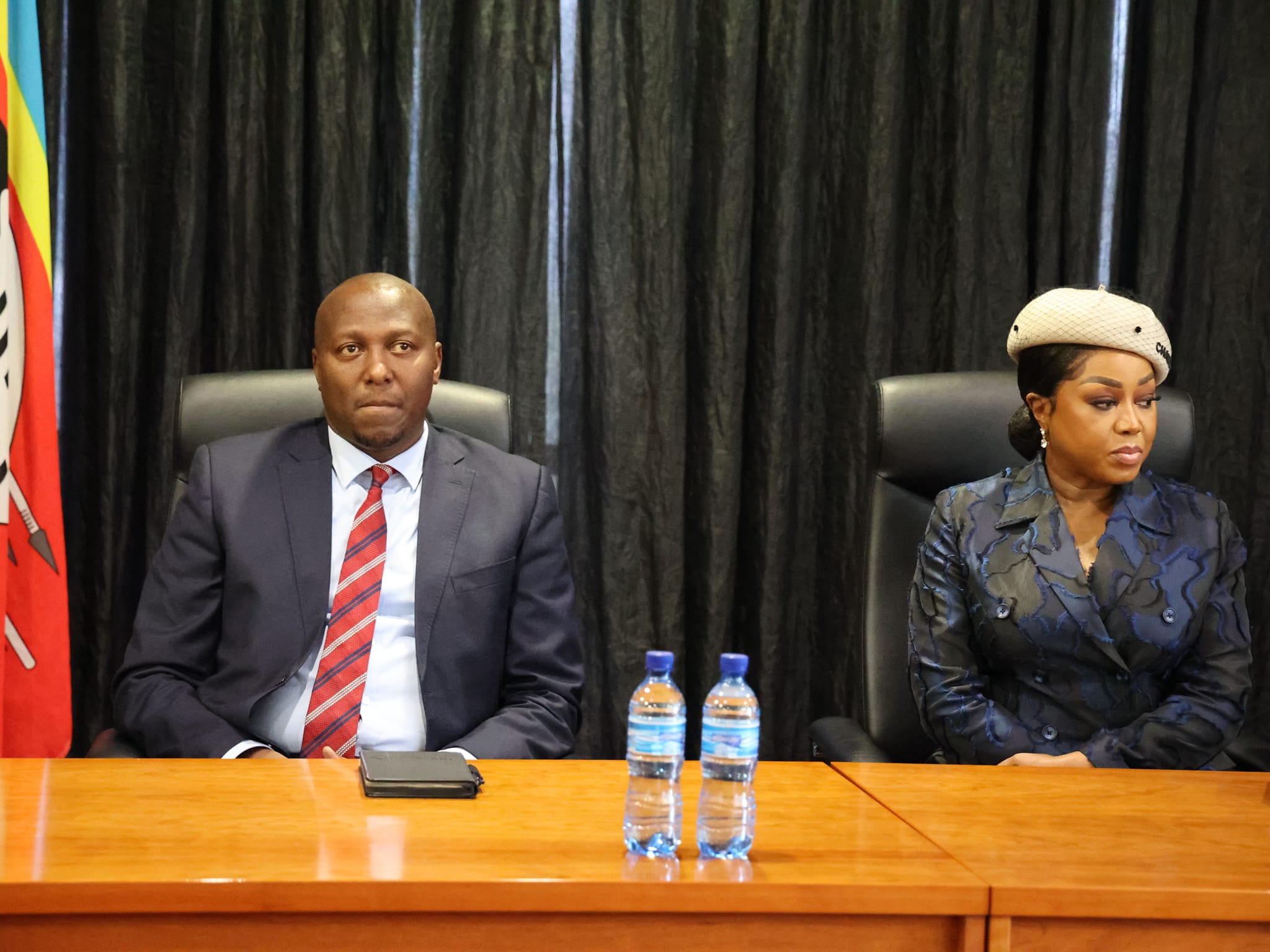
The noise around the government’s memorandum of understanding with Google Cloud EMEA has dominated headlines and spilled into cabinet. Politicians have been criticised, accusations have flown, and young content creators have been left confused about what was promised and what was real.
Swazi Bridge’s investigation, published on April 12, 2026, revealed in careful detail that the MOU signed between the Ministry of Information, Communications and Technology and Google Cloud EMEA Ltd. was never a monetisation agreement. It was a cloud services and e-government framework, and the public narrative that grew around it was, at best, a failure of communication. The investigation is important, and it deserves to be read widely.
But while everyone has been busy pointing fingers at Minister Savannah Maziya and Prime Minister Russell Dlamini, a quieter and far more consequential problem has gone almost entirely unnoticed. The reason Eswatini’s content creators and publishers cannot earn meaningful income from Google is not primarily a political failure. It is a business failure. And it is one that the private sector in this country has the power to begin fixing right now, without a single memorandum of understanding.
Let me explain from where I sit.


At Independent News Eswatini, we run an active Google AdSense account. The technology works. The platform is accessible. But when you look at the advertisements appearing on our pages, they are overwhelmingly irrelevant to our readers. You will see adverts for products that cannot be purchased in Eswatini, services that do not operate here, and brands that have no presence in the Kingdom whatsoever. That is not Google’s fault. It is a reflection of a simple market reality: local advertisers are not on the platform.
Google AdSense works on supply and demand. Advertisers load their campaigns onto Google’s network, they target their audiences by geography, and publishers in those geographies earn revenue when those adverts are served to their readers. When local advertisers are absent from that ecosystem, the platform fills the gap with whatever is available globally, and the revenue that flows to local publishers and creators shrinks dramatically as a result.


This is the structural problem that the MOU debate has completely obscured.
The corporates in this kingdom, the banks, the retailers, the telecoms companies, the insurance providers, the hospitality businesses, spend money on advertising every single year. That money goes to billboards, to radio spots, to print pages, and to sponsored social media posts. Very little of it finds its way onto Google’s advertising network. The result is that when a young content creator in Manzini posts a video that attracts thousands of views, the adverts served against that content have nothing to do with Eswatini, and the earnings are a fraction of what they could be if local businesses were competing for that advertising space.
I do not believe this is arrogance or indifference on the part of local businesses. I believe most of them simply do not know how. Google Ads is not complicated, but it requires someone to explain it, to demonstrate it, and to show businesses the return they can expect. That education piece is missing in Eswatini, and it is where the real intervention needs to happen.
So what can actually be done?
The first and most immediate step is education. The Eswatini ICT industry body, the Eswatini Communications Commission, and even the Ministry of ICT itself could organise practical Google Ads workshops targeted directly at local businesses, marketing managers and brand teams at the country’s major corporates. These do not need to be expensive or elaborate. A well-run half-day session showing a retailer or a bank how to set up a geographically targeted Google Ads campaign, what a realistic budget looks like, and what returns to expect, could be the beginning of a meaningful shift in how advertising money moves in this country.
The second step involves the business community taking digital advertising seriously as a line item in their marketing budgets. Many companies in Eswatini still treat digital as an afterthought, something that gets whatever is left after the billboard and radio budgets are settled. That thinking needs to change. Digital audiences in Eswatini are growing rapidly. Young Swazis consume content on their phones, not on printed pages or through radio sets alone. Businesses that are not following their customers onto digital platforms are leaving money on the table, and they are simultaneously starving the local digital ecosystem of the oxygen it needs to grow.
The third step is for media organisations, content creators and digital publishers to make a collective and coordinated case to advertisers. Rather than competing against each other for a thin slice of a small pie, local publishers and creators could collaborate to present a unified pitch to the business community showing the combined reach, engagement and demographic value of Eswatini’s digital audience. An industry body or informal coalition of digital publishers and creators making that case together would carry far more weight than any individual approaching a corporate marketing department alone.
The fourth step is for financial institutions in the country to simplify how businesses pay for Google Ads. One of the quiet barriers to Google Ads adoption in smaller markets is the payment process. Many businesses in Eswatini have found it cumbersome to load credit onto Google’s platform using local banking infrastructure. The banks have an opportunity here to develop products or partnerships that make it seamless for a business in Mbabane or Manzini to run a Google campaign without friction.
Finally, Google itself has a role to play. The company has dedicated teams for emerging markets and has run digital skills programmes across Africa. Eswatini, through the very MOU that has caused so much controversy, has a relationship with Google Cloud EMEA that could be leveraged to bring Google’s own digital skills and advertising education programmes into the country. That would be a genuinely productive use of the framework that exists.
The bigger picture
This is not about absolving politicians of responsibility for how the MOU was communicated. The Swazi Bridge investigation has done important work in holding that communication to account. But politics moves slowly, negotiations take years, and platform economics are governed by commercial decisions made thousands of kilometres away from Mbabane. What the private sector can do is act now.
A bank that runs a Google Ads campaign targeting Eswatini is directly contributing to an ecosystem in which a local YouTuber, a local blogger, and a local news publisher can earn real income from their work. Getting Eswatini onto YouTube’s Partner Programme is a long road that requires commercial infrastructure, advertiser demand, and platform decisions that no single MOU can shortcut. But building local advertiser demand on Google’s network is something that can begin this week, if the right businesses make the right decisions.
The young person in Matsapha who has spent months building a YouTube channel deserves a fair shot at earning from their work. So does every journalist, blogger and digital publisher trying to build something sustainable in this Kingdom. The path to that future runs through local businesses choosing to advertise on Google, not through memorandums of understanding with cloud subsidiaries in Dublin.
That is the conversation this country should be having.
Adekunle Owolabi is a journalist, political analyst, and digital strategist with experience across Africa and the Middle East. He focuses on international diplomacy, promotes digital inclusion, and advocates for a borderless Africa. The views expressed in this piece are his own.


Discussion about this post