



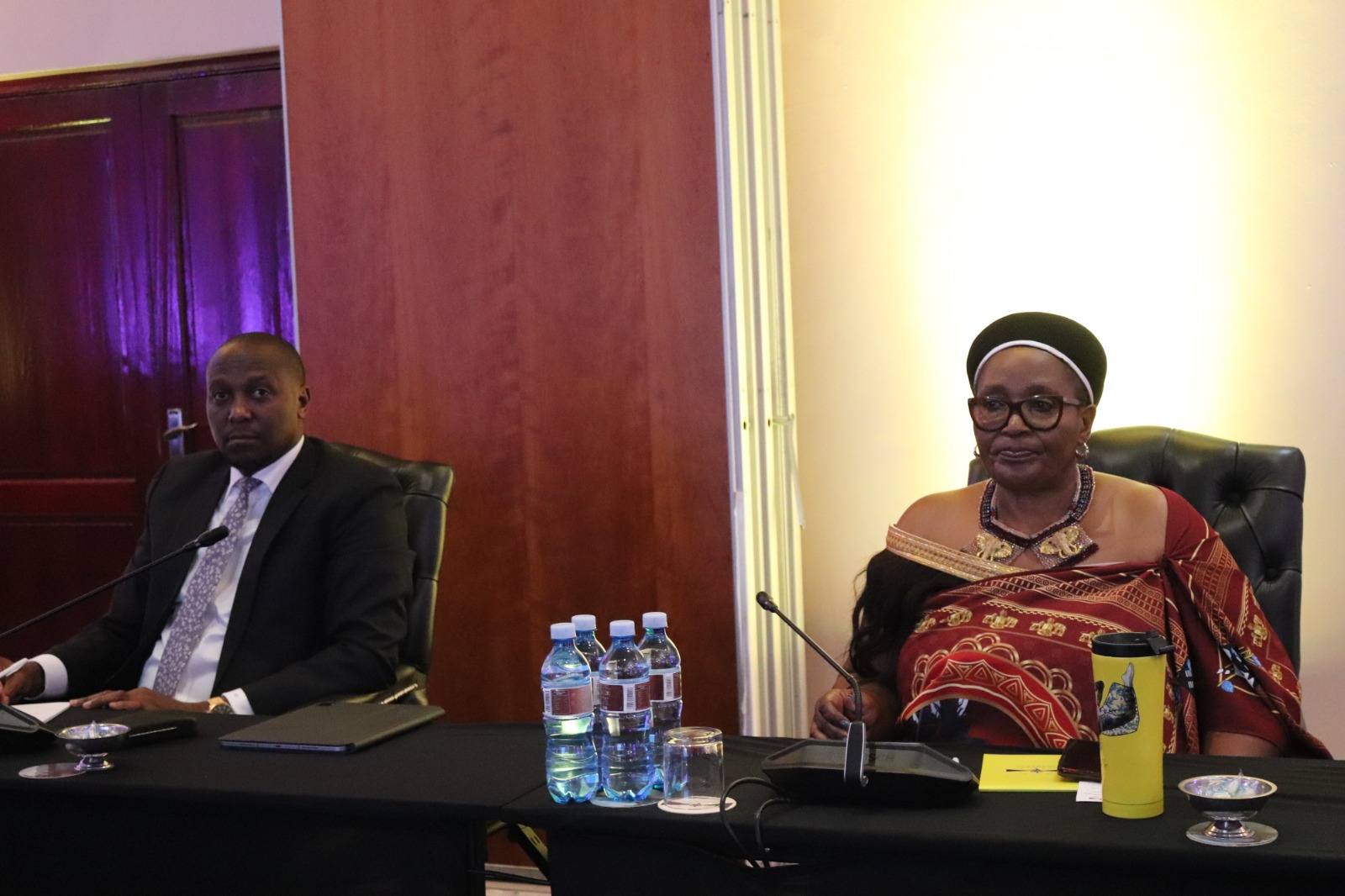
Ezulwini – Government has committed itself to a results-driven approach to governance following a five-day Cabinet retreat held at Royal Villas, Ezulwini, from 16 to 19 and 23 February 2026.
Addressing the media on Monday, Prime Minister Russell Mmiso Dlamini said ministers resolved to adopt “deliverology”, described as the science of delivering measurable outcomes, in order to accelerate national development and improve public services. The retreat was convened under the theme Transforming Eswatini Through Effective Execution.
Cabinet members committed to clear service delivery targets aligned with the national vision of King Mswati III and resolutions of the Sibaya People’s Parliament. A formal declaration binding government to these commitments is expected to be signed this week.
Dlamini said Cabinet agreed to operate as a unified leadership structure with collective accountability for national outcomes. He noted that ministers pledged to improve governance, strengthen coordination across ministries and focus on tangible improvements in citizens’ lives rather than policy pronouncements alone.


Among the urgent priorities identified are the shortage of medicines and medical supplies, Foot and Mouth Disease, gender based violence, substance abuse, gangsterism, and gaps in digital and infrastructure development. Cabinet also plans to strengthen data systems to support evidence based decision making.
Key sector commitments include eliminating drug shortages in health facilities, eradicating Foot and Mouth Disease by December 2026, pursuing food self sufficiency by 2030 and positioning Eswatini as a regional tourism and conferencing destination by 2027. Plans were also outlined to establish a National Mining Company, construct industrial parks, develop a national referral hospital, build technical colleges and expand road infrastructure.
In governance reforms, Cabinet intends to review procurement laws, develop a comprehensive anti corruption strategy and improve public sector efficiency. Energy security and a national mobile payment gateway are targeted for completion by 2030 and 2028 respectively.
The declaration outlines major economic projects expected to drive growth and employment, including an intermodal transport and logistics system, institutional housing programmes and spatial planning initiatives. Infrastructure expansion will include at least 500 kilometres of tarred roads and factory shells by 2028.
Cabinet further committed to programme based planning and budgeting, linking funding directly to measurable outcomes. Cross functional task teams will be formed to speed up implementation and resolve bottlenecks, while the Aid Coordination Unit will be transformed into a Development Cooperation and Coordination Unit.


Civil service reforms are also planned, including performance agreements tied to clear targets, regular progress reviews and the creation of a Cabinet level dashboard to track delivery. Government says these measures aim to build a capable, responsive public service and restore public confidence.
On fiscal matters, Cabinet pledged strict discipline in managing public finances. Borrowing will be directed toward productive investments intended to stimulate growth and job creation, guided by a comprehensive financing and debt sustainability framework.
The government said the declaration shows a clear commitment to carry out the directives from the Throne, Sibaya resolutions and the Programme of Action quickly, openly, and withmeasurable results for EmaSwati.


Discussion about this post