



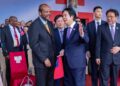
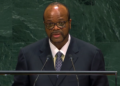
Prime Minister Ntsokoane Matekane of Lesotho addressed delegates at the Sustainable Impact Forum during the World Government Summit in Dubai on Wednesday, 4 February 2026. He conveyed warm greetings from His Majesty King Letsie III, the government, and the people of Lesotho, describing the nation as “modest in size, yet resolute in its commitment to the ideals of multilateralism, sustainable development, peace, and inclusive prosperity.”
Matekane said sustainability is often viewed as a constraint on growth, but Lesotho sees it as “a competitive strategy.” He added that emerging economies are increasingly central to driving innovation, resilience, and inclusive growth, particularly through low-carbon transitions, digital transformation, and diversified trade.
“In a world of constant shocks; energy, climate, or geopolitics, resilience is the new growth model,” Matekane said. “Countries that secure affordable and clean power, reliable water, and climate-smart food systems will grow faster, protect their citizens, and remain competitive.” He called for inclusive development anchored in innovation, shared knowledge, and equitable access to finance and technology, noting that smaller economies like Lesotho must have their voices amplified in global governance.
Matekane outlined Lesotho’s sustainable growth priorities:
Renewable energy: expanding hydropower, solar, and wind energy to reduce dependence on imported energy. He said Lesotho’s abundant water and cool climate make it an ideal location for data centres and global connectivity through renewable energy. The country aims to exceed 1,000 megawatts of combined hydropower and solar generation, with revenues generated from peak power, ancillary services, and sales into the Southern African Power Pool.
Climate adaptation: implementing community-based strategies to address droughts, erratic rainfall, and soil erosion while strengthening early warning systems. Opportunities include carbon-credit programs, catchment restoration, wetland protection, invasive species removal, and climate adaptation. “Protecting this ecosystem is not optional, it is an economic imperative,” he said.
Agricultural resilience: promoting climate-smart farming, agro-processing, and value addition to improve food security, create jobs, and increase exports.
Water security: investing in the Lesotho Highlands Water Project, including Phase II, which supports regional water supply, hydropower, and employment. Future projects include the Lesotho-Botswana Water Transfer and expansion to Namibia, supporting over 60 million people in the Southern African region.


The Prime Minister invited partners to invest in renewable energy, climate-resilient bulk water infrastructure, irrigation and agro-processing value chains, and nature-based solutions in the Senqu Basin. He also pointed to opportunities to unlock climate finance and carbon-market revenues to benefit both Lesotho and its partners.
Matekane concluded by calling for collaboration across public and private sectors to leverage emerging economies as engines of sustainable development and shared prosperity. “Together, let us reaffirm our collective responsibility to build a sustainable, equitable, and resilient future for all,” he said.


Discussion about this post