



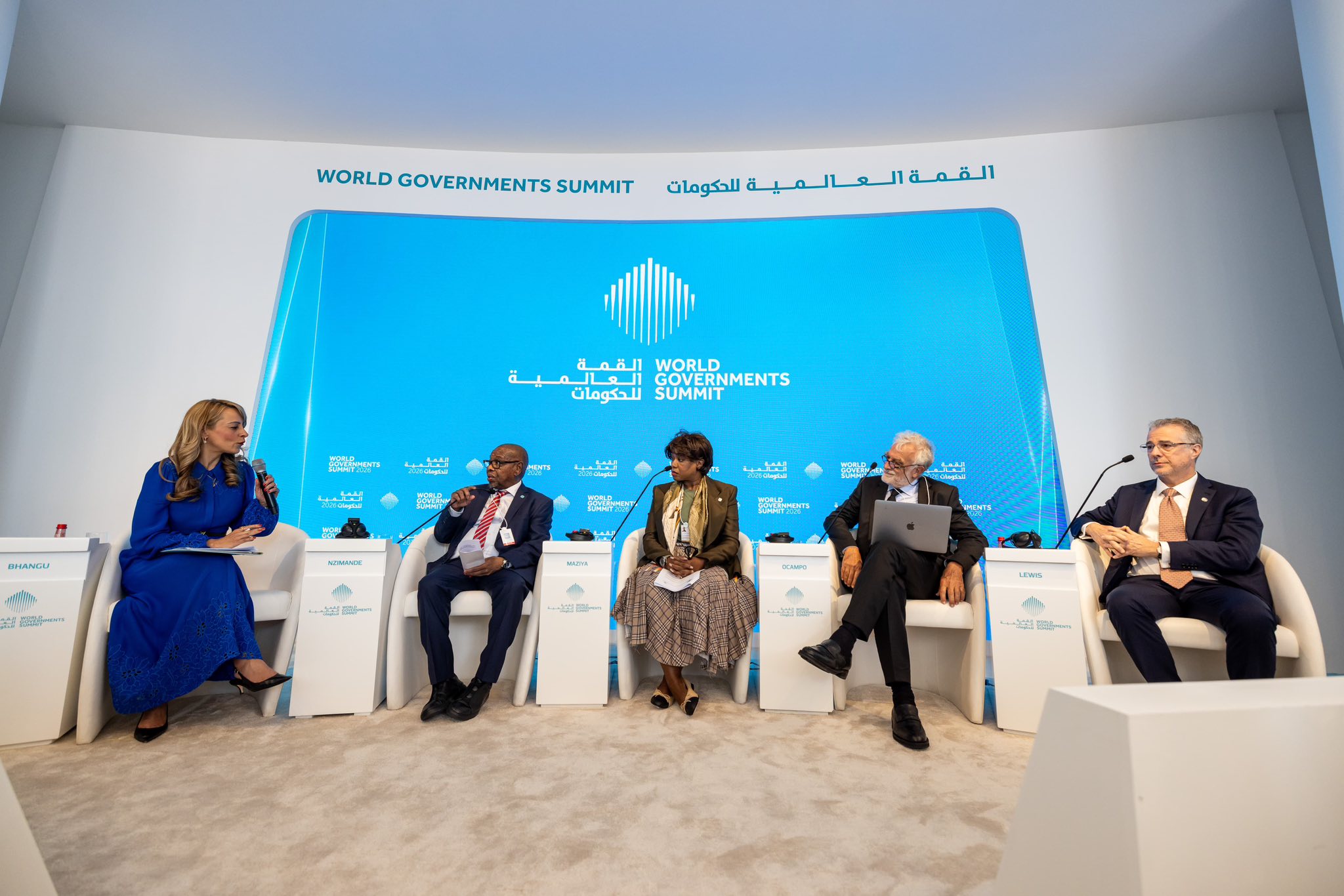
Dubai – The Minister for Information Communications and Technology, Hon. Savannah Maziya represented Eswatini at the Global Councils Meeting on the Sustainable Development Goals held during the World Governments Summit in Dubai, where she attended in her role as Chair of the Global Council on SDG 5 on Gender Equality.
The meeting brought together global leaders, policymakers and development partners to assess progress on the SDGs and to discuss pathways beyond 2030. Speaking during the session, the Minister told delegates that development must move beyond dialogue into action that brings tangible change to people’s lives. Drawing from Eswatini’s experience, she said development should be felt by communities and not only recorded in reports, through expanded opportunity, restored dignity and inclusion.
Digital transformation formed a key part of her address, particularly its role in advancing inclusive development for women and girls. She shared Eswatini’s progress in this area, citing strong female participation in national digital skills programmes, the rise of women led startups at the Royal Science and Technology Park, and the impact of initiatives aligned to She Powers Africa that are supporting thousands of girls and young women across the country.
On the margins of the summit, the Minister also took part in a high level panel discussion at the Global Government Regulatory and Justice Forum under the theme Who Owns Innovation Tomorrow. During the discussion, she contributed Eswatini’s views on artificial intelligence, innovation ownership and governance.


She spoke on Eswatini’s ecosystem approach to protecting local innovation in the age of artificial intelligence, which includes strengthening the intellectual property framework, using the Royal Science and Technology Park as a development hub, and building skills through partnerships with organisations such as the International Telecommunication Union, Google, Oracle, the Government of India and the Government of the United Arab Emirates.
Addressing artificial intelligence regulation, the Minister told the forum that the world is approaching a stage where a more universal approach to AI legislation is required, warning that fragmented policies leave countries and citizens exposed while technology advances faster than regulation. She posed questions to global leaders, asking, “How do we legislate AI while we are still discovering its full potential?” and “Will there come a time when humanity must consult AI itself to help determine how it should be governed?”


She further noted that AI governance is closely linked to the achievement of the Sustainable Development Goals, cautioning that without inclusive, ethical and coordinated frameworks, emerging technologies could widen inequality instead of accelerating sustainable development. Smaller nations, she said, have an important role to play in shaping global AI governance by offering perspectives grounded in inclusivity, equity and real world delivery.




Discussion about this post