



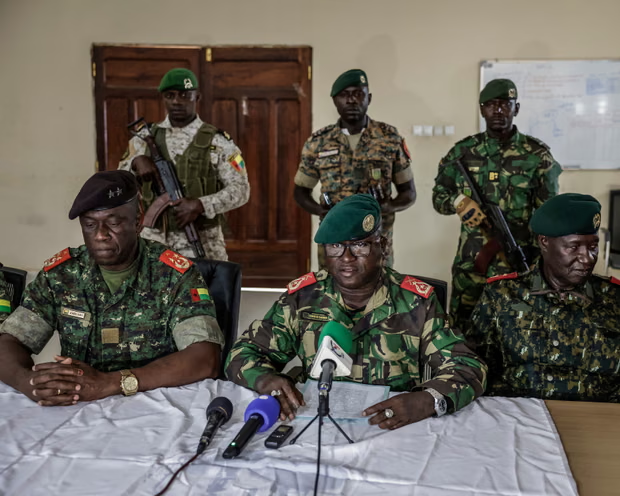
Bissau – Military officers in Guinea Bissau say they have taken total control of the country following a tense national election that saw both main presidential contenders claim victory. The announcement was made on Wednesday at army headquarters in Bissau and aired on state television, where officers declared the suspension of the electoral process and the immediate closure of all borders.
Gunfire was reported earlier around key state buildings including the election commission offices, the presidential palace and the interior ministry. The source of the shooting has not been confirmed, but it unfolded only days after Sunday’s first round of voting.
The political tension centres on incumbent president Umaro Sissoco Embaló and his main challenger Fernando Dias, both of whom said they had won. The election commission had been expected to release provisional results on Thursday.
Moments before the military announcement, a spokesperson for Embaló accused gunmen linked to Dias of firing shots near government buildings. An ally of Dias countered by alleging that Embaló engineered the unrest to justify declaring a state of emergency so he could stay in office. Neither camp has offered evidence for their claims.
Reports from Bissau suggest that Embaló has been detained by armed officers. It remains unclear whether other political figures were also arrested.
Guinea Bissau has a long history of coups and political instability. Since independence from Portugal in 1974, the country has recorded at least nine coups or attempted coups. Embaló, who took office in 2020, previously claimed he survived three attempts to remove him, including one in October 2024. His critics insist some of those incidents were staged to weaken opposition forces. The dissolution of parliament in late 2023 left the country without a fully functioning legislature.


The country’s fragile security environment has been worsened by its reputation as a major transit hub for cocaine trafficked from South America to Europe. Its coastline, dotted with river deltas and the 88 islands of the Bijagós archipelago, has long been linked to illegal drug shipments, earning it a “narco state” designation from the United Nations in 2008.
Guinea Bissau’s 2.2 million citizens face deep economic hardship, with the World Bank estimating an average annual income of under one thousand US dollars in 2024.
The military’s declaration of control marks a new chapter in the country’s prolonged political turmoil, with borders sealed and no indication of when civilian rule might resume.


Discussion about this post