



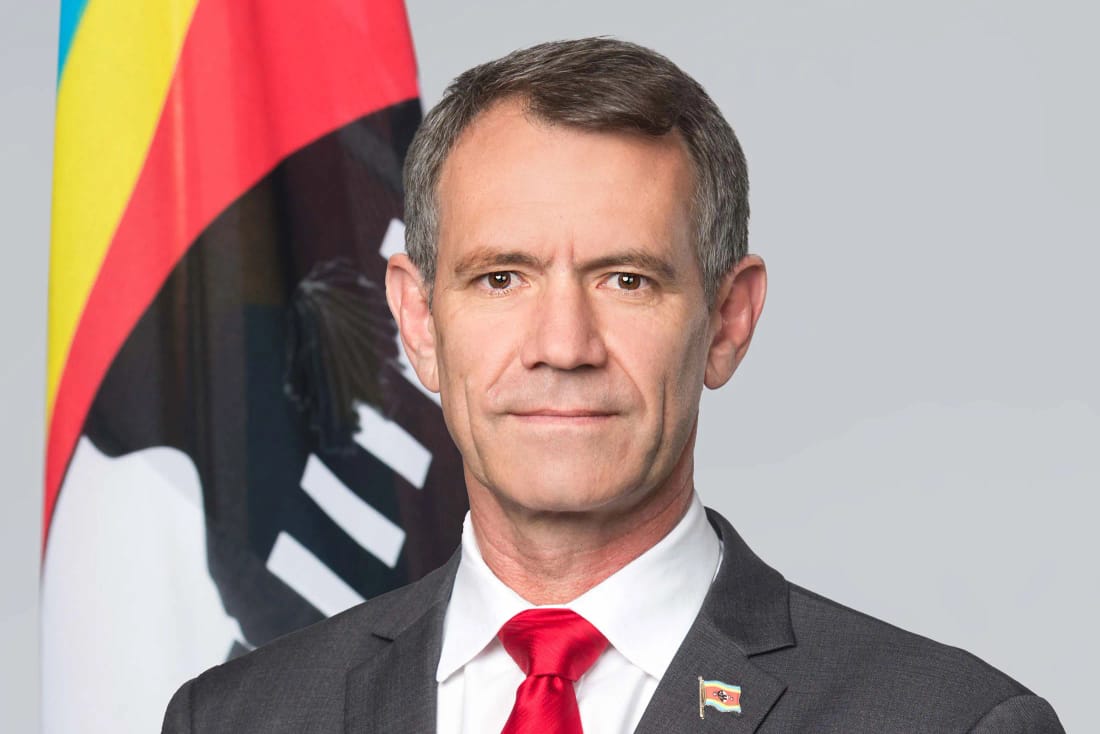
MBABANE – The Minister of Finance Neal Rijkenberg said Eswatini has successfully improved its standing within the Eastern and Southern Africa Anti-Money Laundering Group (ESAAMLG) following recent re-ratings that elevated the country above the threshold required to avoid greylisting.
Rijkenberg reflected on the outcomes of last week’s ESAAMLG council of ministers meeting, where Eswatini’s revised anti-money laundering legislation was assessed.
Out of 15 re-rating applications submitted by the country, all were approved, boosting Eswatini’s compliance score significantly.
The country now surpasses the minimum 20 requirements needed to remain in good standing with the Financial Action Task Force (FATF).


Eswatini had previously fallen short during an audit, scoring only 14 requirements.


In response, the government fast-tracked several legislative reforms through Parliament via an omnibus bill. The new laws were endorsed by Cabinet and signed off, enabling the re-rating request.
Rijkenberg emphasized the global importance of such compliance, noting that countries failing to meet anti-money laundering standards risk greylisting or blacklisting. Greylisting alone, he said, restricts access to international finance, while blacklisting can effectively halt financial flows and disrupt banking operations.
Despite the progress, Rijkenberg noted that a few legislative tasks remain to ensure Eswatini stays clear of greylisting pipelines, with plans to finalize them before year-end.
Beyond financial crime reforms, Rijkenberg also addressed government efforts to support Small and Medium Enterprises (SMEs).
He highlighted an ongoing drive, led in collaboration with the Ministry of Commerce, to ensure SMEs are paid on time.
The Treasury has already reduced late payments to suppliers and is securing new loans to stabilize cash flow.
Two loan approvals by Cabinet are set to be tabled in Parliament shortly, with expectations that government’s arrears will be cleared within six weeks.


Discussion about this post