



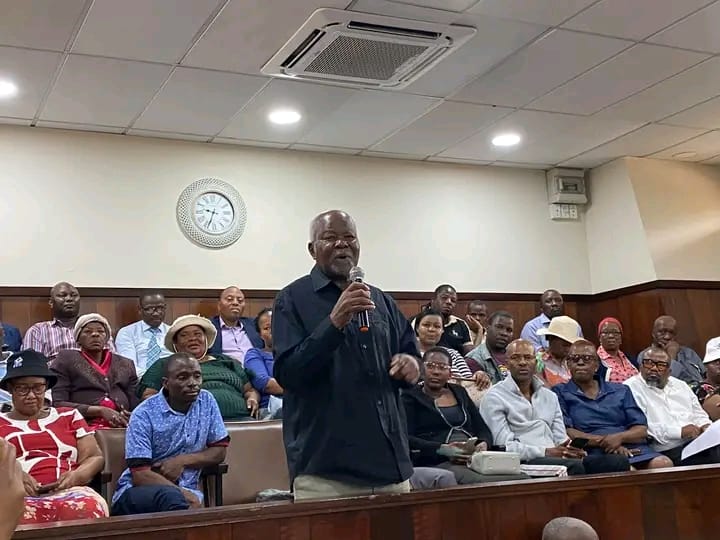
Manzini – Property rates are projected to account for 90 per cent of Manzini Municipal Council’s E125.1 million income in the 2027/2028 financial year, placing the burden of financing municipal operations largely on property ratepayers.
The proposed funding structure emerged during the council’s stakeholder budget consultation, where residents called for better roads, street lighting and public amenities, raising questions about how the municipality’s projected income would translate into tangible improvements in their communities.
According to the budget figures presented by Director of Finance Nombuso Dlamini, the municipality expects to generate E125 116 956.81 during the 2027/2028 financial year, with service charges projected to contribute the remaining 10 per cent.
The reliance on property rates comes against a backdrop of revenue growth over the past five years, with municipal income rising from E89.5 million in 2021/2022 to E117.9 million in 2025/2026, an increase of approximately 32 per cent.


However, grants and subventions have not been received since the 2023/2024 financial year, according to the financial information presented at the consultation. The figures raise questions about the municipality’s options for diversifying its income sources as it seeks to meet residents’ service delivery expectations.
For residents, the priority is whether the available resources will address long-standing infrastructure and public service concerns.
Making her submission, Virginia Maziya of Ngwane Park South complained about the condition of roads in her neighbourhood, saying the poor surfaces and persistent dust had become a source of frustration for residents.
“The roads are a disaster. There is dust everywhere, and it is frustrating the residents,” she said, calling for urgent intervention.
The condition of local roads was among several concerns raised at the meeting, with residents also calling for improved street lighting, better-maintained parks and public spaces, and easier access to municipal services.
Dumsani Gwebu of Manzini Ward 2, meanwhile, called for the council to take its consultations directly to communities, arguing that residents should have a greater say in decisions affecting municipal spending.
“The city belongs to the ratepayers,” he said. Gwebu proposed that future consultation meetings be held in individual wards to make it easier for residents to participate and identify their priorities.
Residents also urged the municipality to make better use of tourism attractions and other opportunities within the city to support development and improve Manzini’s appeal.
Acting Municipal Council Chief Executive Officer Bonginkosi Simelane said the municipality welcomed the concerns raised and would look into them.
“The municipality welcomes all the grievances raised by residents, and we will look into them,” he said.


The consultation also showed that property rates have historically contributed approximately 83 per cent of municipal income, while user fees accounted for about 17 per cent.
Although the projected 2027/2028 income represents a slight decrease from the current budget estimates, the figures presented did not specify which expenditure areas would be affected or how the municipality intended to address residents’ demands.
The proposed budget will guide the council’s operations and service delivery during the 2027/2028 financial year.


Discussion about this post