



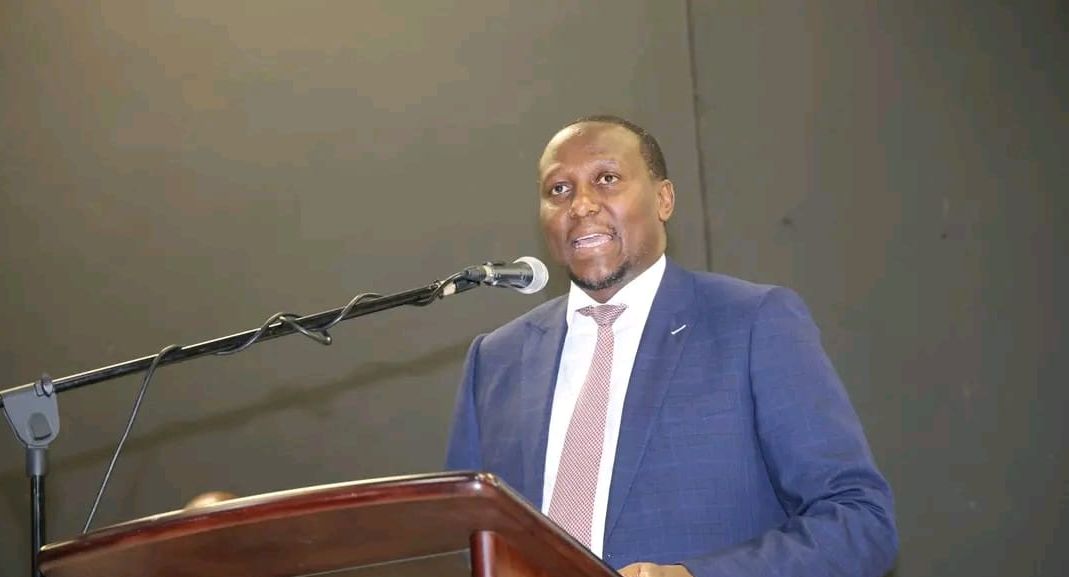
Mbabane –His Excellency Prime Minister Russell Mmiso Dlamini believes reliable and affordable electricity could be the key to unlocking industrial growth, creating jobs and transforming Eswatini into a regional model for economic development.
The PM says the country must move beyond treating electricity as a basic utility for consumption and instead use energy as a strategic tool for wealth creation, industrialisation and economic transformation.
He shared these views in a post on his official social media page, drawing on a chart originally shared by venture capital firm Andreessen Horowitz (a16z), which was later reposted by billionaire entrepreneur Elon Musk on X.
The chart, which uses data from the Energy for Growth Hub, illustrates the relationship between electricity consumption per capita and gross domestic product (GDP) per capita across different countries. It highlights the link between access to energy and economic prosperity, reinforcing the argument that industrial development requires sufficient and dependable electricity.


The Prime Minister’s remarks come as countries across Africa seek to expand their economies, attract investment and create employment opportunities, with energy infrastructure remaining a critical foundation for industrial development.
“No nation can sustainably industrialise, create wealth, or achieve meaningful economic transformation without reliable, affordable and sufficient energy,” Dlamini stated.
He argued that Africa’s energy challenge extends beyond generating more electricity, saying countries must develop integrated energy ecosystems capable of supporting industries, investment and economic growth.
According to Dlamini, such an ecosystem should incorporate power generation, solar energy, battery storage, transmission infrastructure, electric logistics, industrial development, investment financing and skills development.
This approach would require governments and investors to look beyond electricity generation alone and consider how energy infrastructure could support manufacturing, business expansion and the creation of sustainable employment.
Dlamini said the country’s ambition should be to develop bankable energy projects, establish supporting industries, build local technical capabilities and progressively expand the model across Africa.
The emphasis on bankable projects points to the importance of developing energy initiatives that can attract financing, deliver viable returns and support long-term economic activity.
Building local technical capabilities would also be essential to ensure that emaSwati acquire the skills needed to participate in the development, operation and maintenance of energy infrastructure.


His message places industrialisation at the centre of the energy debate, suggesting that the real measure of progress should not only be how much electricity a country generates, but also how effectively that electricity supports production, investment and employment.
For Eswatini, this vision would mean strengthening the relationship between energy infrastructure and the productive sectors of the economy, while developing the skills and supporting industries needed to sustain growth.
Dlamini concluded that energy must become an instrument of national transformation rather than simply a service consumed by households and businesses.
For Eswatini, the Prime Minister believes the country has an opportunity to position itself as an example of how energy investment can support broader economic transformation.


Discussion about this post