



Ezulwini- Business Eswatini Chief Executive Officer E. Nathi Dlamini has urged the government of Eswatini government to restrain its borrowing and spending, warning that the country’s rising debt burden is becoming an increasing concern for the private sector.
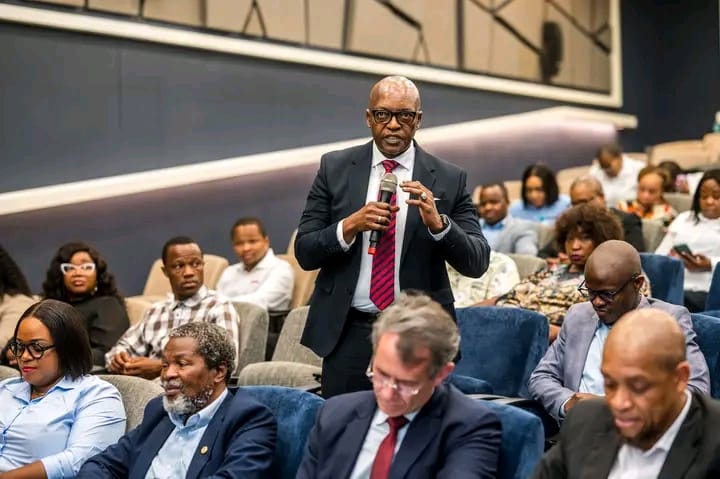
Speaking during the launch of 2926 Tax Income Filing Season at the Eswatini Revenue Service (ERS) Auditorium on Wednesday, Dlamini said government should reconsider the pace at which it is taking on new debt and prioritise projects more carefully, particularly at a time when public debt has moved above 40 per cent of the country’s gross domestic product (GDP).
His comments come as the country’s total public debt stood at E42.1 billion at the end of June 2026, equivalent to 40.4 per cent of GDP, according to the Central Bank of Eswatini. The debt stock increased by E900 million between May and June.
“We’re asking government to respect them, to see if they can apply the brakes on it’s spending,” Dlamini noted.

He acknowledged that many of the projects government is undertaking are necessary, but said the question was whether all of them needed to be implemented immediately.
“The thing is, how do we prioritise? How can we delay other projects that can come in later years as opposed to now?” he urged.


Dlamini’s concern is not simply about the size of the debt stock, but about the resources that government must continue allocating to service it. He used the finances of an ordinary household to illustrate the pressure created when a large portion of income is committed to debt.
“If your GDP is E20,000 as a family, and E10,000 rand is debt. Just think about that,” he said, arguing that the comparison illustrates how debt can affect the amount of money available for other needs.
He said interest payments could ultimately affect the quality of life of citizens because government has to continue servicing its obligations rather than directing all available resources towards services and development.
Dlamini called for restraint unless spending was directed towards projects that the country could not afford to postpone.
“Unless something is so important that we cannot do without in this country, let’s apply the restraint that needs to be applied,” he stressed.
This, his comments come against a backdrop of a steady rise in Eswatini’s public debt in recent years. The Central Bank reported public debt at 40.2 per cent of GDP in June 2025, before it moved to 40.4 per cent a year later.
The government’s own medium-term debt strategy had projected public debt to peak at about 43.9 per cent of GDP during the 2025/26 financial year before gradually declining.
For the private sector, Dlamini said the growing debt burden had become a matter of concern because government’s borrowing needs compete for financial resources and add to the cost of servicing the country’s obligations.
The Central Bank has previously warned that the upward debt trajectory could increase the risk of crowding out private-sector credit while exposing the financial system to interest-rate and refinancing risks.
Dlamini said government therefore needed to return to tighter spending controls and carefully determine which projects should take priority.
“We can revert back to the magic years of control,” he said.
His remarks amount to a call for a shift in emphasis from simply securing financing for government programmes to determining whether those programmes can be afforded now, and what their cost will be over the longer term.

Discussion about this post