



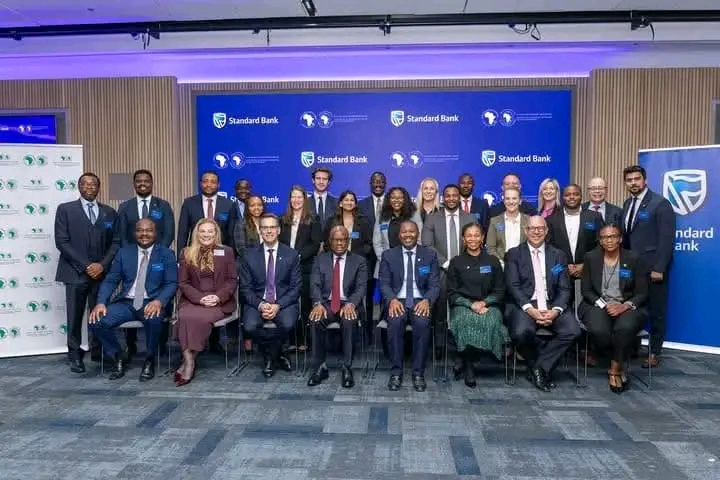
Mbabane – The African Development Bank (AfDB) has committed about E5.4 billion (US$332 million) to Standard Bank Group in a major financing initiative aimed at increasing access to funding for small and medium-sized enterprises (SMEs) in South Africa, with a strong focus on supporting women-owned businesses.
The investment will be channeled through a capital markets security issued by Standard Bank Group and is expected to strengthen the bank’s lending capacity to businesses that often struggle to access affordable finance.
In addition to the financing package, the AfDB’s Affirmative Finance Action for Women in Africa (AFAWA) programme has approved approximately E16 million) ( US$1 million) technical assistance grant through the Women Entrepreneurs Finance Initiative (We-Fi). The grant will help address obstacles that continue to limit women entrepreneurs’ access to finance.
The funding will support initiatives such as the introduction of digital payment solutions that allow women-owned businesses to build formal credit histories, while also providing enterprise development and supplier support programmes designed to improve the sustainability of women-led SMEs.

The financing is being provided through a Financial Loss Absorbing Capacity (FLAC) instrument, a debt instrument introduced by the South African Reserve Bank earlier this year as part of reforms to strengthen the country’s banking sector. The security has also been listed as a social bond on the Johannesburg Stock Exchange (JSE), making it Standard Bank’s first FLAC social bond dedicated to financing projects with measurable social impact.
African Development Bank Director General for Southern Africa, Kennedy Mbekeani, said the investment demonstrates the institution’s commitment to strengthening Africa’s financial sector while ensuring that long-term capital reaches businesses that create employment and stimulate economic growth.
He said the partnership with Standard Bank not only reinforces the resilience of the banking system but also supports entrepreneurs and SMEs, which remain key drivers of inclusive economic development.
Standard Bank Group’s Chief Executive for Corporate and Investment Banking, Luvuyo Masinda, described the transaction as another milestone in the bank’s long-standing partnership with the AfDB.
He said SMEs remain central to South Africa’s economy, employing around 60 percent of the workforce through an estimated 3.2 million businesses, making improved access to finance critical for sustained economic expansion and job creation.
Business and Commercial Banking Chief Executive Bill Blackie said the agreement would strengthen Standard Bank’s ability to finance businesses that contribute significantly to economic development. He added that the technical assistance grant would fund practical programmes that directly benefit women entrepreneurs by helping them establish, manage and grow sustainable businesses.
Meanwhile, AfDB Director for Financial Sector Development Ahmed Attout said the transaction is expected to encourage wider adoption of international banking best practices across Africa while promoting stronger financial systems.
The latest agreement further extends the relationship between the African Development Bank and Standard Bank Group, which dates back to 2008.


It also follows financing approved in 2024, including a E3.6 billion subordinated debt facility and a US$200 million risk participation agreement that supported trade finance across the continent.
According to the AfDB, by the end of 2025 Standard Bank had fully deployed the previous facility, financing 5,425 SMEs, well above the initial target of 4,000 businesses. The funding benefited enterprises operating in agriculture, manufacturing, retail and wholesale trade, highlighting the growing demand for SME financing across key sectors of the economy.


Discussion about this post