



Lobamba– Importers using bonded warehouses will soon pay substantially higher storage fees after Parliament approved amendments to the Customs and Excise Regulations, marking the first adjustment to the charges since 1974.
The House of Assembly on Thursday adopted, with amendments, the Finance Committee Report on the Customs and Excise (Amendment) Regulations, 2026, replacing a fee structure that had remained unchanged for 52 years despite inflation, rising operational costs and significant changes in Eswatini’s trading environment.
Under the new regulations, the long-standing daily storage charge of E1.12 will be replaced with a weight-based tariff. Goods weighing up to 500 kilograms will attract a storage fee of E200 per day, while consignments weighing more than 500 kilograms but less than one tonne will be charged E400 per day.
Presenting the report to Parliament, Finance Committee Chairperson Marwick Khumalo said the existing charges no longer reflected the realities of operating bonded warehouse facilities. He said the amendments were aimed at modernizing customs administration and aligning storage fees with current economic conditions.


Bonded warehouses are secure facilities where imported goods are stored under the supervision of the Eswatini Revenue Service (ERS) before customs duties are paid or before the goods are released into the local market. The facilities allow importers to defer duty payments while their goods remain in storage.
In addition to revising storage charges, the amendments update Eswatini’s list of official customs entry points by incorporating facilities such as King Mswati III International Airport and Mlawula, ensuring that customs legislation reflects the country’s current border and trade infrastructure.
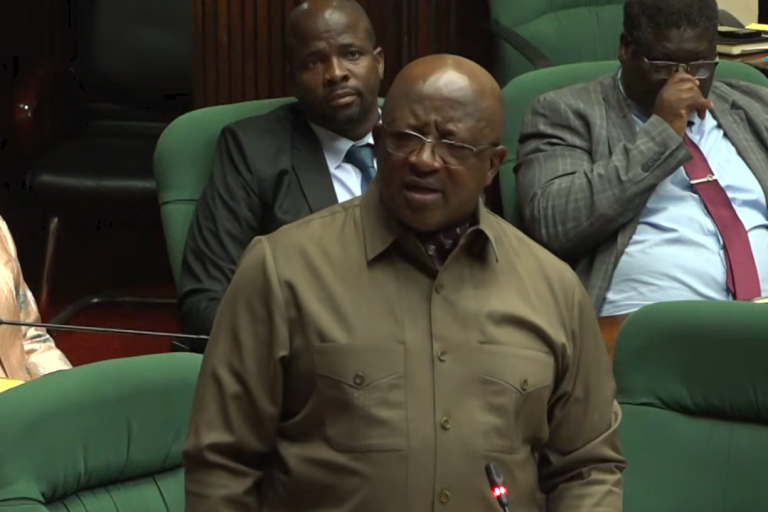
Although legislators largely supported the amendments, Deputy Speaker Madala Mhlanga warned against relying excessively on higher fees and charges to boost government revenue.
He urged government to strike a balance between strengthening revenue collection and protecting businesses already operating under difficult economic conditions.
Mhlanga further argued that government should intensify efforts to curb public expenditure and reduce dependence on borrowing instead of placing additional financial pressure on businesses and consumers through increased taxes and administrative charges.
“If we expect the Eswatini Revenue Service to recover every financial shortfall through increased taxes and charges, we risk placing an unnecessary burden on emaSwati and the business community,” he said.He also cautioned policymakers against adopting revenue collection models suited to developed economies without taking into account Eswatini’s economic realities as a developing country.
During the debate, Lamgabhi Member of Parliament Sicelo Jele sought clarification on how the revised storage fees would be applied, expressing concern that importers bringing in goods in bulk could face significantly higher costs if charges were levied on individual items.
Responding to the concerns, Khumalo clarified that the revised charges were not a new tax but storage fees payable for the use of bonded warehouse facilities where goods are held under ERS supervision until customs procedures have been completed.


In the same sitting, Parliament also received the Eswatini Public Procurement Regulatory Agency Annual Report for the 2024/25 financial year, tabled by Finance Minister Neal Rijkenberg, and the Eswatini National Petroleum Company Annual Report for 2025, presented on behalf of Natural Resources and Energy Minister Prince Lonkhokhela by Health Minister Mduduzi Matsebula.
The Customs and Excise (Amendment) Regulations, 2026 were subsequently passed with amendments, paving the way for the revised bonded warehouse storage fees to come into effect.


Discussion about this post