



MAHLANGATJA – More than 2,000 households across Eswatini are set to benefit from an ambitious rangeland restoration programme supported by the European Union (EU), aimed at improving livestock production, strengthening climate resilience, and restoring degraded ecosystems.
The initiative will see approximately 4,200 hectares of rehabilitated rangeland fenced and protected across nine rangelands in the country under the Eswatini Livestock Value Chain Development Programme (ELVCDP).
Speaking during the World Environment Day 2026 and EU Green Week commemoration held at Dzanyana Primary School, EU Head of Cooperation Eva Maria Engdahl said the programme represented a significant investment in environmental restoration and rural livelihoods.
Engdahl said the restoration efforts would directly benefit more than 2,000 households that depend on livestock farming and natural resources for their survival, while also contributing to climate change mitigation through carbon sequestration and increased biomass.


She noted that healthy ecosystems were essential for economic development, food security, and climate adaptation, particularly in rural communities where livestock farming remains a key source of income. “Across the world, rangelands are under increasing pressure from climate change, land degradation, invasive species, unsustainable land use practices and biodiversity loss,” said Engdahl.
She added that these challenges were having a direct impact on communities whose livelihoods depended on natural resources and livestock production.
According to Engdahl, the EU was proud to partner with the Government of Eswatini and the International Trade Centre in implementing the livestock value chain programme, which seeks to rehabilitate degraded grazing areas and improve sustainable livestock production systems.
She said the initiative was about more than restoring damaged land.
“This initiative is not only about restoring land. It is about restoring productivity, biodiversity, dignity and hope for future generations,” she said.
Engdahl explained that improving the condition of rangelands would lead to healthier livestock, increased productivity, improved access to markets, enhanced food security and better livelihoods for rural households.
She further highlighted the environmental benefits associated with healthy grazing land, saying restored rangelands improve pasture regeneration, conserve water resources, protect soils from degradation and create healthier ecosystems capable of supporting biodiversity.
The restoration programme forms part of broader efforts to strengthen communities against the growing impacts of climate change, including prolonged droughts and unpredictable weather patterns that continue to threaten agricultural production.
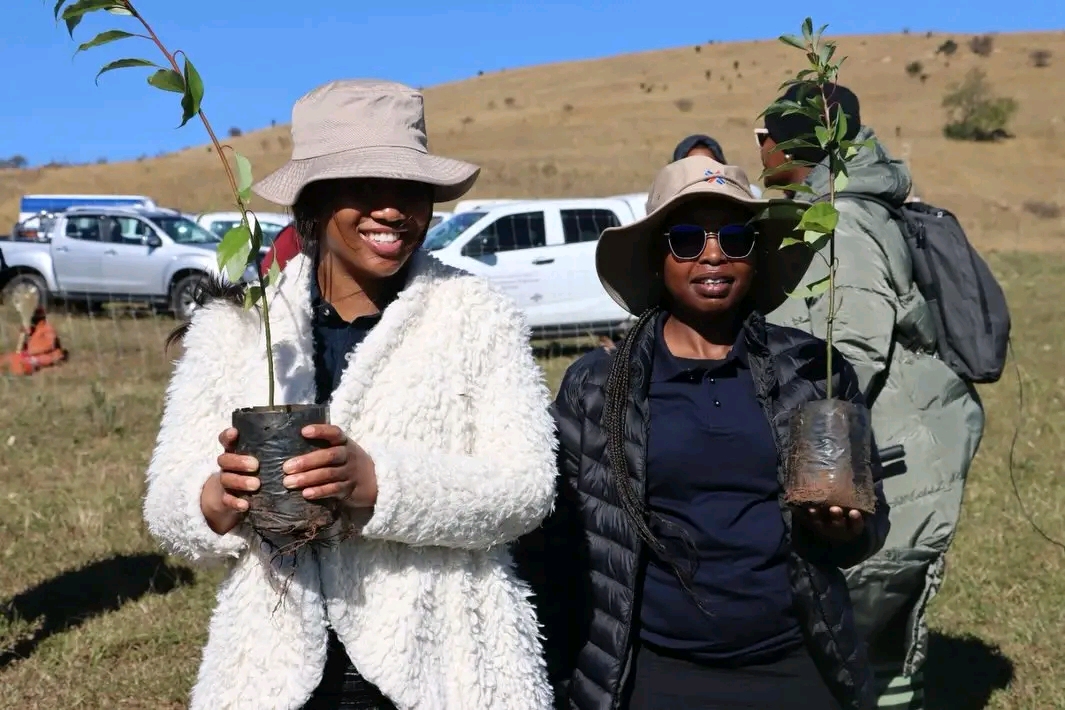
Activities undertaken during the commemoration included the removal of invasive plant species, planting of indigenous trees and rehabilitation of degraded grazing land.
Engdahl described these interventions as practical examples of climate action taking place at community level.
However, she stressed that the long-term success of the programme would depend heavily on the involvement of local communities and traditional leaders.
“The success of these restoration efforts will depend on the active participation of local communities, traditional leadership and rangeland management committees whose stewardship is essential for ensuring the long-term sustainability of these investments,” she said.


To support this goal, rangeland management committees established under the programme have undergone capacity-building training in sustainable grazing management, invasive species control, governance, leadership and climate-resilient natural resource management.
Engdahl said the committees would play a critical role in protecting restored rangelands and ensuring the benefits of the project continue long after the initial interventions have been completed.
She also emphasised the programme’s commitment to promoting the participation of women and young people in environmental management and conservation efforts.
According to Engdahl, empowering these groups is essential for building resilient communities and ensuring long-term stewardship of natural resources.
The EU official said the initiative aligns with the objectives of EU Green Week 2026, which focuses on environmental sustainability, biodiversity conservation, ecosystem restoration and community-driven climate solutions.
She noted that local projects such as those being implemented in Eswatini contribute to global efforts aimed at combating climate change, reversing biodiversity loss and restoring degraded ecosystems. “These local efforts demonstrate how community action can generate meaningful global impact,” she said.
Engdahl further described the programme as an example of the power of partnerships in addressing environmental challenges.She said the project brings together government institutions, development partners, traditional authorities, local communities and the private sector under a shared vision of sustainable development and climate resilience. “Our partnership with Eswatini is guided by a shared vision of sustainable and inclusive growth that leaves no one behind,” she said.
She commended the Government of Eswatini, the Ministry of Agriculture, the Ministry of Tourism and Environmental Affairs, the Eswatini Environment Authority, traditional leaders and local communities for their commitment to environmental stewardship and sustainable natural resource management.
Special recognition was also given to communities participating in the programme, with Engdahl saying environmental restoration efforts could not succeed without local ownership and active involvement.
As the country joined the rest of the world in commemorating World Environment Day, she called for renewed commitment towards protecting natural resources and restoring degraded landscapes. “Let us use today not only to celebrate progress but also to renew our collective commitment to protecting our natural resources, restoring degraded landscapes and ensuring that future generations inherit a healthier, greener and more resilient environment,” she said.
The rangeland restoration programme is expected to improve grazing conditions, increase livestock productivity and enhance the resilience of vulnerable rural communities while contributing to Eswatini’s broader environmental and climate goals


Discussion about this post