



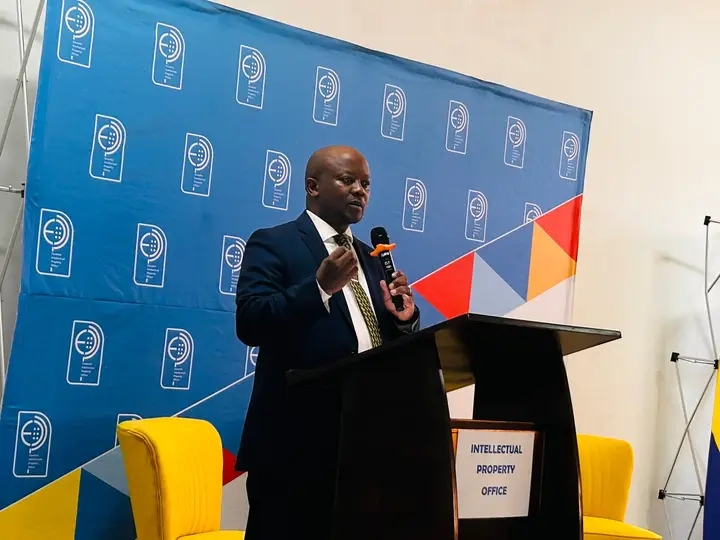
MANZINI – Registrar of the Eswatini Intellectual Property Office (EIPO), Dr. Celucolo Dludlu, has called for Eswatini to urgently reposition storytelling as both a cultural treasure and an economic driver, warning that the country risks losing its identity if local stories are absent from the rapidly expanding digital space.
Speaking during the commemoration of World Book and Copyright Day 2026, held under the local theme “Promoting SiSwati Stories in the Digital Age,” Dludlu said the country stood at a critical moment where protecting and commercialising local stories had become essential for preserving national identity and building a sustainable creative economy.
Addressing stakeholders from the creative, education and intellectual property sectors, Dludlu challenged the common perception that copyright was merely about legal processes and complicated regulations.
“Many people hear the word copyright and immediately think about courtrooms, legal language and restrictions,” he said. “But today we must think about copyright differently. We must think about it through stories.”


Dludlu said stories have always played a central role in shaping societies, preserving values and defining how nations are viewed by the world.
“Stories matter. Stories shape identity. Stories preserve memory. Stories transfer values. Stories shape how nations are understood,” he said.
Reflecting on traditional forms of storytelling, Dludlu said many emaSwati were raised listening to folktales and wisdom shared by parents and grandparents around fires, describing those moments as the country’s “first classroom”, “first entertainment platform” and “first education system.”
However, he said the storytelling landscape had changed dramatically, as children now consume content through phones, streaming services, gaming platforms, social media and digital books.“ If our stories are absent from these spaces, whose stories are shaping our children?” he asked.
Dludlu warned that if local stories are not intentionally developed and protected in digital spaces, Eswatini risks losing control of its cultural narrative to foreign content creators.
He stressed that stories in the digital era were no longer only cultural expressions, but economic assets capable of generating revenue and employment.


“Stories create jobs. Stories create industries. Stories attract investment. Stories can be commercialised, licensed, monetised, protected and exported,” he said.
The registrar further emphasised the need to prepare young people to become creators rather than passive consumers of global content.“Our learners must see themselves not only as consumers of global content, but creators — writers, illustrators, animators, filmmakers, publishers and digital creators,” he said.
Dludlu also highlighted the disconnect that often exists between artists and the business sector, saying many creatives struggle to position their work commercially, while investors and policymakers often fail to appreciate the economic potential of the arts.
He pointed to the Speedmata initiative as an example of how Eswatini could begin building a creative industry ecosystem by focusing on accessible and lower-cost productions such as cartoons, puppetry and simple animation.
Using the example of a SiSwati animated story, Dludlu explained how a single creative concept could create opportunities for writers, script developers, illustrators, animators, textile workers, costume designers, sculptors, musicians, videographers, editors and digital distribution specialists. “A story is no longer just a story.
A story becomes an ecosystem,” he said.He said the development of local content could eventually evolve into a full business value chain supporting employment creation and sustainable livelihoods.


Discussion about this post