



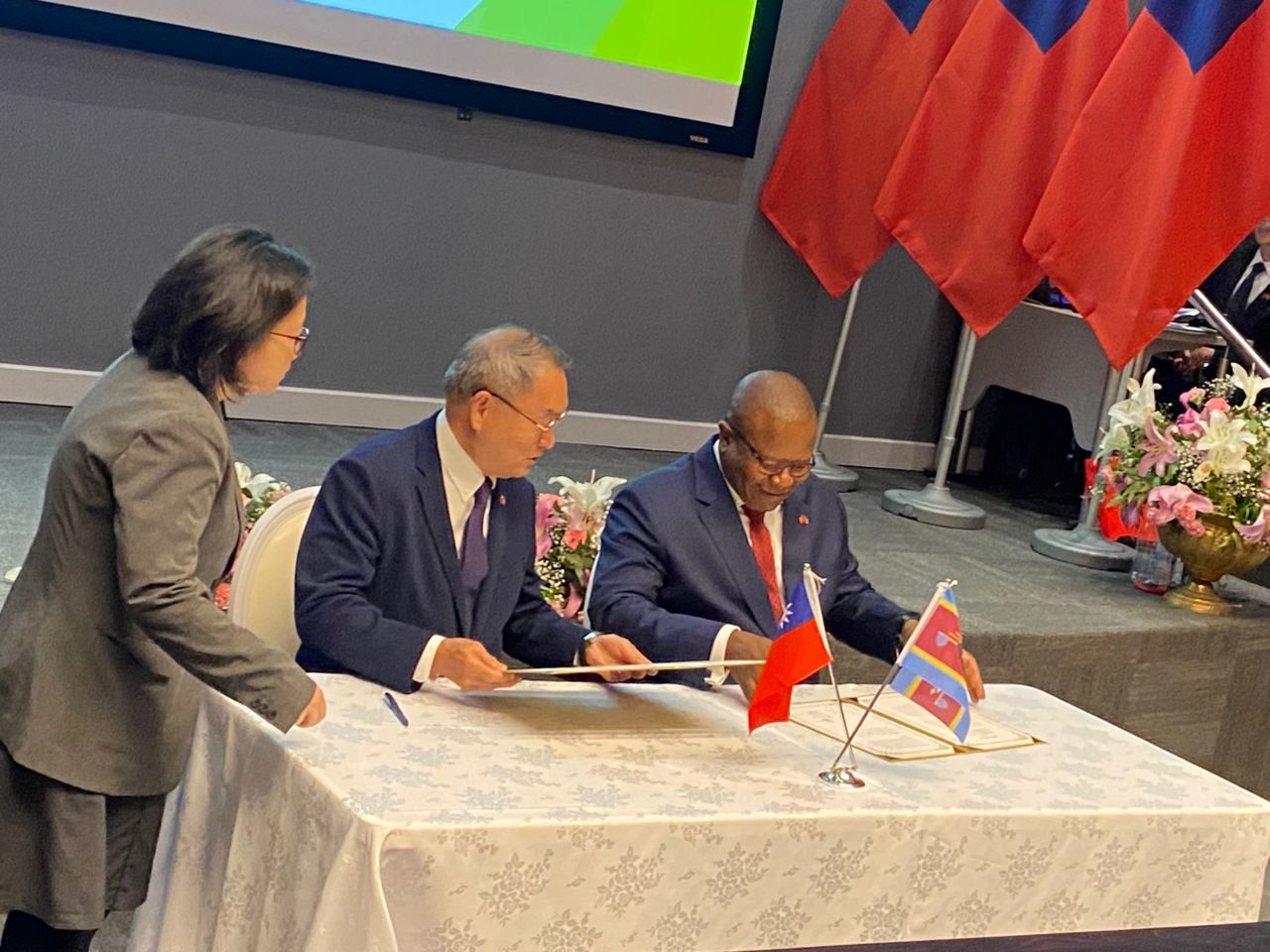
Matsapha- Eswatini has secured its first anchor investor for the Taiwan-backed Industrial and Innovation Park, with Texray Group formalising its interest through the signing of a Letter of Intent just days after outlining plans to invest up to US$80 million in the country.
Signed last week Saturday at Biotecnology Centre where the anticipated park will be built during a high- level visit by a Taiwanese delegation, the move signals a transition from preliminary investment discussions to early-stage commitment under the Taiwan Industrial and Innovation Programme (TIIP), reflecting rising confidence among Taiwanese firms in Eswatini’s industrial prospects.
Texray Chairman Ray Lin indicated earlier last week, during the Taiwan-Eswatini Investment Workshop, that the company is considering an investment ranging between US$50 million and US$80 million. The proposed project includes the establishment of a local headquarters and five manufacturing facilities covering textiles, printing, and embroidery.
Minister of Commerce, Industry and Trade Manqoba Khumalo described the development as a significant milestone, noting that Texray’s entry provides early validation of the park’s long-term potential.

“This is a strong signal that Eswatini is ready for investment and capable of hosting globally competitive industries,” Khumalo said, adding that the company’s participation could pave the way for additional investors.


The Industrial and Innovation Park forms part of a broader economic partnership between Eswatini and Taiwan, aimed at accelerating industrialisation, diversifying the economy, and creating employment through high-value manufacturing.
Although Texray’s investment remains at the intent stage, it is expected to lay the groundwork for further negotiations and eventual project rollout. Early commitments of this nature are seen as critical in building momentum and credibility for large-scale industrial initiatives.
The government of Eswatini has reaffirmed its commitment to facilitating investment through a coordinated institutional approach, with the Eswatini Investment Promotion Authority expected to play a key role in supporting the process.
“We are moving from engagement to execution,” Khumalo said, emphasising the focus on ensuring a smooth transition for investors from entry to full operation.
Beyond the immediate capital injection, the investment is expected to contribute to skills development, technology transfer, and the strengthening of local supply chains, while supporting Eswatini’s broader strategy to expand into non-traditional sectors and enhance its global competitiveness.


Discussion about this post