



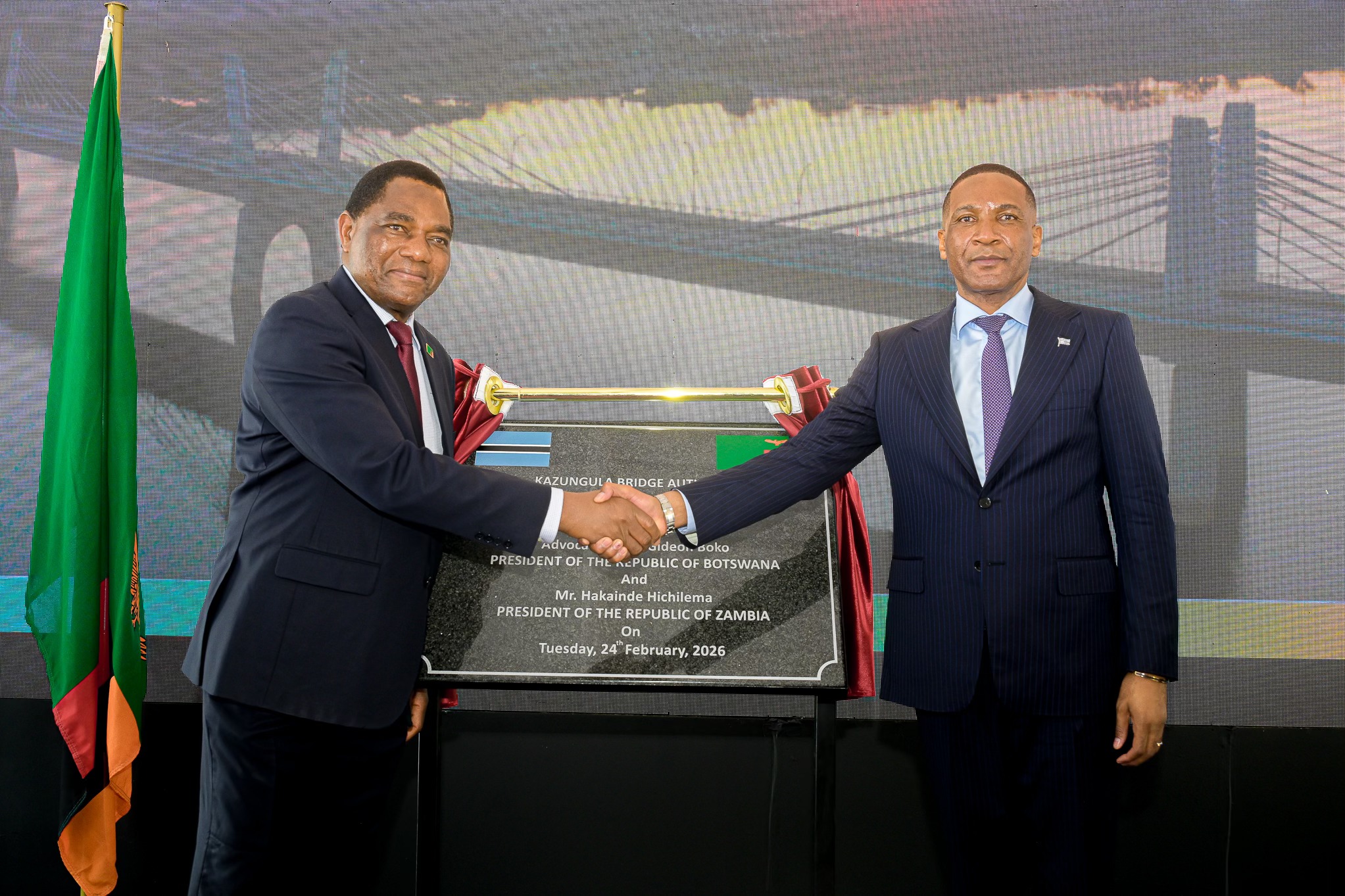
KAZUNGULA – A major regional trade route linking Southern Africa is set for round the clock operations after Botswana and Zambia announced that the Kazungula One Stop Border Post will operate 24 hours a day, a move expected to speed up the movement of goods and travellers across the continent.
The decision was announced at the joint launch of the Kazungula Bridge Authority in Kazungula on February 24, led by Botswana President Duma Boko and Zambian President Hakainde Hichilema.
President Boko said the shift to continuous operations followed discussions with his Zambian counterpart during the 39th Ordinary Session of the Assembly of Heads of State and Government of the African Union held in Addis Ababa, Ethiopia.
He also revealed that the Botswana Stock Exchange would lead efforts to transform the crossing into a non stop border post by working with technical partners to develop the technologies needed for the transition.


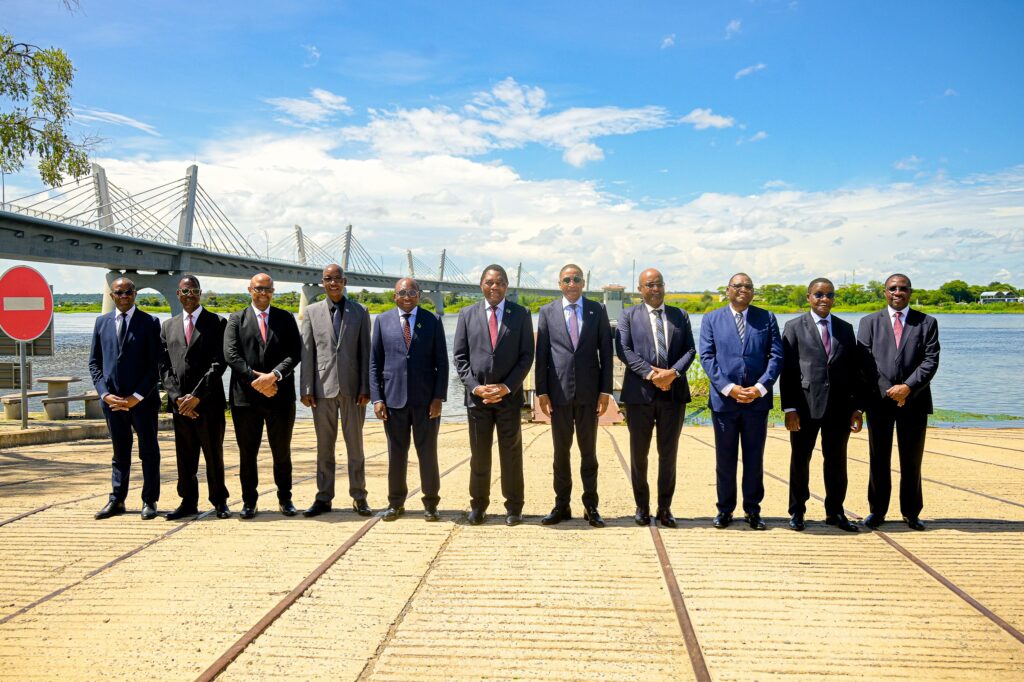
Speaking at the launch of the Kazungula Bridge Authority, President Boko described the bridge as a model of cooperation on the continent.
“The Kazungula Bridge is an iconic connection between two countries poised as an exemplifier of what collaboration can achieve and standing as a benchmark for the rest of Africa,” he said.
He added that the authority would strengthen regional links, open new trade corridors and reduce long queues for cargo and passengers that have historically slowed movement along the route.
President Hichilema said technology would play a central role in making a non stop border feasible, noting that current procedures create bottlenecks for travellers and transporters.
“The value of this unique asset goes beyond the four countries because there is Democratic Republic Congo, Angola and the rest of Africa who are also players in this bridge while we are just custodians,” President Hichilema said.
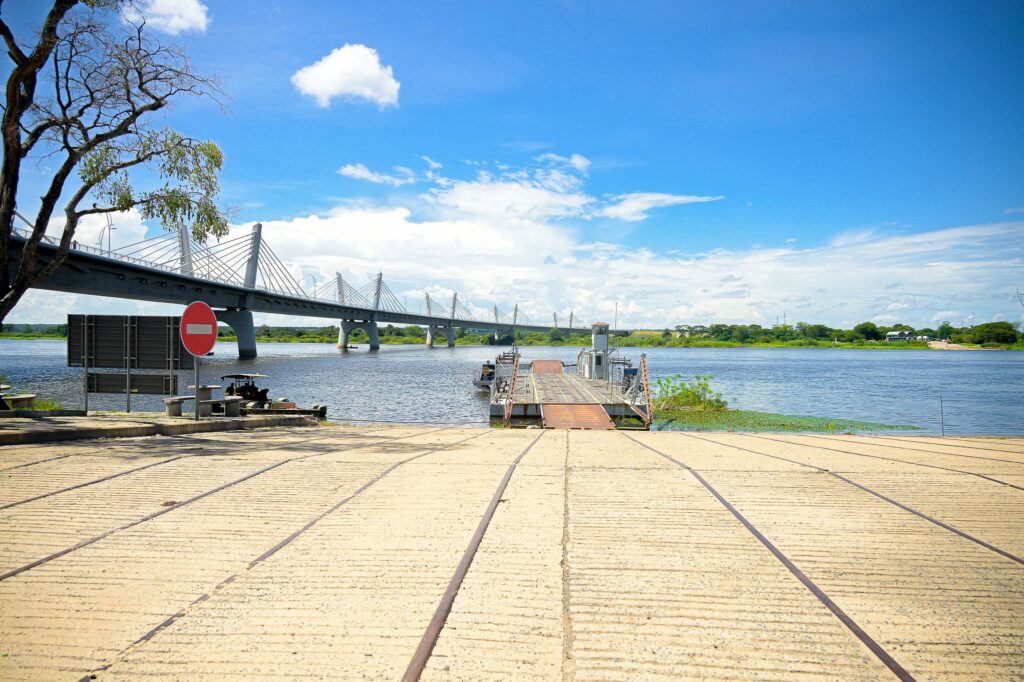
He noted that traffic volumes could rise significantly, with trucks using the crossing expected to increase from about 400 to as many as 1 000 per day, reflecting the bridge’s importance to regional trade.
According to Hichilema, the crossing forms a key part of the North South Corridor, making continued investment essential to maintain its status as a preferred route for transporters moving goods across the region.
The Zambian leader also suggested tourism opportunities linked to the site, including floating restaurants at the Chobe Zambezi confluence to expand offerings for visitors to the area.
Traditional leader Kgosi Morgan Makhanga of Kazungula said the bridge symbolises unity and shared heritage between Botswana and Zambia while also delivering economic benefits.


He noted that beyond boosting trade, the project has created jobs and improved livelihoods in surrounding communities. However, he appealed to the two governments to review customs charges, road levies and insurance fees at the crossing, which he said were higher than at other border posts.
Transporters using the corridor have long complained about delays caused by fragmented systems among agencies responsible for customs, infrastructure and security. Officials believe the new authority will enable joint planning and coordination to address these issues.
Both presidents stressed the importance of cooperation in managing shared infrastructure as traffic continues to grow. Since the bridge opened, authorities have recorded increased activity along the corridor, which connects Botswana, Zambia, Namibia and Zimbabwe at a unique four country meeting point.
Policymakers described the crossing as a strategic gateway linking markets across Southern Africa and supporting regional integration efforts, including the African Continental Free Trade Area.
Officials also pointed to ongoing discussions on easing entry procedures between Botswana and Zambia, saying simpler travel arrangements could boost tourism and cross border interaction between communities.
Observers at the launch said the establishment of a joint authority signals a shift toward shared management of cross border infrastructure, reducing conflicting policies that often slow movement at busy frontiers.
Local businesses around Kazungula are watching developments closely, anticipating increased economic activity as coordination improves and traffic volumes rise.
Announcing the new measures, the leaders said continuous operations would transform the crossing into a seamless gateway for trade and travel.
“We have also resolved to implement 24-hour border operations, ensuring seamless movement of goods and people. This strengthens economic collaboration, reduces trade bottlenecks, and aligns fully with the spirit and objectives of the African Continental Free Trade Area.”
“This is integration with intent, turning infrastructure into productivity, trade into growth, and cooperation into shared prosperity.”


Discussion about this post