



Mbabane – Khuluma Eswatini has set its sights on one of the country’s most persistent labour market failures, by announcing an ambitious plan to establish a National Graduate Data Bank.
The Graduate Data Bank will be an always-ready digital repository designed to give companies instant access to skilled young professionals for internships, research teams, data collection assignments, and short-term projects.
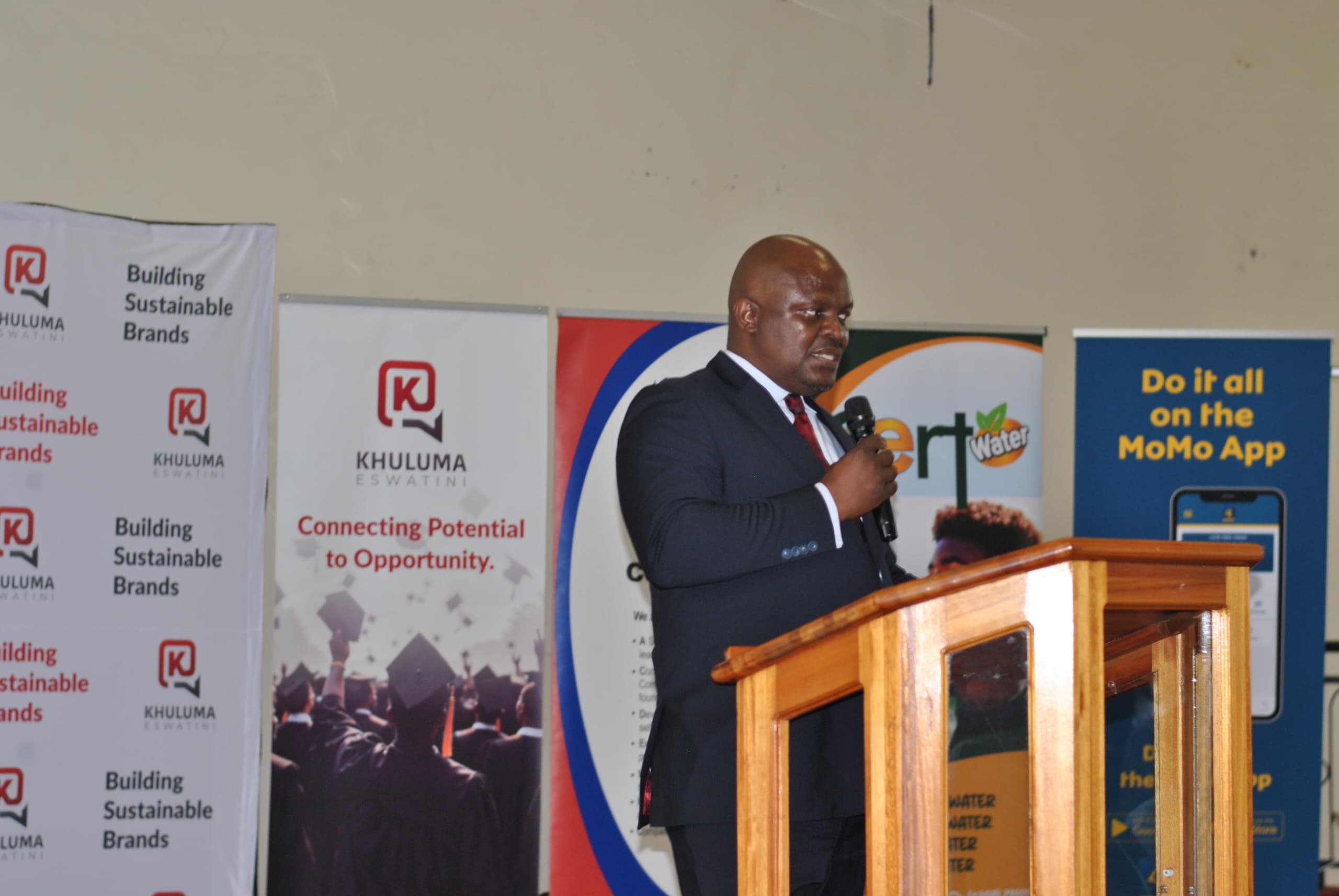
The initiative was revealed during the high-energy GradConnect and Business Seminar held at Southern African Nazarene University (SANU), where the hall was filled with final-year students, recruiters, and academics eager for solutions. While the event focused on strengthening employability, Khuluma Eswatini’s announcement introduced a fresh, systemic intervention aimed at transforming recruitment efficiency across sectors.
Chairman Mandla Luphondvo said the project responds to a longstanding frustration shared by employers who often scramble to find qualified youth at short notice.


“A company might need 20 data collectors or a research team at once, but the difficulty is knowing where to find them,” he said. “This data bank will change that story. It will allow companies to identify talent quickly, reducing time, cost, and stress for everyone involved.”
Rather than simply lamenting the country’s high youth unemployment, Luphondvo framed the crisis as an urgent, shared responsibility—warning that treating it casually was as dangerous as ignoring “a snake in the house.”


“We can either kill the snake, find someone who can, or waste time blaming the landlord,” he said. “Real solutions demand collective action.”
Founded just eight months ago, Khuluma Eswatini has been positioning itself as a connector between the classroom and the career world. Its early innovations— including the low-data Khuluma App—have already gained traction for linking young jobseekers to entry-level opportunities with minimal cost barriers.
The upcoming data bank marks its most far-reaching effort yet. The tool is expected to support government departments, development partners, corporates, and NGOs by providing a curated and verified pipeline of graduates from various institutions. This strengthens the organisation’s emerging role as a national hub that links colleges and universities with real labour market demand.
Khuluma Eswatini also announced plans to expand its campus outreach in 2026 following engagements with MITC, Limkokwing, Gwamile VTC, and William Pitcher College. SANU, which hosted the seminar, was celebrated for offering “the most amazing reception.”
Apart from connecting graduates to opportunities, the organisation is also building a service ecosystem for young professionals and entrepreneurs. It offers CV development, interview coaching, skills courses, and communication services—supporting both jobseekers and small business owners trying to grow their brands.
With the launch of the National Graduate Data Bank, Khuluma Eswatini is signalling a shift from fragmented job-matching efforts toward a coordinated national system—one that could ultimately reshape how young professionals step into the world of work.




Discussion about this post