




MBABANE – Eswatini’s business sector is preparing for a historic moment as the country hosts its first Empowered Workplace Indaba, a high-level forum designed to confront rising workplace toxicity and chart a new path toward healthier organisational cultures.
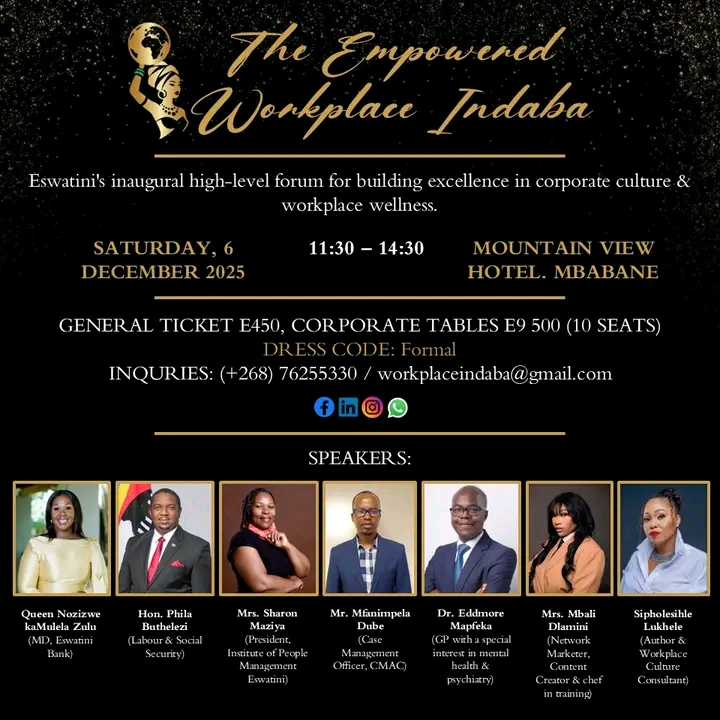
Scheduled for 6 December 2025, the event will bring together ministers, senior executives, HR professionals, medical experts, and thought leaders at Mountain View Hotel in Mbabane.
Under the theme “Rebuilding Corporate Culture: From Toxicity to Empowerment,” the Indaba will also serve as the official launch of Pretty Suits & Poisoned Mugs, a powerful workplace memoir penned by workplace culture consultant and corporate veteran Sipholesihle Daisy Lukhele.
Recent research shows that toxic workplace environments cost organizations between 25-40% of productivity each year through increased absenteeism, staff turnover, and reduced performance. For Eswatini’s business community, the conversation about workplace wellness is no longer optional; .


“We’re losing our best talent not because competitors are offering better salaries, but because organisations are failing to create cultures that respect human dignity,” Lukhele said. “This Indaba opens the door for honest reflection and meaningful action.”
Confirmed speakers include: Dr. Nozizwe kaMulela-Zulu, Managing Director of Eswatini Bank; Phila Buthelezi, Minister of Labour and Social Security; Sharon Maziya, President of the Institute of People Management Eswatini; Dr. Eddmore Mapfeka, General Practitioner (Mental Health); Mfanimpela Dube, Case Management Officer at CMAC; Mbali Dlamini, Network Marketer, Content Creator, and Chef-in-Training; and Sipholesihle Daisy Lukhele, Author and Workplace Culture Consultant.
Government involvement underscores recognition that toxic workplaces are not just an HR issue, they are a labour, economic, and national development concern.
Major topics to deliberate on include,from Mental Health to Labour Rights where speakers will tackle critical themes such as leadership accountability, invisible psychological harm, legal protections, career reinvention, and the hidden financial cost of staff loss.


As Eswatini approaches 2026, Lukhele says the question is no longer whether workplace culture affects national productivity—it’s whether organisations are willing to commit to meaningful change.
“This Indaba is for companies brave enough to look inward,” she said.
“Those willing to lead forward will shape the future of work in Eswatini.”


Discussion about this post