



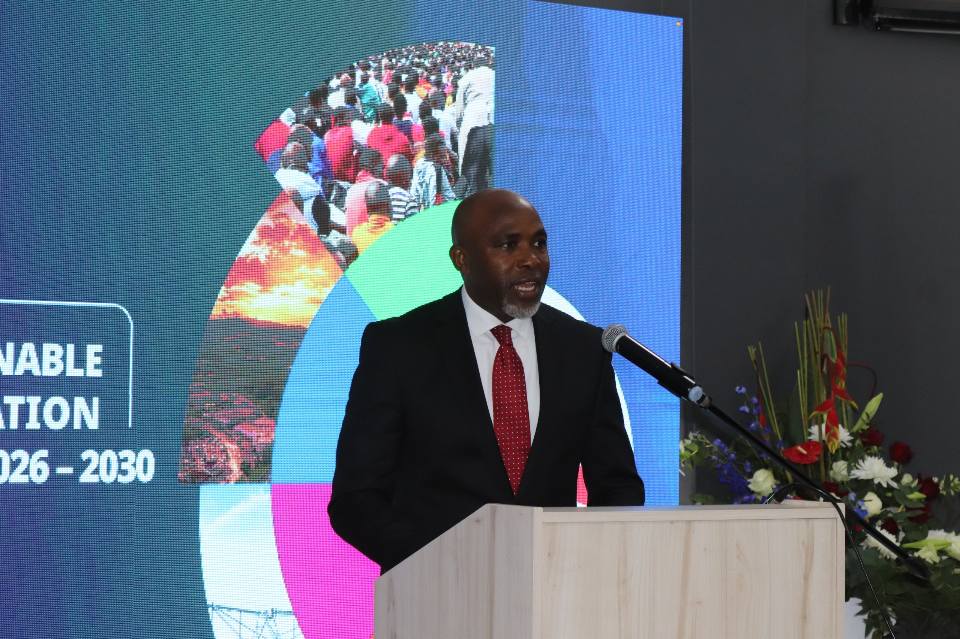
Mbabane- “The United Nations Sustainable Development Cooperation Framework (CF) 2026–2030 is the product of an extensive and multi-stakeholder consultative process.”
These were the sentiments that were shared by the UN Resident Coordinator George Wachira during the official signing of the frameowrk on Thursday. Wachira said the the development process was informed by lessons learned from the implementation and evaluation of the 2021-2025 CF, as well as feedback from a wide array of partners.
The planning phase for the 2025-2030 CF began in August 2024 with a strategic dialogue at the UN House, involving the Government of Eswatini and various partners. This was followed by a high-level consultation on strategic priorities in March 2025, which was led by the Prime Minister and attended by several ministers and Principal Secretaries.
Wachira also expressed gratitude to the Minister of Economic Planning and Development, Dr. Tambo Gina, and his team for their support and guidance throughout the process.


The presence of the UN DCO Regional Director for Africa, Yacoub El-Hillo, at both the initial meeting and the launch, was highlighted as an affirmation of the UN’s extended capacities to support the CF’s implementation beyond Eswatini’s physical borders.
Wachira also acknowledged the contributions of multiple non-governmental stakeholders who shaped the framework. These include civil society partners coordinated under the umbrella of CANGO, youth groups such as the Eswatini Youth Chamber of Commerce, and private sector representatives convened by Business Eswatini, including the Federation of Eswatini Business Community.


The Resident Coordinator also noted that the launch occurs “at a time of great uncertainty,” citing global challenges such as the accelerating effects of climate change, constrained development financing, and the urgent needs of the young population.
He also stated that the CF has been a “balancing act – treading the path of ambition to accelerate the SDGs, while being realistic about what we can reasonably hope to achieve.”
“The framework’s design aims to ensure effective coverage of key development areas with expanded access to expertise beyond Eswatini, integrating a focus on digital transformation, human rights, gender equality,” said Wachira

Discussion about this post