



In the heart of Southern Africa lies Eswatini, a small kingdom with a vibrant culture and welcoming spirit. Over the last two decades, this land has become a beacon for female migrants from across the continent.
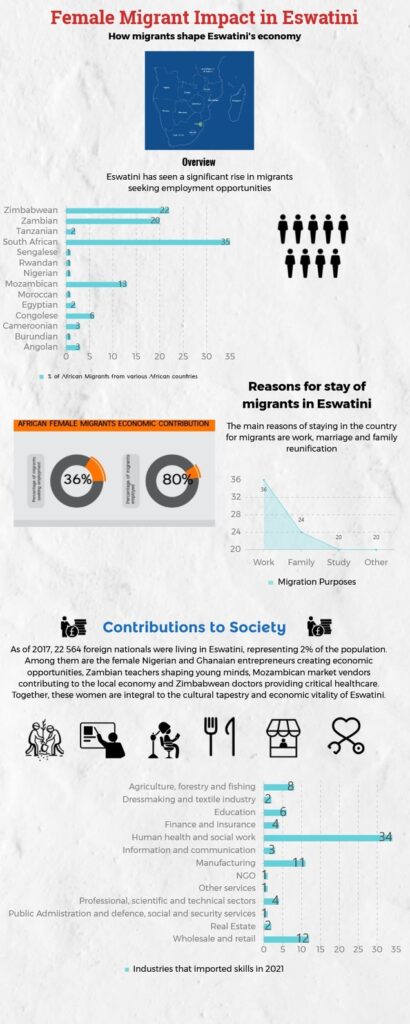
As of 2017, 22,564 people living in Eswatini were foreign nationals, accounting for approximately 2% of the population.
From Kenyan entrepreneurs creating economic opportunities to Zimbabwean nurses, Zambian teachers, Mozambican housekeepers, and Ethiopian doctors providing critical healthcare services, these migrants are weaving a powerful narrative of collaboration, innovation, and exchange.
Upon arriving in Eswatini, they encounter a landscape with breathtaking natural beauty, a community that is warm and welcoming, and a serene environment characterized by a leisurely pace of life.


The rich cultural diversity enhances the charm. The warm smiles of locals, bustling markets filled with colourful produce, and the sounds of laughter create an atmosphere that feels both foreign and familiar.
Eswatini is also perceived as a safer haven compared to countries facing war or political turmoil, making it an ideal choice for those seeking refuge from difficult circumstances and a meaningful life filled with opportunities.
But the stories of female migrants in Eswatini are not just about individual triumphs; they embody the spirit of an African Renaissance.
Their movement into Eswatini has marked a rebirth of cultural identity, economic empowerment, and social cohesion within the small nation.
These women from diverse backgrounds are weaving a narrative that reflects the dynamic potential of Africa as they establish themselves in their new home. At the heart of this renaissance, the migrant women bring with them rich traditions, cuisines, and practices that enrich the local culture.
Adeola Okebanjo, the Nigerian owner of Dee’s Restaurant, has introduced the Swazi community to new flavours and culinary experiences.
“The Swazis love my food. I provide Nigerian food in Eswatini, and the people love it,” she says.
Adeola moved from Nigeria in 2010, drawn by Eswatini’s peaceful ambience.
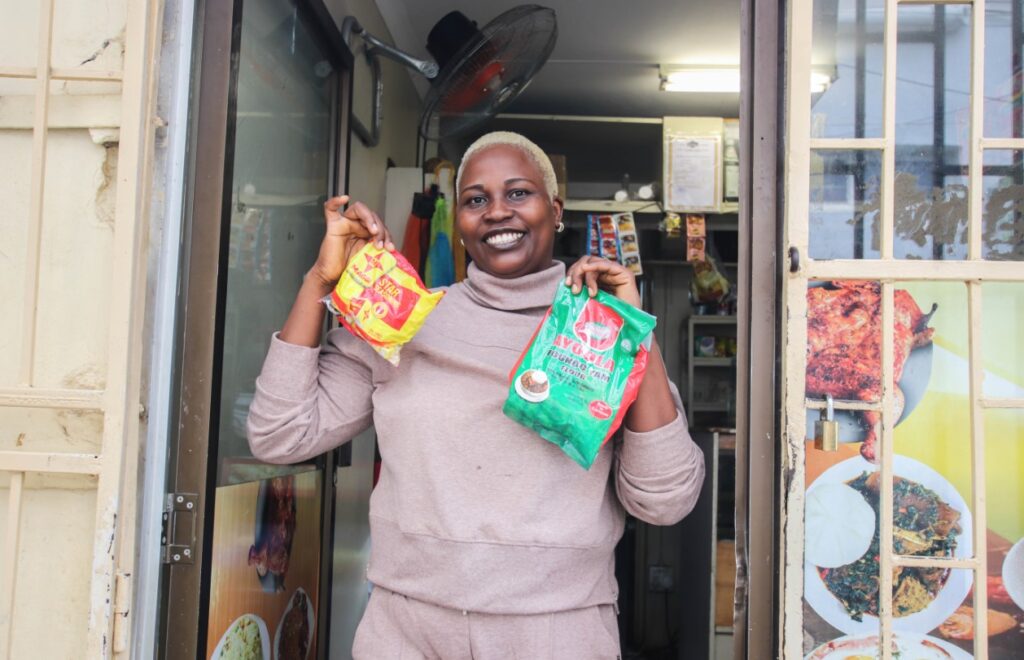
“I discovered that it’s a place where people are kind and welcoming. I’ve built my restaurant providing Nigerian cuisine, and the Swazi community has embraced me,” she says.
The blending of different African cultures in the small nation of Eswatini not only enhances community ties but also reinforces the idea that Africa is a tapestry of shared experiences and mutual respect. As migrants share their traditions, languages, and customs, locals are introduced to a rich mix of cultural practices that foster appreciation for one another’s backgrounds and promote unity.
Food has also played a significant role in this cultural exchange. The diverse cuisines, ranging from Nigerian to Zambian and Mozambican dishes, enrich the local food scene, enabling locals and foreign migrants to connect.
Sharing meals during festivals and cultural events has been an avenue for Swazis and migrants to celebrate different flavours and culinary traditions, opening the door for meaningful conversations about challenges and achievements, ultimately strengthening the bonds that tie everyone together.
The economic contributions of these women are profound and transformative. Their contributions extend beyond entrepreneurship and education; they shape the very fabric of Eswatini’s healthcare system.
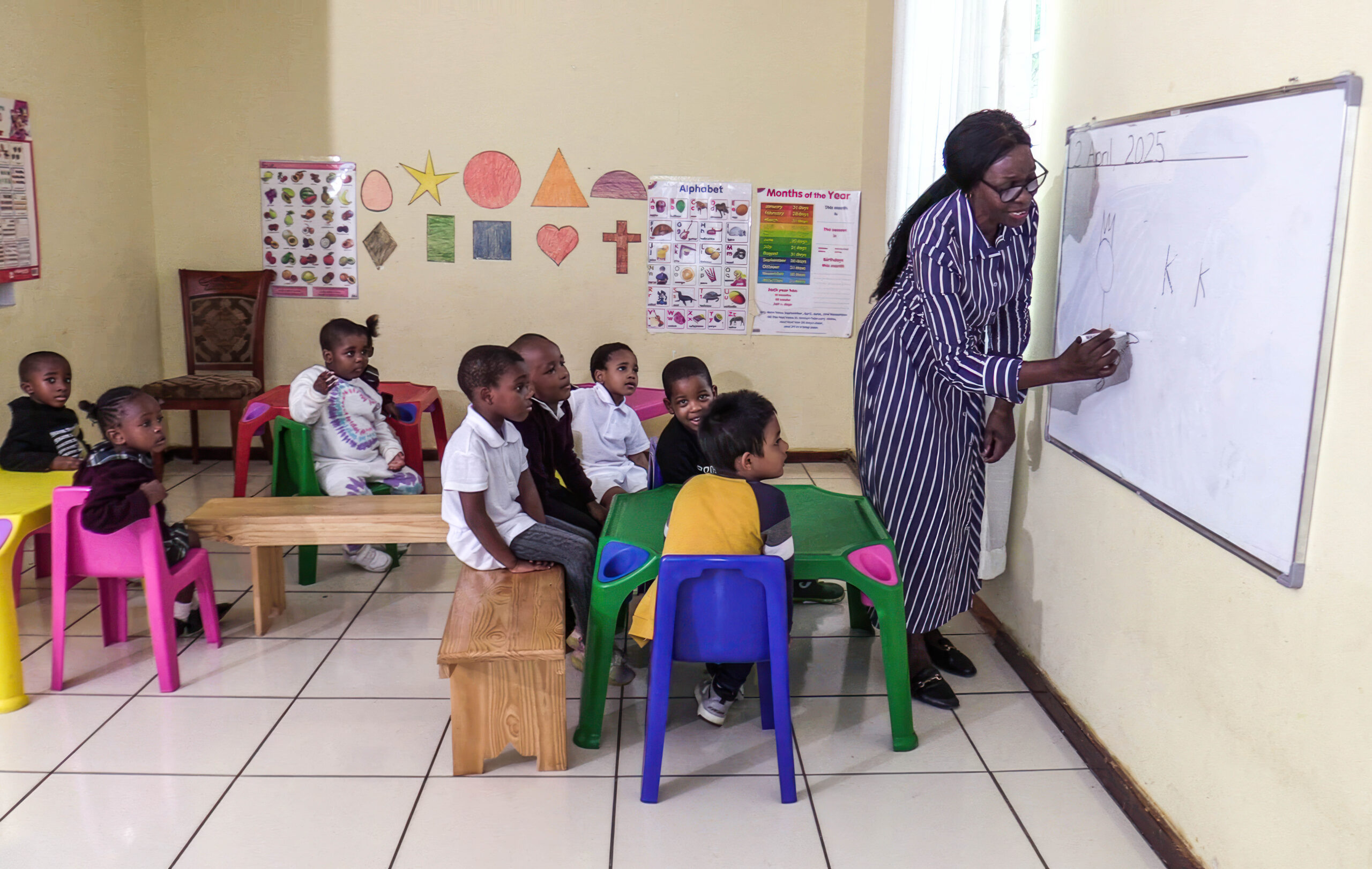
Kathy Sichilaba, the Principal of Luyando Preschool, reflects on her journey from her native country, Zambia, to Eswatini over two decades ago.
“When I arrived in 2000, I was filled with hope. I found work at Kazakhali Private School, and over the years, I’ve had the privilege of watching my students grow into successful professionals—doctors, lawyers, teachers. This isn’t just a job for me,” she shares.
When Kathy moved to Eswatini, she was driven by hope and ambition. She tackled the struggles of adapting to a new culture head-on. Arriving in a new country and beginning her teaching career at Kazakhali Private School, Kathy knew how vital emotional and social support was for young kids, and the importance of creating a safe and warm learning environment for learning.
Kathy has put together lessons that blend local culture and traditions with global ideas. This way, kids learn to appreciate their own background while also understanding the world better. Her commitment to developing young minds goes beyond academics. Instilling values like respect, responsibility, and cultural appreciation, she helps raise a generation that’s not only knowledgeable but also kind and aware of social issues.
Through her creative teaching methods, Kathy Sichilaba is empowering future generations, preparing them to appreciate the diverse cultures in Eswatini and beyond.
Zimbabwe-born Dr. Joyce Sibanda, who initially came to Eswatini with nursing qualifications, has transformed her career into a vital public health role.
“Eswatini feels like home to me. The supportive environment allowed me to pursue my master’s and work on impactful health projects,” she shares.
Dr. Sibanda’s journey exemplifies how migrant women not only seek personal advancement but also contribute meaningfully to the well-being of their adopted communities.
Sibanda, who also served as the kingdom’s National TB/HIV Community Services Coordinator, says upon her arrival in Eswatini, she never felt disconnected because the Swazi people, with their calm, welcoming nature, made her feel at home from the very beginning.
“I came to Eswatini with my nursing qualifications, with my first degree. And over time, I pursued my master’s in public health and took on the local philosophy of working with communities, respecting culture, teamwork, and empowering people, all of which are key for good public health leadership, thanks to the supportive learning environment provided here.
My journey in public health began when I arrived in Eswatini. The opportunity I received enabled me to grow into a public health specialist. I am proud to have contributed meaningfully to the Ministry of Health by initiating numerous projects. My involvement in implementation science and studies has further enriched my experience.
Because Eswatini is like home to me, I have found it easy to collaborate and build a strong relationship within communities,” she explains.
As the National TB/HIV Community Services Coordinator in Eswatini, Dr. Sibanda worked hard to manage TB and HIV, big health issues in Eswatini. She has helped lower the rates of these diseases and boost community health. She also played a key role in teaching people about preventing and treating TB and HIV to make better health choices.
In this role, Dr. Sibanda has made healthcare more accessible to those who need it. This includes organizing healthcare workers and making sure testing and treatment programs are available, very important for early help. With her understanding of local cultures, she helped develop health programs that connect with the community.
This sensitivity built trust and encouraged people to get involved in health initiatives. Her experiences helped guide national strategies for managing these diseases. Dr. Joyce Sibanda not only improved public health in Eswatini but also emphasized the importance of collaboration and inclusion in achieving better health results.
As a successful woman in public health, Dr. Sibanda inspires other women and girls in Eswatini. Her journey shows that education and hard work can lead to great opportunities, encouraging others to explore health careers.
Around 36% of migrants have come to Eswatini seeking work. Approximately 80% of female migrants are employed, and they significantly contribute to various sectors, shaping the country’s economy and society.
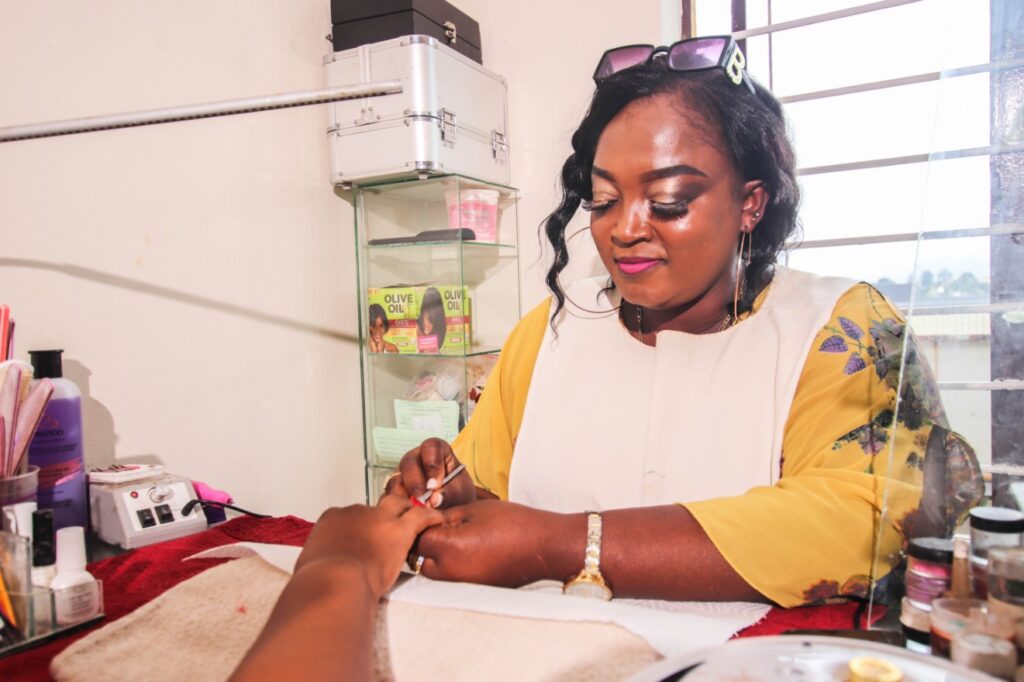
Janet Tetteh Boakye is a vibrant Ghanaian beautician who has made Eswatini her home. She arrived in Eswatini 17 years ago, having travelled through many African countries.
“When I first came here, I was mesmerised by the country’s beauty and the people’s warmth and hospitality. I’ve been to a lot of African countries like Togo, Benin, Nigeria, Cameroon, Chad, Kenya, Tanzania, Malawi, Mozambique, before eventually landing in Eswatini.
I have stayed here because this country is so peaceful. The people are so lovely. I found myself staying and went on to give birth to two daughters. I have a family here and also set up my business,” she says.
Many female migrants share similar sentiments. Lina Mandlas, a Mozambican market vendor, emphasizes her connection to Eswatini:
“I arrived in the 90s, and I have lived here ever since. This is my home now. I support my family back in Mozambique, and I’m proud to be part of this community.”
Although there are many success stories of female migrants integrating well into Swazi society, the journey to Eswatini is fraught with significant obstacles that test their resilience and determination. Leaving behind familiar environments, one of the most immediate hurdles is the language barrier.
Upon arriving in Eswatini, many women find themselves in a world where the native language of Siswati and English dominate daily interactions. Mozambique-born Lina recalls her initial struggles.
“When I first arrived, I didn’t speak any Siswati. Simple tasks like shopping became overwhelming. I felt isolated, unable to communicate with those around me.”
However, Lina’s determination to learn the language allowed her to connect with the community, fostering relationships that helped her integrate into this new society.
Like Zimbabwe, Eswatini is geographically closer to Mozambique than Nigeria or Ghana, which made it easier for Lina to consider moving there. Many people she knew were heading this way, so it felt familiar and welcoming with a good support system that helped her settle in.
Unlike the experiences she heard about fellow Mozambicans in nearby South Africa, where xenophobia often came to light, Eswatini felt much more inviting. Even though she had a tough time with the language at first, the friendly atmosphere helped her build real friendships and feel like she belonged.
Adeola reflects on her initial culture shock.
“I had to adapt to different ways of socializing and doing business. The pace of life in Eswatini was slower than what I was used to, and it took time to adjust.”
When Adeola arrived in Eswatini, the slower way of life really surprised her. Back home in Nigeria, life was always loudly on the go. In Eswatini, she found that people took their time, chatting over meals.
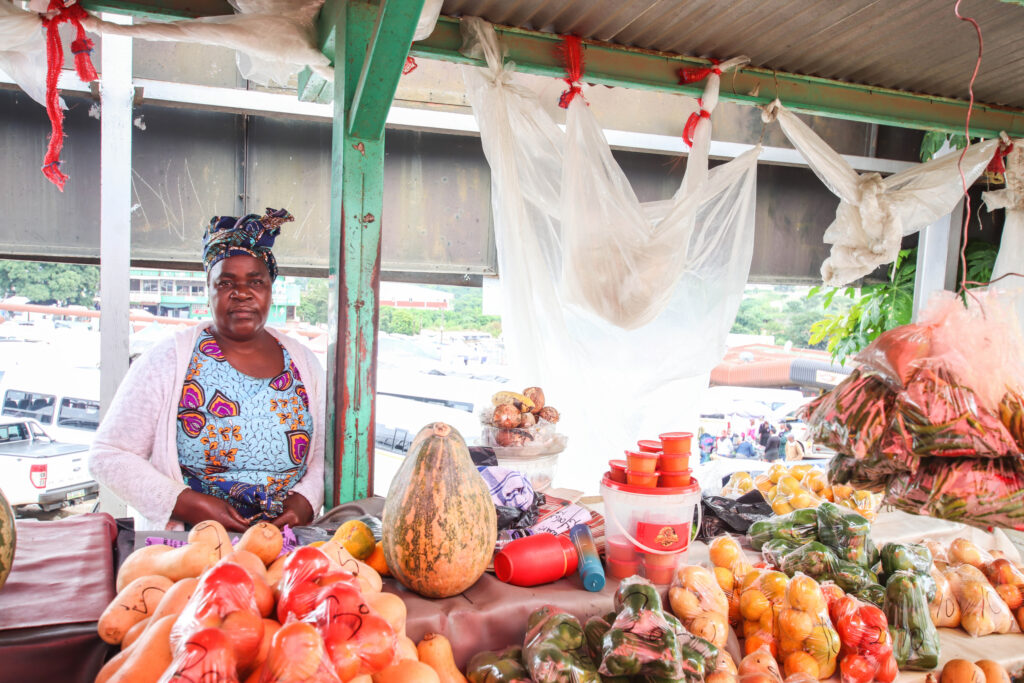
One day, she thought she’d check out a local market to learn more about the community. She figured it would be a quick visit, but she was taken aback by how vendors were chatting with customers, not just about prices but also about family and local happenings. Adeola felt a bit out of place, rushing while everyone else seemed to be enjoying themselves.
Soon, she realized she was missing out on something special, so Adeola joined a group of women at a fruit stand. As they talked, they shared stories, jokes, tips on cooking and local customs. By the end of her visit, Adeola walked away with fresh fruits and veggies, but also with new friends and a better appreciation for life here.
This experience showed her that taking time to build connections could really make a difference in how she felt about her new community. Despite the challenges, Adeola embraced the local customs, which not only enriched her personal experience but also helped her build a loyal customer base for her restaurant.


According to Lindiwe Simelane, Acting Head of the Eswatini Office of the International Organisation for Migration (IOM), Eswatini has robust national frameworks and policies for migration governance.
“Owing to relatively better economic conditions than some countries in the region, Eswatini attracts migrants seeking employment opportunities and family reunification. According to the African Development Bank Group, Eswatini’s economy grew from 0.5% in 2022 to an estimated 4.8% in 2023, driven by the stronger performance of the services sector.
The majority of migrants in Eswatini are of reproductive and working age, primarily between 30 and 39 years old. While approximately 90% of male migrants are employed, around 80% of female migrants hold jobs, often in professional sectors, which highlights the essential role of women in driving development through migration, contributing to both social and economic progress,” she explains.
However, Simelane points out that the lack of accurate data on migration poses challenges in understanding the full impact of migrant women on development in Eswatini.
On March 6, 2025, Eswatini launched the National Labour Migration Policy (NLMP) with help from the International Labour Organisation (ILO) and IOM. The goal is to improve how labour migration is managed, making sure that moving for work is safe and orderly.
The policy will improve data systems for labour migration, support migrant workers and their families, engage with those living abroad, as well as work with different government sectors, social partners, and civil society and labour groups.
At the launch of a steering committee for the NLMP, various speakers highlighted the need for everyone to get involved in making the policy work to protect people and boost the economy. The IOM is committed to continuing to support the NLMP’s rollout, aiming to make labour migration better and increase safety for migrant workers.
Simelane notes, “We must recognize the vital role of female migrants in our society and ensure that policies support their contributions.”
The African Renaissance in Eswatini represents a vision for a united and progressive continent. Women who migrate often work in important areas like healthcare and education. Their involvement helps fill job gaps and boosts economic growth. When governments support these contributions, it can lead to a stronger and more inclusive economy.
For many families in Southern Africa, migration is a key way to make a living. Women send money back home to support their families, helping them avoid poverty, keep children in school, buy land, and build homes. The success of migrant women encourages others in their community to seek education and job opportunities.
The economic stability from remittances, paired with empowered women, lays a solid foundation for families and neighbourhoods. In short, recognizing and helping female migrants is not only fair; it’s also smart.
In Eswatini, the journeys of female migrants symbolize the heart of an awakening that transcends borders, cultures, and challenges. As these women continue to forge their paths, they embody the hope and promise of a united Africa, reminding us all that the future is not just to be inherited but created together.
Watch the full documentary below to meet the women reshaping Eswatini, one meal, one classroom, one clinic at a time.


Discussion about this post