



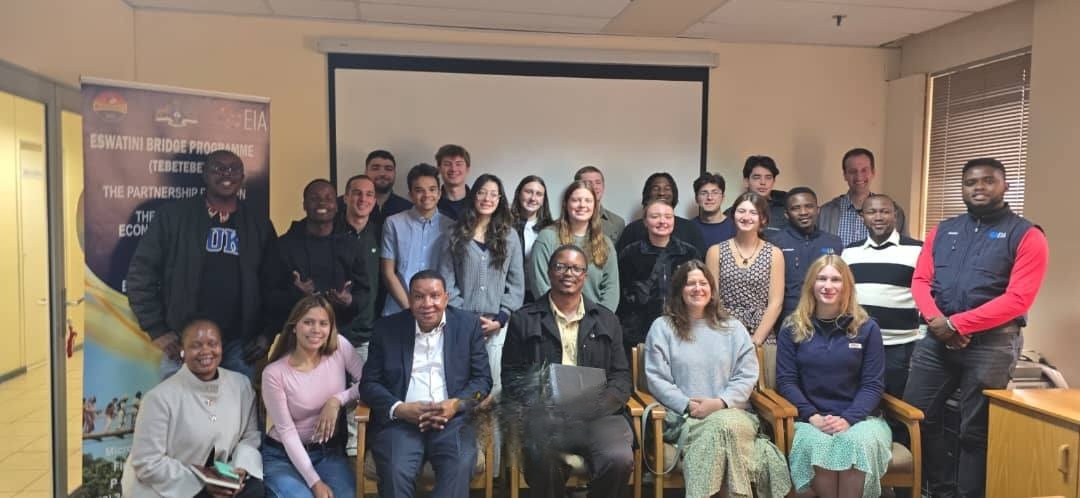
HOSEA – A group of 14 engineering students from the United States has arrived in Eswatini to take part in the construction of a suspended footbridge at Hosea, a project aimed at improving access for rural communities in the Lubombo region.
The students are working under the Engineers in Action programme and are expected to spend the next eight weeks contributing to the Nyakuza Footbridge, which will connect three imiphakatsi — Bufaneni, Lushini and Liba. The footbridge is set to ease movement across a river that often becomes impassable during the rainy season, cutting off residents from schools, clinics and other basic services.
The Under Secretary in the Ministry of Economic Planning and Development, Siboniso Masilela, officially welcomed the students this week, thanking them for their commitment to community development.
“We are thrilled to have you here with us,” Masilela said. “Your decision to spend time working on this bridge speaks volumes about your dedication to making a difference.”

Joining him was Sibusiso Mbingo, Director of the Microprojects Programme, which is coordinating the project locally. Mbingo told the students they were not only here to build a bridge, but to immerse themselves in the life of the community. He explained that they would be staying with local families throughout their stay and would share meals and experiences with their hosts.


“This is not just about construction. It’s about relationships,” said Mbingo. “You will witness how people live, and you’ll learn that we are all more connected than we think.”
The Microprojects team has put systems in place to monitor the students’ safety and wellbeing during their stay. Regular check-ins will be conducted and health support is available if needed.
The footbridge project was first initiated in 2017 and has since impacted several hard-to-reach communities by reducing travel times and improving safety. Masilela described the changes as life-changing, especially for vulnerable groups like schoolchildren and the elderly who previously struggled to cross the river during floods.
“This bridge is more than a structure,” he said. “It brings access, dignity, and opportunity to people who have long been cut off.”
The students are expected to complete the project by the end of July before returning home.



Discussion about this post