



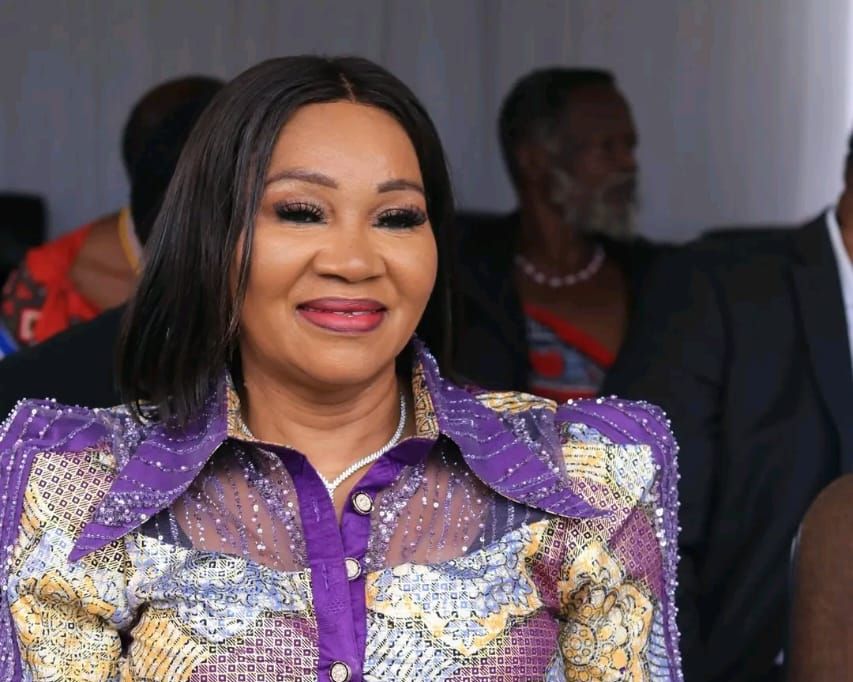
Lobamba- Senate President Lindiwe Dlamini has called on Cabinet ministers, Senators to prioritise parliamentary business over other commitments, insisting that unexplained absences undermine the dignity of the House.
The warning comes amid previous concerns raised by the House of Assembly Speaker over ministers failing to report their absence.
Speaking during Tuesday’s Senate sitting on October 27, 2026, Senate President stressed that ministers and senators who could not attend parliamentary proceedings should formally notify the House rather than leave their colleagues without an explanation.
She said informing the House about an absence was a matter of courtesy and demonstrated respect for Parliament, an institution whose business should receive the attention it deserves.


“Kuba ngumkhuba lomuhle nekuhlonipha kutsi nawubambekile ubike endlini. Kungabiki doesn’t give the right honour the House it deserves,” Sen. President said.
The Senate President directed the Minister of Finance, Neal Rijkenberg, to convey the message to his Cabinet colleagues, emphasising that parliamentary business must take precedence over other engagements.
“Parliament business takes precedence. Whenever there is a sitting, you leave everything and attend to parliament business,” she said.
Dlamini’s remarks come against the backdrop of previous concerns about ministerial attendance in the House of Assembly, where Speaker Jabulani Mabuza has also raised the issue of ministers failing to report their absence.
Agriculture Minister’s absence leaves MPs waiting
On September 15, 2026, Mabuza disclosed that he had received no explanation for the absence of Agriculture Minister Mandla Tshawuka, who was expected to attend proceedings concerning alleged maize and sugar bean smuggling.
The Speaker said he had attempted to contact Tshawuka by telephone during the day but could not reach him.
“I did not get any report from him and I tried to call him during the day but did not get hold of him,” Mabuza said at the time.
The minister’s absence meant that MPs could not proceed with a motion concerning concerns about local farmers, the influx of imported and allegedly smuggled agricultural commodities, and the accuracy of reported maize production figures.
The incident highlighted the practical consequences of ministerial absence, particularly when a minister’s presence is required to respond to questions or participate in parliamentary business.
Mabuza’s concerns echoed a broader complaint raised in February 2024, when members of the House of Assembly questioned the absence of several Cabinet ministers at a sitting.
At the time, the Speaker and Deputy Speaker Madala Mhlanga questioned how parliamentary business could proceed when ministers expected to participate were not present.


Mabuza stressed that Parliament’s work was important and that ministers were expected to attend when the House was called to conduct business. The Prime Minister subsequently apologised on behalf of the absent ministers.
Senate President recognises those who reported
During Tuesday’s sitting, Dlamini acknowledged senators who had formally communicated their inability to attend.
Those who had reported their absence included Senator Prince Ngangabani, Senator Princess Temaswati and Princess Ncengencenge.
Deputy Senate President Ndumiso Mdluli had also submitted an apology, explaining that he was occupied with other commitments within the Ministry of Education.
By recognising those who had communicated their absence, Dlamini emphasised that members should notify the House when circumstances prevent them from attending.
She also referred to a previous sitting at which a minister who was expected to answer questions had reportedly been upset.
“Khona lesekulahlekile eveni kepha sitakukhulumisa,” she said, indicating that something had gone wrong and that the matter needed to be addressed.
Although the circumstances surrounding that incident were not fully detailed during Tuesday’s remarks, the Senate President used the occasion to reinforce her position that parliamentary business must be treated as a priority.
Her message was directed at both Cabinet ministers and senators, whose attendance and participation are important to the effective conduct of parliamentary proceedings.
The concerns raised in both chambers place the spotlight on the relationship between Parliament and the Executive, particularly the responsibility of ministers to make themselves available when their ministries’ business is scheduled for consideration.
For Dlamini, the expectation is clear: parliamentary business must come first, and members who cannot attend must communicate their absence rather than leave the House without an explanation.

Discussion about this post