



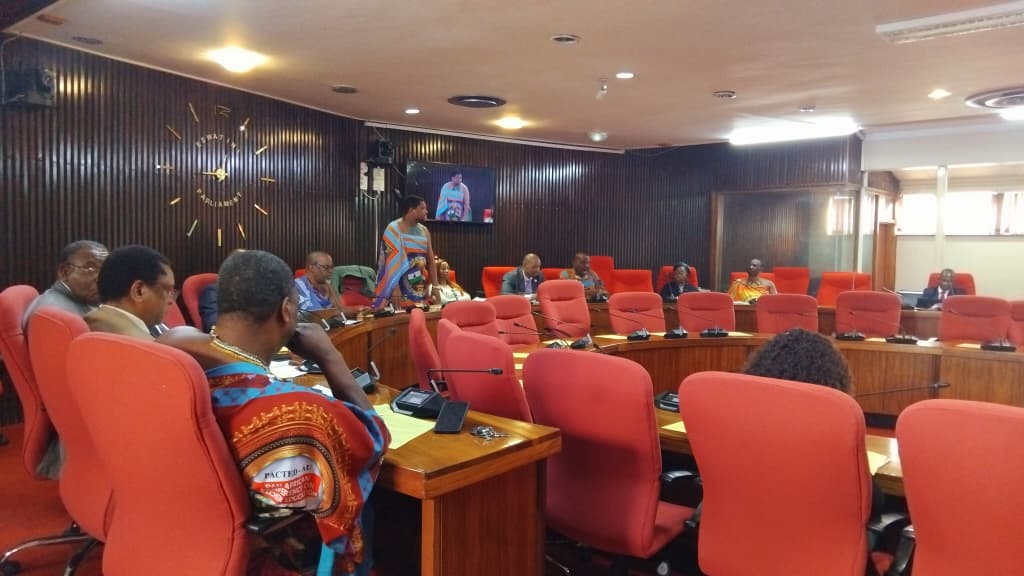
Lobamba – Government has been challenged to ensure that billions of emalangeni borrowed to finance development projects translate into tangible benefits for emaSwati, with senators insisting that good plans on paper must produce practical solutions on the ground.
The call was raised by Senator Siphelele Mkhonta during Senate proceedings on Wednesday, October 28, 2026, as senators considered reports on four loan-related bills, including a proposed E2.4 billion loan for the National Housing and Infrastructure Programme and a government guarantee of approximately E455 million for the Eswatini Posts and Telecommunications Corporation (EPTC).
Senator Zabeni even concord His Majesty King Mswati III call “ Inkhomo ayishekise umniyo”. He was supporting that the loans must benefit emaSwati.
The concern centres on whether the loans will deliver meaningful improvements in the lives of ordinary emaSwati, particularly through housing, infrastructure and access to digital services, instead of leaving the country with financial obligations without sufficient benefits to show for the borrowing.


The four bills before Senate were the International Bank for Reconstruction and Development (EPTC) Loan Guarantee Bill No. 13 of 2026, the International Development Association (Digital Eswatini Project) Loan Bill No. 14 of 2026, the International Bank for Reconstruction and Development (Inclusive Digitalisation in Eastern and Southern Africa Multiphase Programmatic Approach Programme) Loan Bill No. 15 of 2026, and the Development Bank of Southern Africa (National Housing and Infrastructure Programme) Loan Bill No. 17 of 2026.


The proposed E2.4 billion loan from the Development Bank of Southern Africa (DBSA) is intended to finance the National Housing and Infrastructure Programme, which is expected to support housing and related infrastructure projects across the country.
The scale of the proposed borrowing raises questions about how the funding will be distributed, which communities will benefit and how government will ensure that the projects meet the country’s development needs.
For emaSwati, the value of the programme will ultimately be measured by the housing and infrastructure delivered, rather than the amount of money secured.
The EPTC loan guarantee also carries financial implications for the country. Under the proposed arrangement, the government would guarantee a US$26 million loan, equivalent to approximately E455 million, from the International Bank for Reconstruction and Development, part of the World Bank Group.
EPTC would be the direct borrower, while government would act as guarantor. If the corporation failed to meet its repayment obligations, the guarantee could expose government to financial liability.
This makes accountability particularly important, as public resources could be affected if the borrowing does not achieve its intended purpose or the corporation cannot meet its obligations.
The two other bills relate to digitalisation initiatives, including the Digital Eswatini Project and the Inclusive Digitalisation in Eastern and Southern Africa Multiphase Programmatic Approach Programme.
The intended public value of these initiatives will depend on how effectively they improve access to digital services and extend the benefits of technology to emaSwati.
The challenge, therefore, is to ensure that the financing arrangements are followed by effective implementation, with clear objectives and measurable results.
As government pursues development financing, the debate places renewed attention on the need to connect borrowing decisions with the everyday needs of citizens. Housing, infrastructure and digital services must produce visible improvements if the loans are to justify the financial obligations attached to them.
The expectation is that the projects will be implemented transparently, with progress monitored and the public able to see what the borrowed money has delivered.
Ultimately, the success of the loans will depend not only on whether the financing is approved, but on whether it produces practical solutions that improve the lives of emaSwati.


Discussion about this post