



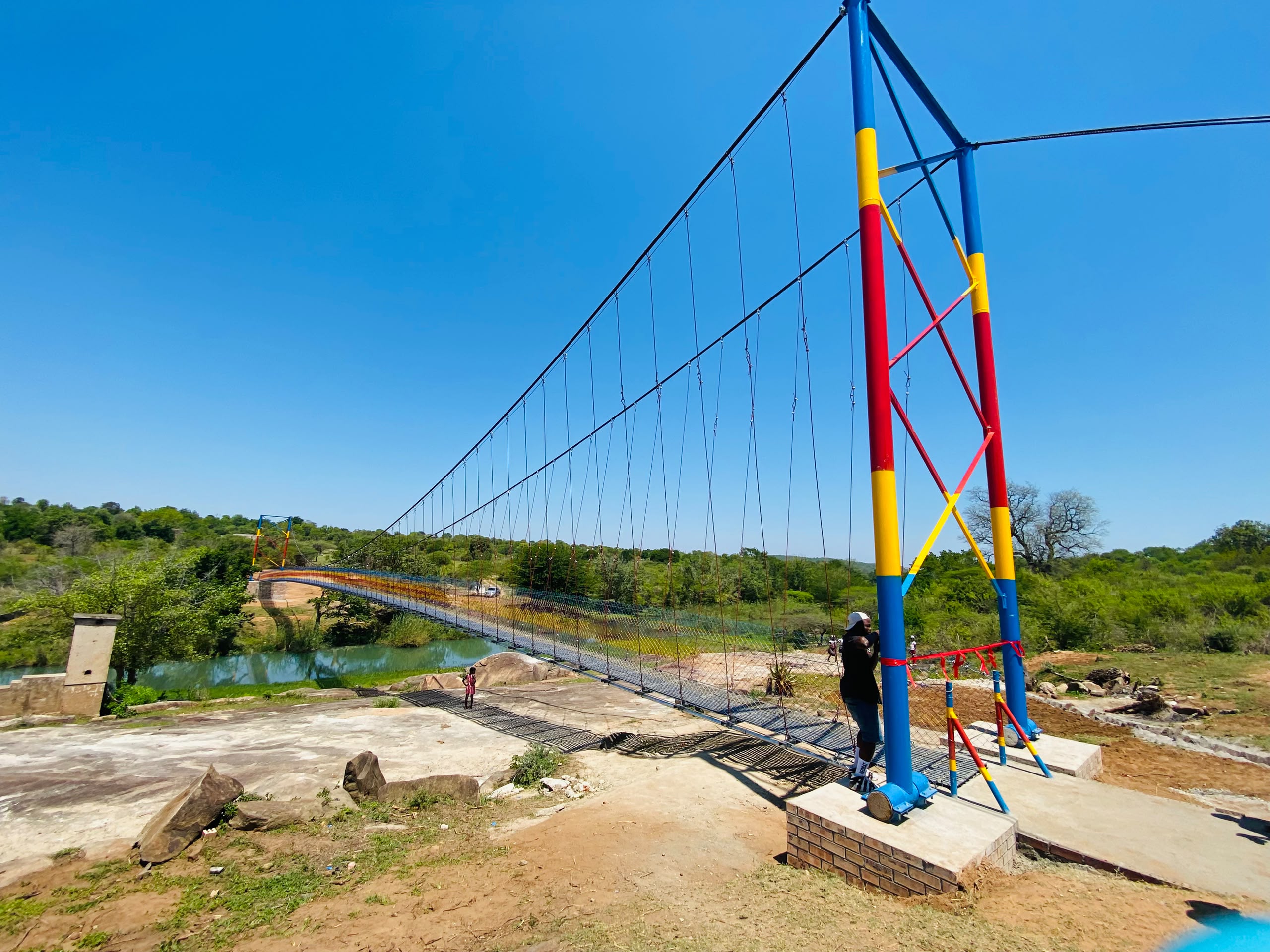
SIPHOFANENI – Residents of KaGamedze and Ngcamphalala are set to enjoy safer access to schools, clinics and other essential services following the official opening of the Nkosinathi Suspension Footbridge on Friday.
The 87-metre bridge, which cost E1.35 million, was officially opened by the Ministry of Economic Planning and Development through its Microprojects Programme, in partnership with Engineers in Action (EIA).
The bridge is the 44th pedestrian bridge constructed through the partnership since 2017 and is expected to address longstanding safety concerns associated with crossing the river, particularly during the rainy season when rising water levels can make traditional crossings dangerous or impassable.
A key feature of the new structure is its steel walking deck, which is the first of its kind under the Eswatini programme. Unlike previous pedestrian suspension bridges that traditionally used timber decking, the Nkosinathi bridge incorporates steel decking fully funded by Engineers in Action.


The new design is expected to improve durability, reduce long-term maintenance requirements and provide a more reliable crossing for residents for years to come.
Speaking at the official opening, Minister of Economic Planning and Development Dr Thambo Gina emphasised that the project’s success should be measured by its impact on people’s daily lives.
“The true value of this bridge will be measured in the lives that it changes. It will be measured by the children who can now travel to school safely, by families who can access clinics and markets throughout the year, and by communities that will no longer become isolated during periods of heavy rainfall,” he said.
The bridge is expected to improve connectivity between KaGamedze and Ngcamphalala, reducing the risks previously faced by residents who depended on the river crossing to reach essential services.
Siphofaneni Member of Parliament Nomalungelo LaZwide Simelane also expressed gratitude for the development, highlighting the role of the bridge in bringing the two communities closer together.
Beyond its immediate benefits, the project represents a broader effort to improve rural infrastructure through cooperation between Government, development partners, professional engineers and local communities.
Since the partnership began with a pilot bridge in Edlangeni in 2017, Microprojects and Engineers in Action have constructed 44 pedestrian footbridges across 34 Tinkhundla, reaching approximately 117,000 beneficiaries.
The partnership has also delivered five clean-water systems for schools across five Tinkhundla, benefiting approximately 1,500 schoolchildren.
More than 50 international teams from the United States, Canada, the United Kingdom and other countries have participated in the programme over the past nine years, contributing technical expertise alongside local teams and communities.
The Nkosinathi project also received technical support from professional engineers representing United States-based engineering companies Burns & McDonnell, Parsons and Fortis.
The collaboration is expected to expand in 2027, with plans to construct nine additional pedestrian footbridges, three clean-water systems and five boreholes for schools.
The upcoming construction season will also mark 10 years of Engineers in Action operating in Eswatini.
Minister Gina said the programme’s growth demonstrated the value of partnerships in delivering infrastructure that responds to community needs.
“The growth of this programme from one pilot bridge in 2017 to the range of infrastructure projects being implemented today is evidence of what can be achieved when Government, communities, development partners and technical professionals work together with a shared purpose,” he said.
The Ministry also acknowledged the contribution of traditional leaders, the Regional Administration, the project committee, professional partners and community members who supported the project.


Residents were encouraged to take ownership of the bridge and protect the structure to ensure that it continues serving present and future generations.
The Nkosinathi Suspension Footbridge forms part of ongoing national efforts to strengthen rural connectivity and ensure that communities can access essential services safely throughout the year.


Discussion about this post