



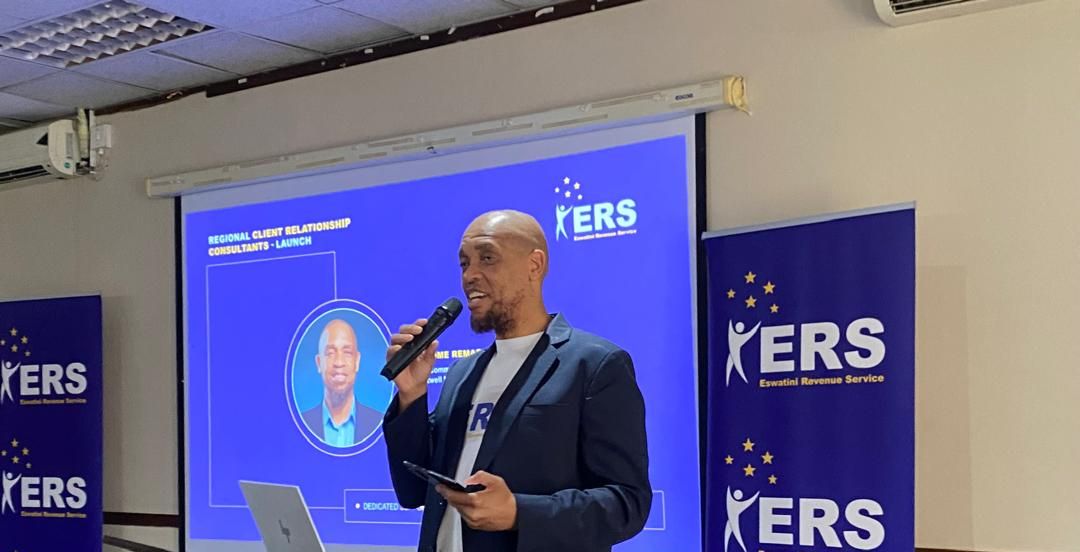
Manzini – Eswatini’s small-business sector is pressing for changes to tax administration rules, saying short Tax Clearance Certificate validity periods are creating unnecessary costs and delays, even as the Eswatini Revenue Service launches a nationwide initiative to bring taxpayer support closer to businesses.
The call was made during the launch of the ERS Regional Client Relationship Consultant (CRC) Model at The George Hotel in Manzini on Wednesday, where the business community raised concerns over the practical challenges companies face when meeting tax and regulatory requirements.
Federation of Eswatini Business Community (FESBC) First Vice President Elijah Dlamini urged the revenue authority to extend the validity of Tax Clearance Certificates (TCCs) for small and medium enterprises to at least three months.
Dlamini said a longer validity period would help businesses manage their cash flow while pursuing commercial opportunities, as companies would not have to repeatedly obtain tax clearance documents within short periods.


The issue comes as ERS moves to establish a more direct relationship with businesses through its regional CRC model, which assigns dedicated consultants to assist taxpayers from local ERS service centres.
The model is being introduced with small and micro businesses in mind, providing them with a designated point of contact for tax-related queries, compliance guidance and referrals to relevant ERS services. The Manzini rollout covers businesses operating in Manzini and Matsapha, with the approach expected to be extended to other regions through a nationwide roadshow.
For businesses, the regional model could reduce the distance between taxpayers and the revenue authority, particularly for smaller enterprises that may not have specialized tax personnel.
ERS Head of Domestic Revenue and Commissioner-Domestic Taxes Pearl Muir-Dlamini said the intention was to make tax services more accessible by bringing them closer to businesses.
“We want to bring ERS closer to you,” Muir-Dlamini said.
ERS Commissioner General Brightwell Nkambule said the revenue authority’s responsibility extended beyond enforcement, stressing that taxpayers needed assistance to understand and meet their obligations.
“Our role is to assist in tax compliance,” Nkambule said.
The regional engagement also introduced businesses to the SME Tax and Customs Compliance Toolkit and provided information on the accreditation of e-invoicing vendors. A question-and-answer session allowed businesses to raise tax and customs concerns directly with ERS officials.
The rollout therefore places taxpayer support and compliance at the centre of ERS’s engagement with the SME sector, while the call for longer TCC validity highlights some of the administrative issues businesses want addressed as they interact with the revenue system.


The Manzini engagement is the first stop in the ERS countrywide roadshow, with the regional service model expected to be taken to businesses in other parts of the country.


Discussion about this post