



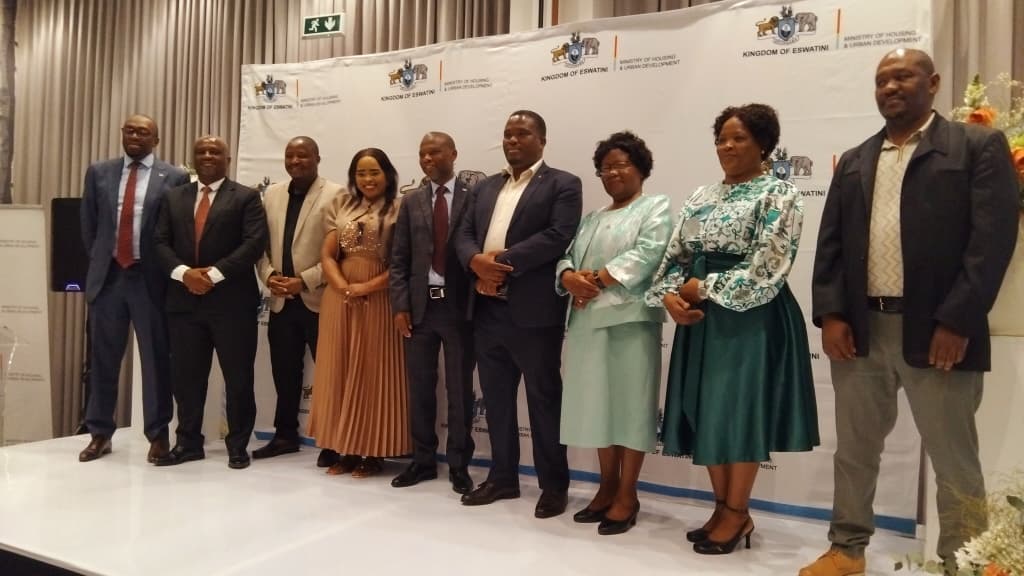
Mbabane – Urban authorities are struggling to match their expanding responsibilities with limited financial resources, Minister of Housing and Urban Development Hon. Appolo Maphalala has said.
Maphalala said the country’s municipalities were increasingly expected to provide complex services, including digital transformation, climate-resilient infrastructure, housing and essential social services, despite facing revenue shortfalls and limited traditional funding options.
He was speaking during the official launch of the second Eswatini Urban Forum 2026, which will be held from October 28 to 30 under the theme: “Empowering Eswatini’s Local Authorities, Financing Smart Solutions, Resilient Infrastructure, and Housing for All.”
“The mandate is so huge, but the resources usually are not enough to cover the extent of the mandate,” Maphalala said, describing the mandate-resource gap as a common challenge facing all local authorities.


He said the forum, which follows the inaugural National Urban Forum held in 2024, would seek practical solutions to the financial and developmental pressures facing Eswatini’s towns and cities. The minister said the discussions would draw on international experiences, including lessons from the National Urban Forum in Baku, Azerbaijan, particularly on sustainable housing, climate resilience and innovative financing.
Maphalala said Eswatini could not continue relying solely on traditional funding mechanisms if municipalities were expected to meet their growing responsibilities.
“If we rely on the traditional funding modalities that we have always had, we cannot take our municipalities anywhere,” he said, calling for innovative approaches to financing local government.
He said one of the key objectives would be to explore sustainable revenue systems that could give local authorities greater capacity to deliver services and implement development programmes.


The minister said the forum would also examine how towns and cities could accelerate climate-resilient infrastructure and smart-city initiatives. He said the smart-city project being implemented in Mbabane with support from Taiwan, which includes cameras and sensors for adverse weather conditions, would be extended to Ezulwini, Matsapha and Manzini before eventually being rolled out across the country.
However, Maphalala cautioned that smart cities should not be reduced to the installation of technological equipment.
“Smart cities is not only about cameras and equipment and high mast lights and all of those things,” he said, stressing that urban authorities also needed to rethink town-planning schemes and development codes to make them responsive to climate change.
He cited recent hail as an example of the changing environmental conditions that urban authorities needed to prepare for, saying infrastructure and planning systems had to anticipate such risks.
Housing will also form a major part of the forum, with Maphalala revealing that the country has about 52 informal settlements requiring intervention.
He said the ministry was already working on upgrading informal settlements in areas including Matsapha, Piggs Peak and Mbabane, while security of tenure had been prioritised in the settlements.
The minister said there was also a need for a clear national policy on social housing, particularly in urban areas where housing interventions face additional requirements relating to land ownership and security of tenure.
He said the country needed to determine whether government should directly provide housing for citizens or focus on creating an enabling environment and housing products that allow citizens to provide housing for themselves.
Principal Secretary in the ministry Dr Simon Zwane said urbanisation was already taking place and required deliberate planning if the country was to avoid uncontrolled development.
“The future is urban. Whether we like it or not, urbanisation is happening right now, and at its own pace,” Zwane said.
He said failure to properly manage urbanisation could result in undesirable development patterns, particularly along the Manzini-Matsapha corridor.
Zwane said the ministry was also working towards developing a housing profile to establish the factors contributing to or preventing access to affordable housing.
He said infrastructure gaps remained a concern, particularly in informal settlements, while climate change required towns and communities to become more resilient.
He said the forum would bring together central government, local authorities, development partners, parliamentarians, communities, youth, academia, civil society and the private sector to identify priorities and develop implementation mechanisms.
Zwane said the objective was to move beyond discussions and ensure that agreed priorities translated into measurable impact.
The forum will focus on six sub-themes: sustainable revenue streams; bridging the mandate-resource gap; infrastructure resilience and climate adaptation; inclusive governance, youth empowerment and local economic development; accelerating the smart-city blueprint in Eswatini; and housing for all.
Maphalala said the forum would provide an opportunity to mobilise financing for infrastructure and housing gaps while strengthening partnerships between government, municipalities, development partners and private investors.
The Eswatini Urban Forum 2026 has been officially launched, with registration scheduled to open on Monday, September 28, 2026. Urban planners, housing practitioners, developers and other stakeholders are expected to participate in the three-day forum.


Discussion about this post