



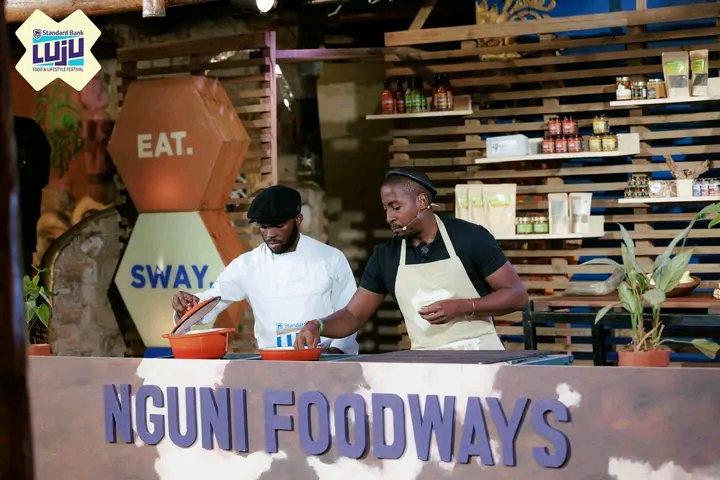
Mbabane- The Standard Bank Luju Food and Lifestyle Festival is increasingly emerging as a platform for SME growth, after participating businesses recorded a 17 per cent increase in sales during this year’s expanded two-day event.
The eighth edition of the festival, held earlier this month at House On Fire, attracted more than 10,000 people from 35 countries, while creating over 620 employment opportunities across production, hospitality, trading and related services.
Festival Director Jiggs Thorne said the festival’s long-term ambition was to extend its economic reach beyond Eswatini by building stronger connections across Southern Africa.“Luju was always designed to grow beyond Eswatini’s borders,” Thorne said, citing the festival’s recent launch events in Johannesburg and Maputo as early steps towards its regional expansion.
He said the intention was to deepen partnerships in trade, talent and tourism, while positioning Luju as a platform through which SMEs, artists and designers could access opportunities across the region.The 17 per cent growth in SME sales comes after the festival introduced its first full two-day format, giving traders an extended period to engage with the thousands of visitors attending the event.


The festival featured 113 traders, alongside 49 music acts, 15 designer collections and culinary practitioners from across Southern Africa.Regional participation included businesses and creatives from South Africa, Mozambique and Lesotho, widening the market exposure available to participating enterprises.
The festival’s regional ambitions were also reflected in the presence of more than 10 representatives from Mozambique’s National Institute of Cultural and Creative Industries.Led by National Director Ivan Bonde, the delegation visited Luju to examine its festival model, including its public-private partnership approach and digital marketing strategy.
The engagement provided an opportunity for knowledge exchange while also strengthening Eswatini’s position within the region’s growing creative economy.Cross-border business participation was further demonstrated by Lesotho-based designer Chere Mongangane of Bonono Merchants, who exhibited at Luju’s Fashion Café with support from Standard Bank Lesotho.


Mozambican company Marrabenta Special Events and Technologies also participated in the festival’s technical and sound production, highlighting the opportunities created for regional businesses beyond the festival’s trading spaces.
For Thorne, such partnerships form an important part of Luju’s next phase of growth. “Looking ahead, our focus is on deepening those regional partnerships across trade, talent and tourism so Luju becomes a launchpad for SMEs, artists and designers across Southern Africa, not only in Eswatini,” he said.
The strategy places SMEs at the centre of the festival’s expansion, with organisers seeking to create an environment where businesses can trade, build networks, gain visibility and establish relationships that could open markets beyond Eswatini.
The 17 per cent increase in sales therefore provides an important measure of the festival’s commercial impact, particularly as Luju seeks to scale its regional footprint.With more than 10,000 visitors, international representation from 35 countries and increased sales among participating SMEs, the festival is demonstrating the economic potential of combining culture, tourism and commerce.

Discussion about this post