



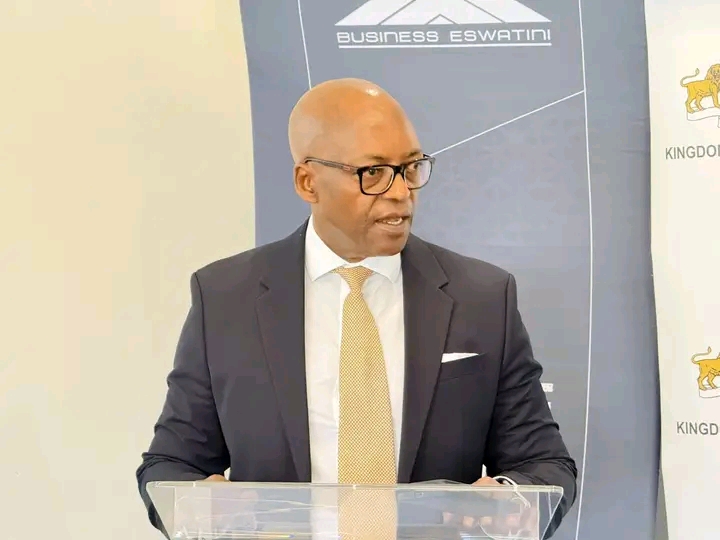
Mbabane – Business Eswatini (BE) and three labour federations have questioned the legality of the Minister for Labour and Social Security Phila Buthelezi’s decision to dissolve the Board of the Eswatini National Provident Fund (ENPF), claiming there is no provision in the law that empowers him to dissolve the entire Board.
The claims are contained in a joint media statement issued on Wednesday by Business Eswatini, the Trade Union Congress of Swaziland (TUCOSWA), the Federation of Eswatini Business Community (FESBC) and the Federation of Swaziland Trade Unions (FESWATU), following the Minister’s decision to dissolve the ENPF Board.
The organizations said they were unaware of any provision in the ENPF Order No. 23 of 1974, as amended, that gives the Minister authority to dissolve the Board in its entirety. They called on him to disclose, in writing, the legal basis upon which the decision was made.
The social partners further argued that the Board was dissolved before Parliament had debated and adopted the report of the Select Committee that investigated the governance crisis at the Fund.

“We record with serious concern that, before Parliament has had the opportunity to debate and adopt the Select Committee’s report, the Minister has dissolved the Board of Directors in its entirety,” the statement reads.


The organizations also claimed they were not formally informed of the Board’s dissolution, despite being the recognised federations that nominate employer and worker representatives to the ENPF Board.
Instead, they said they learnt of the decision through government social media platforms, which they described as an inappropriate channel for communicating such a significant decision.
According to the statement, the governance dispute dates back to October 2025 when a Board chairperson was appointed outside what the organizations described as the long-standing rotational arrangement between employer and worker representatives.
They said repeated attempts to engage the Minister from November 2025 failed after he allegedly declined requests for dialogue. The organizations added that they later sought intervention from the Office of the Prime Minister, where two meetings were held but did not resolve the impasse.
The statement notes that Parliament subsequently established a seven-member Select Committee after a Motion of Urgent Public Importance was tabled in the House of Assembly. The committee heard evidence from the Minister for Labour and Social Security, the former minister, the Attorney General, the Financial Services Regulatory Authority, ENPF management, the Board chairperson and the social partners before tabling its report.
The four organizations said they remain committed to the long-standing practice of rotating the ENPF Board chairperson between employer and worker representatives and called for urgent consultations with the Minister before any further decisions are taken on the composition or leadership of the Board.

Discussion about this post