



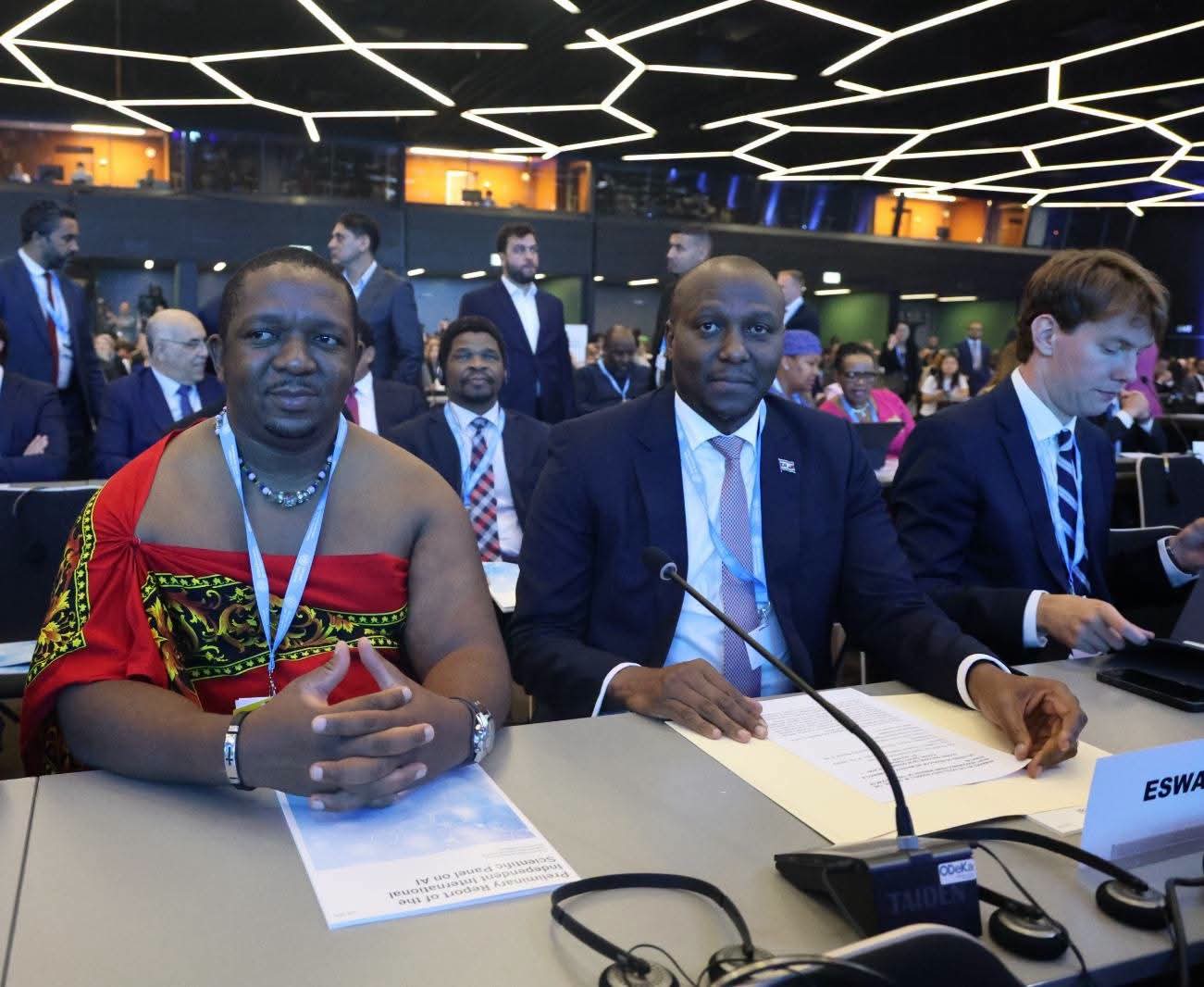
MBABANE- The Kingdom of Eswatini has called for a human-centred approach to artificial intelligence (AI) governance, urging the global community to ensure that technological advancement promotes human dignity, protects cultural diversity and supports sustainable development.
Speaking on behalf of His Majesty King Mswati III at the Global Dialogue on AI Governance 2026 in Geneva, Switzerland, Prime Minister Russell Mmiso Dlamini said AI has already become an integral part of modern society, influencing education, governance, healthcare, agriculture, trade and environmental protection.
Addressing world leaders, United Nations officials and international delegates, the Prime Minister stressed that the key challenge is no longer whether AI will transform societies, but how governments can guide that transformation responsibly.
“For countries such as Eswatini, AI governance must begin with a simple principle: technology must serve people,” he said. He noted that AI should improve citizens’ daily lives by strengthening public services, boosting food security, improving healthcare, expanding educational opportunities, supporting climate resilience and creating sustainable economic growth.


The Prime Minister also cautioned against AI promoting a single global perspective at the expense of cultural diversity. He argued that AI systems should respect different languages, traditions, values and social contexts rather than imposing uniform standards across the world.
He highlighted the challenges faced by small and developing nations, warning that they should not become mere consumers of technologies developed elsewhere without consideration for their unique realities and development priorities. Instead, he called for greater investment in local innovation, research, digital literacy, computing infrastructure and trusted data ecosystems to enable equitable participation in the AI revolution.
Dlamini outlined Eswatini’s ongoing efforts to prepare for the digital future through its National Fourth Industrial Revolution Strategy. The country is investing in digital skills development, including coding, data science and AI education for young people, while strengthening expertise through national learning institutions.
He emphasised that automation should complement human capabilities without undermining employment, social cohesion, dignity or cultural identity.
The Prime Minister further stressed that innovation can only succeed where trust exists. He called for AI systems to remain subject to human oversight and accountability, insisting that algorithms must adhere to principles of fairness, transparency, human rights and public safety.
Special attention, he said, must be given to protecting children from manipulation, harmful content, addictive technologies and profiling, arguing that no society should allow machines to shape childhood or moral development.


He also called for enforceable national and international legal frameworks governing AI, including stronger protections for privacy, cybersecurity, data security and critical information infrastructure. While voluntary guidelines are valuable, he maintained that binding regulations with clear accountability mechanisms are essential.
Eswatini welcomed ongoing efforts by the United Nations, UNESCO and the African Union to develop global AI governance standards, while encouraging greater inclusion of developing countries in shaping future policies.
Concluding his address, the Prime Minister said the true success of AI would not be measured by technological sophistication, but by its ability to improve people’s lives. He urged world leaders to work towards an AI future that is safe, inclusive, culturally aware, legally accountable and firmly centred on humanity.


Discussion about this post