



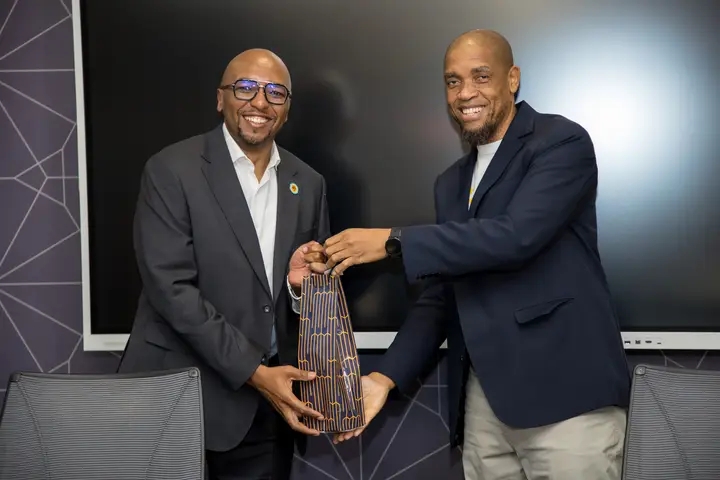
Mbabane – The Eswatini Revenue Service (ERS) and FNB Eswatini have successfully integrated their payment systems, enabling traders to make customs payments that are reflected on the ASYCUDA trade platform in near real time.
The development marks a significant step towards digitizing customs processes and improving ease of doing business in Eswatini by reducing delays associated with manual payment verification.
Speaking during the in- house launch of the integration, ERS Commissioner General Brightwell Nkambule said the project was a major milestone in the organisation’s drive towards achieving full compliance through technology and automation.
“Our vision is 100 per cent voluntary compliance. This project is therefore very significant because we have made a major step in interfacing our systems with those of FNB Eswatini,” said Nkambule.


He explained that under the previous arrangement, a manual process was required to reconcile payments made by taxpayers with records in the ERS system. This involved officials downloading bank statements and manually uploading payment information into the tax system before traders could proceed with customs declarations.
“With this initiative, that manual interface has been fully automated. Once a taxpayer makes a payment, the system automatically credits the taxpayer’s account within ERS, removing the need for human intervention,” he said.
Nkambule noted that the integration would enhance efficiency, improve compliance and significantly reduce waiting times for traders.The new system allows payments made through FNB Eswatini into the ERS Customs Bank Account to be reflected almost instantly on ASYCUDA, enabling traders to process declarations more quickly.
FNB Eswatini Chief Executive Officer Thokozani “TK” Dlamini said the bank was committed to supporting initiatives that simplify compliance and improve customer experience. “Compliance is not an option, but it must be painless,” said Dlamini. “As FNB, we committed ourselves to continuously participate in finding solutions that make processes easier for customers and stakeholders,” he added.
He commended both the ERS and FNB technical teams for successfully delivering the project and reaffirmed the bank’s commitment to supporting digital transformation initiatives.


Dlamini said the integration demonstrates how collaboration between financial institutions and public sector agencies can create practical solutions that improve service delivery and strengthen the country’s business environment.
ERS also acknowledged FNB Eswatini for becoming the first bank to complete the integration, describing the achievement as a demonstration of the shared commitment by both institutions to innovation, efficiency and service excellence.
The integration is expected to benefit importers, exporters and clearing agents by streamlining customs payment processes, reducing administrative bottlenecks and accelerating the movement of goods through the country’s borders.


Discussion about this post