



Mbabane- The Minister of Commerce, Industry and Trade, Manqoba Khumalo, has urged regulators to
intensify oversight of mergers and acquisitions, warning that while business consolidations can attract
investment and stimulate economic growth, they also carry the risk of creating dominant market players
that undermine competition and harm consumers.
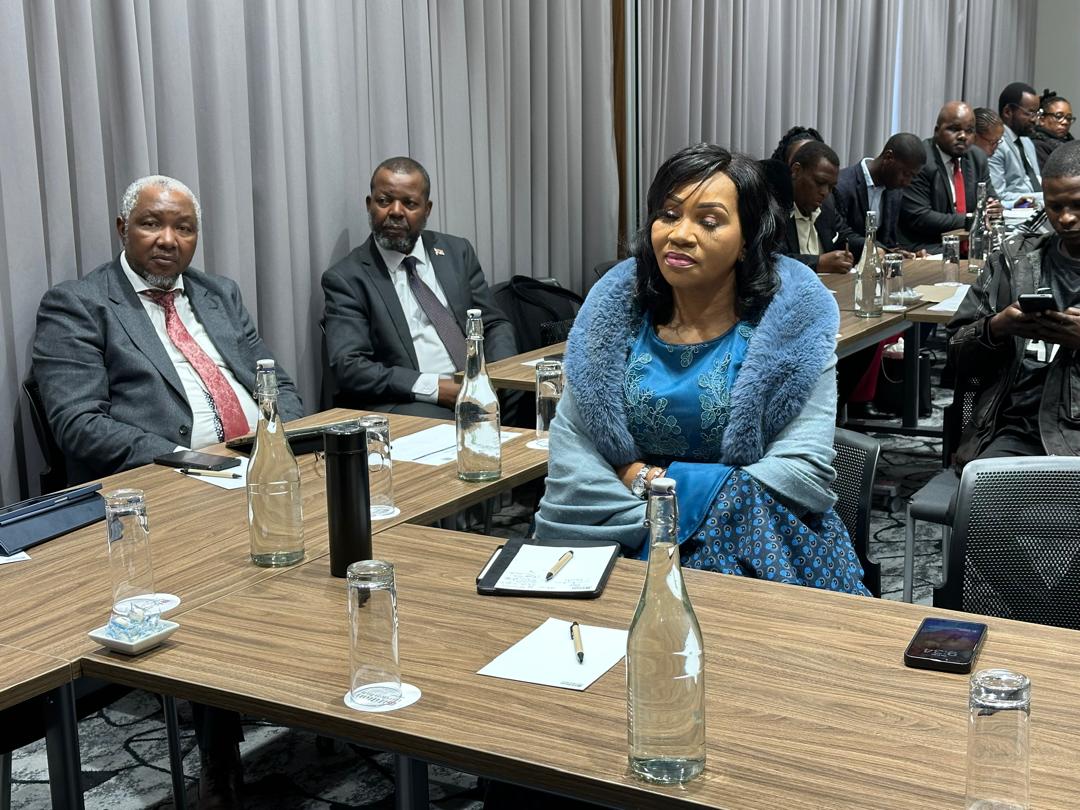
The minister made the remarks during a workshop between the Senate Portfolio Committee under the
Ministry of Commerce, Industry and Trade and the ministry’s parastatals, including the Eswatini
Competition Commission (ECC) and the Eswatini Standards Authority (ESWASA).
Khumalo said regulators have a critical role to play in ensuring that mergers and acquisitions contribute
positively to the economy without compromising fair competition.
“Monitor mergers and acquisitions closely,” the minister tasked the organizations. “While they can
stimulate investment and business growth, they can also lead to excessive market concentration if they
are not properly regulated,” he added.


He noted that competition is essential for innovation, quality products and fair pricing, cautioning that
dominant firms often abuse their market power at the expense of consumers.
“Abuse of dominance destroys competition, and as a result quality is compromised,” said Khumalo.
The minister’s remarks come at a time when competition authorities across the world are increasingly
scrutinizing corporate mergers amid concerns that excessive concentration in key sectors can reduce
consumer choice and weaken market competitiveness.
The workshop provided a platform for lawmakers and regulatory agencies to discuss challenges affecting
consumer protection, standards enforcement and competition regulation in the country.
Responding to presentations made by the regulators, senators expressed support for both ESWASA and
ECC, arguing that the institutions are expected to deliver on important national mandates despite facing
resource constraints.
On ome note, Senator Dr. Linda Nxumalo said the two entities require greater support if they are to
effectively carry out their responsibilities.
“The entities are under-resourced,” she said, adding that there remains a significant gap in consumer
awareness.
Dr. Nxumalo stressed that consumers need to be better informed about their rights and the standards
they should expect from products and services available on the market.
“There is a gap in customer awareness. Customers should know what to expect,” she said.
Her comments were echoed throughout discussions that focused on the need for stronger consumer
education programmes and broader outreach efforts, particularly in rural communities where
awareness of standards and consumer rights remains limited.
It was revealed that many small-scale producers continue to struggle to meet required production
standards due to inadequate facilities.
The Managing Director of ESWASA Ncamiso Mhlanga revealed that inspections conducted by the
authority found that some producers were manufacturing products in unsuitable environments.
“During some of our inspections we found that certain producers were making products in their
kitchens,” he respectfully said.
To address this challenge, ESWASA has established production cottages in various parts of the country
to provide compliant facilities for small producers.


The managing director said six cottages have already been constructed nationwide, including facilities in
Mliba and Lugongolweni, among other areas.
The initiative is intended to help entrepreneurs access appropriate production spaces while ensuring
that products entering the market comply with national standards.
The proposal received support from senators, who argued that expanding the programme could
significantly improve product quality and market access for rural businesses.
Senator Fezeka advocated for a more ambitious rollout of the initiative.
“Every Inkhundla should have at least one cottage,” she said.
She argued that decentralizing such facilities would help bridge existing gaps in production standards
while creating opportunities for rural entrepreneurs to participate more effectively in the formal
economy.
The senator noted that many small businesses have the potential to grow but are constrained by a lack
of compliant production infrastructure.
Meanwhile, Senate President Hon. Lindiwe Gwebu-Dlamini called for closer collaboration among
institutions operating under the Ministry of Commerce, Industry and Trade.
She said stronger alignment between the entities would improve efficiency and enhance service
delivery.
“The entities need to be aligned,” she said.
Gwebu-Dlamini assured regulators that government remains committed to supporting their work.
“As Cabinet, we are ready to support them in every way possible,” she said.
The Senate President also raised concerns about what she described as an imbalance in standards
inspection activities between urban and rural areas.
She argued that communities in rural parts of the country appear to receive less attention despite facing
many of the same consumer protection and product quality challenges as urban centres.
“Rural areas are neglected in terms of product standards inspections,” she said adding that Inspections
are only done in urban areas.”
Her remarks highlighted the broader challenge of ensuring equitable regulatory coverage across the
country, particularly as government seeks to promote inclusive economic development.
The discussions underscored the interconnected roles played by ECC and ESWASA in protecting
consumers and supporting economic growth. While ECC focuses on preventing anti-competitive
conduct, monitoring mergers and acquisitions and promoting fair markets, ESWASA is responsible for
developing and enforcing standards that safeguard product quality, health and safety.
The workshop ultimately highlighted a shared commitment among policymakers, regulators and
lawmakers to ensure that economic growth is accompanied by fair competition, quality products and
stronger protection for consumers across both urban and rural communities.


Discussion about this post