



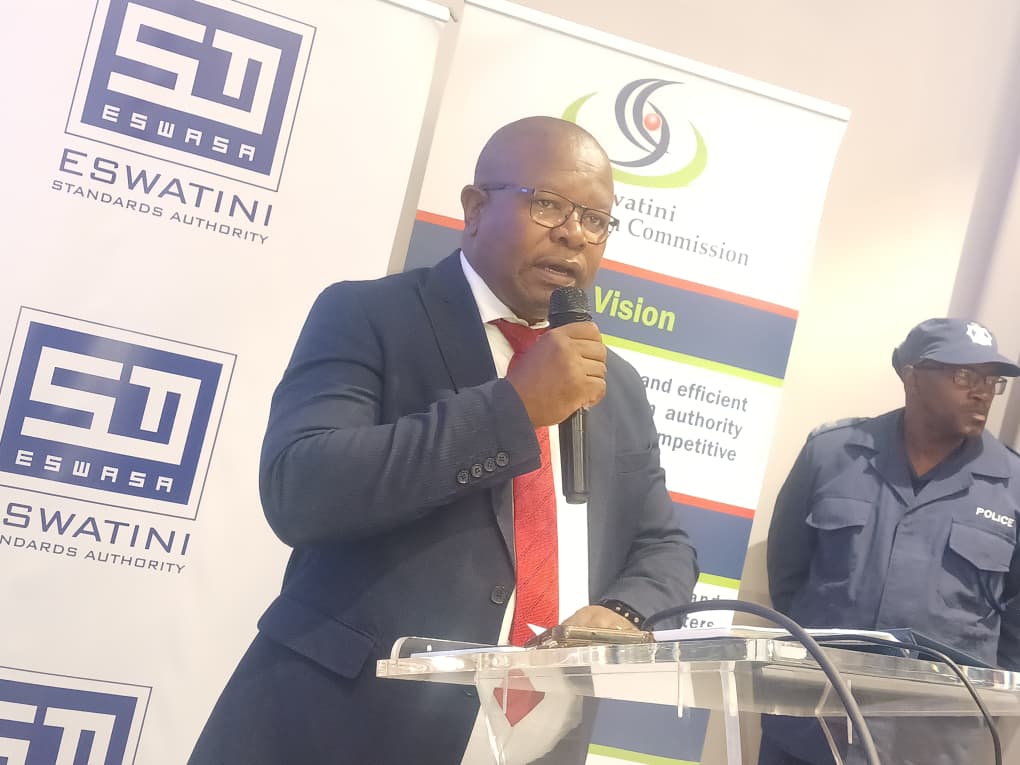
Mbabane– The Minister of Commerce, Industry and Trade Honourable Manqoba Khumalo have urged lawmakers to confront regulatory weaknesses that could undermine Eswatini’s economic transformation agenda, as government intensifies efforts to strengthen oversight institutions critical to market stability, consumer protection and industrial growth.
Opening a high-level workshop for portfolio committees under the ministry, Khumalo cautioned that gaps in legislation and enforcement capacity could limit the effectiveness of key regulatory bodies such as the Eswatini Standards Authority (ESWASA) and the Eswatini Competition Commission (ESCC).
He said Parliament carries a critical responsibility not only to oversee these institutions, but also to ensure they are adequately empowered through stronger laws, sufficient resources and clear policy direction.
The workshop brought MPs of the House of Assembly to deepen their understanding of ESWASA and ESCC, both of which the minister described as central to building a competitive, safe and efficient economy.


Khumalo said ESWASA plays a frontline role in protecting consumers from unsafe and substandard goods while supporting businesses to meet international quality standards required for export competitiveness.
He warned that without effective standards enforcement, consumers remain exposed to unsafe products and legitimate businesses are placed at a disadvantage in an uneven market.
On competition regulation, he said the ESCC remains essential in preventing anti-competitive behaviour, promoting fair pricing, and ensuring that markets are not dominated by unfair practices that limit entry for small and emerging enterprises.
“Competitive markets are not automatic, they must be protected and enforced,” he said, adding that weak enforcement risks higher prices, reduced innovation and restricted economic opportunity.
He further stressed that the work of ESWASA and ESCC is mutually reinforcing, with standards ensuring quality and safety while competition policy ensures fairness and efficiency in the marketplace.


The minister also highlighted complementary briefings from the Intellectual Property Department and the Department of International Trade, noting that innovation protection and trade facilitation are key pillars of Eswatini’s economic strategy under the Nkwe Programme of Action.
Khumalo urged legislators to actively interrogate institutional challenges during the workshop, saying meaningful engagement would help close policy and enforcement gaps affecting economic regulation.


Discussion about this post