



Matsapha- Eswatini is among the lowest investors in research and development (R&D) in Southern
Africa, a trend that threatens the country’s ability to build a competitive, knowledge-based economy
and reduce its dependence on raw commodity exports.
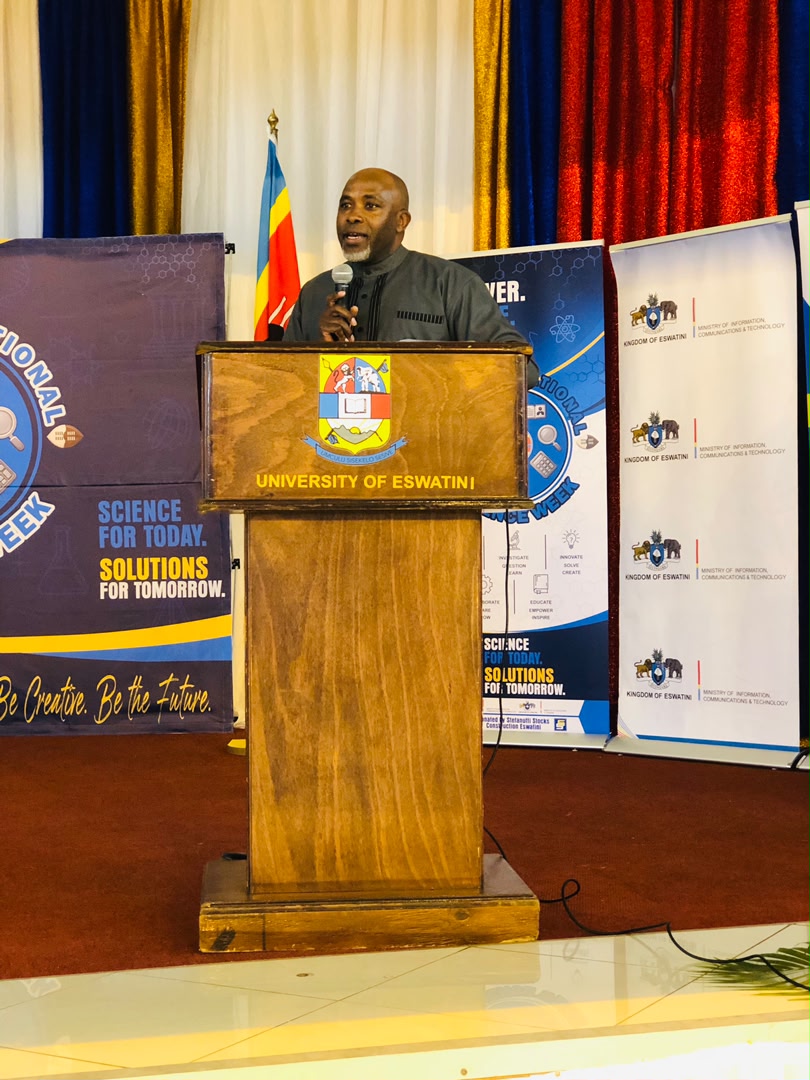
This warning was issued by United Nations Resident Coordinator George Wachira during the launch of
the National Science Month at the UNESWA Sports Emporium on Monday.
Wachira said despite growing recognition that science, technology, engineering and mathematics
(STEM), digitalization and innovation are key drivers of economic transformation, Africa continues to
struggle with what he termed an “innovation gap” caused largely by inadequate investment in research
and development.
According to Wachira, Africa contributes only one percent of global research output, with most
countries investing less than 0.5 percent of their Gross Domestic Product (GDP) in R&D. Eswatini’s
expenditure is even lower, standing at just 0.27 percent of GDP.


“Here in Eswatini, the World Bank records domestic R&D expenditure at just 0.27 percent of GDP,” said
Wachira.
He noted that the figure falls significantly below the African Union’s target of one percent of GDP and
lags behind the global average of more than 2.6 percent. He added that, outside South Africa, most
SADC countries invest less than 0.3 percent of GDP in research, leaving the region heavily reliant on
external partners for scientific advancement and technological development.
Wachira said the consequences of underinvestment are visible across the continent, where universities
remain underfunded, laboratories lack modern equipment and innovation struggles to flourish.


“This tight funding envelope means that local university budgets are consumed almost entirely by
administrative and personnel costs, leaving virtually zero capital for advanced laboratory equipment,
software or exploratory science,” he said.
The UN official further highlighted Africa’s weak patent performance, noting that the continent registers
only about 5,000 patents annually compared to more than 600,000 in Asia. While Asia accounts for
roughly 68 percent of global patent activity, Africa contributes only 0.2 percent.
“A key reason for the export of raw commodities is the fact that the continent lags in indigenous
technological patents, industrial software and metallurgy expertise required to operate advanced
refineries, making them entirely dependent on foreign multinational operators,” he said.
Wachira stressed that without stronger investment in research, innovation and intellectual property
protection, African countries would struggle to transition from resource-based economies to
knowledge-driven economies capable of creating high-value industries and sustainable jobs.
He called on governments, the private sector and development partners to increase funding for
research, support innovation ecosystems and strengthen links between universities and industry.
The National Science Month is being observed under the theme “STEM and Digital Transformation as
Drivers of a Resilient Economy and Enhanced Quality of Life.”


Discussion about this post