



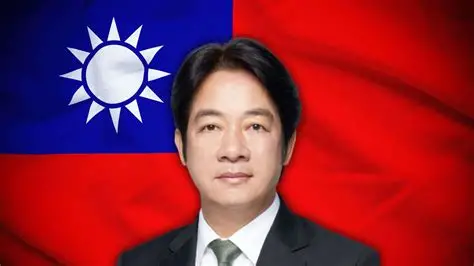
MBABANE – Taiwan’s Legislature has unanimously passed a resolution condemning what it described as China’s efforts to obstruct President Lai Ching-te’s planned state visit to Eswatini earlier this year.
This comes in the wake of a tense diplomatic dispute between Taipei and Beijing.
The resolution, adopted on Friday by Taiwan’s Legislative Yuan, denounced China’s alleged use of diplomatic and economic pressure to force third countries to withdraw flight clearances that had been granted for Lai’s journey to Eswatini in April.
According to Taiwan’s state-owned Central News Agency (CNA), the resolution was introduced by lawmakers from the ruling Democratic Progressive Party (DPP) after President Lai’s scheduled departure for Eswatini on April 22 was abruptly cancelled. Taiwanese authorities said Seychelles, Mauritius and Madagascar withdrew overflight and landing permissions for Lai’s chartered aircraft shortly before the trip was due to begin.


Taiwanese officials have alleged that China pressured the three countries by threatening economic consequences if they allowed Lai’s aircraft to pass through their airspace. Beijing has not publicly acknowledged making such threats.
In the resolution, lawmakers condemned what they called China’s “heavy-handed diplomatic and economic coercion,” arguing that the actions jeopardised aviation safety, violated international norms and interfered with Taiwan’s right to conduct diplomatic relations with its allies.
The resolution further stated that lawmakers across party lines were united in defending Taiwan’s sovereignty, democracy and international dignity.
The motion was passed without objection after being supported by the opposition Taiwan People’s Party (TPP), making it one of the rare foreign policy issues to receive unanimous backing in the Taiwanese legislature.
The controversy stems from Lai’s planned state visit to Eswatini, Taiwan’s only remaining diplomatic ally in Africa. Taiwan’s Presidential Office announced the cancellation of the trip on April 21, claiming that flight permissions previously granted by Seychelles, Mauritius and Madagascar had suddenly been revoked. Taiwan blamed the development on pressure from Beijing.
A committee of Taiwan’s legislature had already condemned the alleged interference in April, arguing that Beijing’s actions violated principles of sovereign equality, non-interference and international civil aviation norms. Taiwanese lawmakers also cited provisions of the United Nations Charter, the Chicago Convention on International Civil Aviation and the Vienna Convention on Diplomatic Relations in their criticism of China.


Despite the setback, Lai ultimately travelled to Eswatini in early May through an alternative arrangement. The visit was facilitated using the private aircraft of King Mswati III after Eswatini’s Deputy Prime Minister Thulisile Dladla travelled to Taiwan as the King’s special envoy.
Lai arrived in Eswatini on May 2 and participated in celebrations marking King Mswati III’s 58th birthday and the 40th anniversary of his reign. During the visit, he held talks with the monarch and reaffirmed Taiwan’s commitment to strengthening cooperation with Eswatini in areas including trade, agriculture, education and culture.
Following the visit, Lai said no amount of external pressure would prevent Taiwan from engaging with the international community. He described exchanges between heads of state as a basic right of sovereign nations rather than diplomatic breakthroughs.
China reacted angrily to the successful visit. Chinese Foreign Ministry officials accused Taiwan of engaging in dollar diplomacy and criticised Eswatini for maintaining diplomatic relations with Taipei. Beijing also reiterated its position that Taiwan is part of China and opposes any official exchanges between Taiwan’s leaders and foreign governments.
Eswatini rejected China’s criticism, describing some of Beijing’s remarks as disrespectful and reaffirming its sovereign right to determine its own diplomatic relations.

Discussion about this post