



Heavy fighting erupted in Somalia’s capital, Mogadishu, this week as a political dispute over delayed elections and President Hassan Sheikh Mohamud’s continued stay in office escalated into armed confrontations between government forces and opposition-aligned fighters.
According to the BBC, government forces and opposition fighters exchanged heavy gunfire in several parts of Mogadishu after opposition leaders called for demonstrations against the extension of President Mohamud’s term in office.
Reuters reported that the clashes began on Wednesday night and continued into Thursday morning, forcing residents to flee affected neighbourhoods as gunfire and mortar shelling rocked parts of the city.
The violence comes after President Mohamud’s term expired on May 15. Reuters reported that parliament approved constitutional amendments in March that effectively extended the president’s tenure by one year and delayed national elections, a move fiercely opposed by opposition groups.
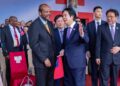

The opposition argues that the extension is unconstitutional and undermines efforts to build consensus around Somalia’s democratic transition.
According to the BBC, former Prime Minister Hassan Ali Khaire accused government forces of attacking him and other opposition leaders while they were preparing for what he described as peaceful demonstrations.
“The responsibility for any casualties or damage resulting from this incident lies with the president whose term has expired,” Khaire wrote on X, according to the BBC.
Reuters separately reported that former President Sharif Sheikh Ahmed, another prominent opposition leader, alleged that government troops attacked his residence and attempted to suppress opposition activities ahead of the planned protests.
The Somali government has denied targeting political opponents. According to the BBC, police said they were conducting a large-scale security operation against heavily armed militias that had launched attacks in parts of the capital.
Reuters reported that government officials accused opposition-aligned fighters of destabilising the city and threatening public security.
Residents described scenes of chaos as fighting spread through several districts.
One resident, Ahmed Ismail, told Reuters that a mortar shell landed on a neighbouring house and injured a woman.
“A big house near us is also ablaze, mortars and other weapons landed on it,” he was quoted as saying by Reuters.
The exact number of casualties remains unclear.
The BBC reported that while the capital later became relatively calm, sporadic gunfire could still be heard in some districts on Thursday.
The planned anti-government demonstrations were subsequently postponed because of the violence.
Amid reports of instability, Somalia’s Civil Aviation Authority sought to reassure travellers.
According to the BBC, the authority denied reports that the violence had disrupted operations at Aden Adde International Airport, stating that all scheduled flights were operating normally.
The deteriorating political situation has attracted growing international concern.
Reuters reported that the United States Embassy in Mogadishu condemned what it described as reckless violence and urged all Somali leaders to resolve their differences through peaceful means.
“Leaders on all sides have a responsibility to preserve stability and resolve differences through peaceful means,” the embassy said, according to Reuters.
The BBC reported that the Intergovernmental Authority on Development (IGAD) also condemned acts of violence and urged all parties to exercise restraint and engage in dialogue.
Similarly, Reuters reported that the European Union Delegation in Somalia called on political leaders to prioritise national interests and reach a consensus on the country’s electoral roadmap.


At the centre of the dispute is President Mohamud’s plan to transition Somalia toward direct elections.
According to Reuters, Mohamud has been advocating reforms that would replace Somalia’s long-standing indirect electoral model, under which clan elders select members of parliament who then elect the president.
The government argues that the reforms are necessary to establish universal suffrage and strengthen democratic institutions.
However, Reuters reported that opposition parties have rejected the constitutional amendments and questioned the credibility of new electoral laws and the appointment of electoral commissioners, arguing that the process was not sufficiently inclusive.
The BBC noted that Somalia has not held a one-person, one-vote national election since 1969. For decades, the country has relied on indirect electoral systems while grappling with civil conflict, political instability and the threat posed by the al-Shabaab militant group.
President Mohamud, who first served as president between 2012 and 2017 before returning to office in 2022, has made electoral reform a key priority of his administration.
However, analysts quoted by Reuters warn that the current dispute could deepen political divisions and threaten fragile gains made in Somalia’s state-building efforts if leaders fail to reach an agreement on the way forward.

Discussion about this post