



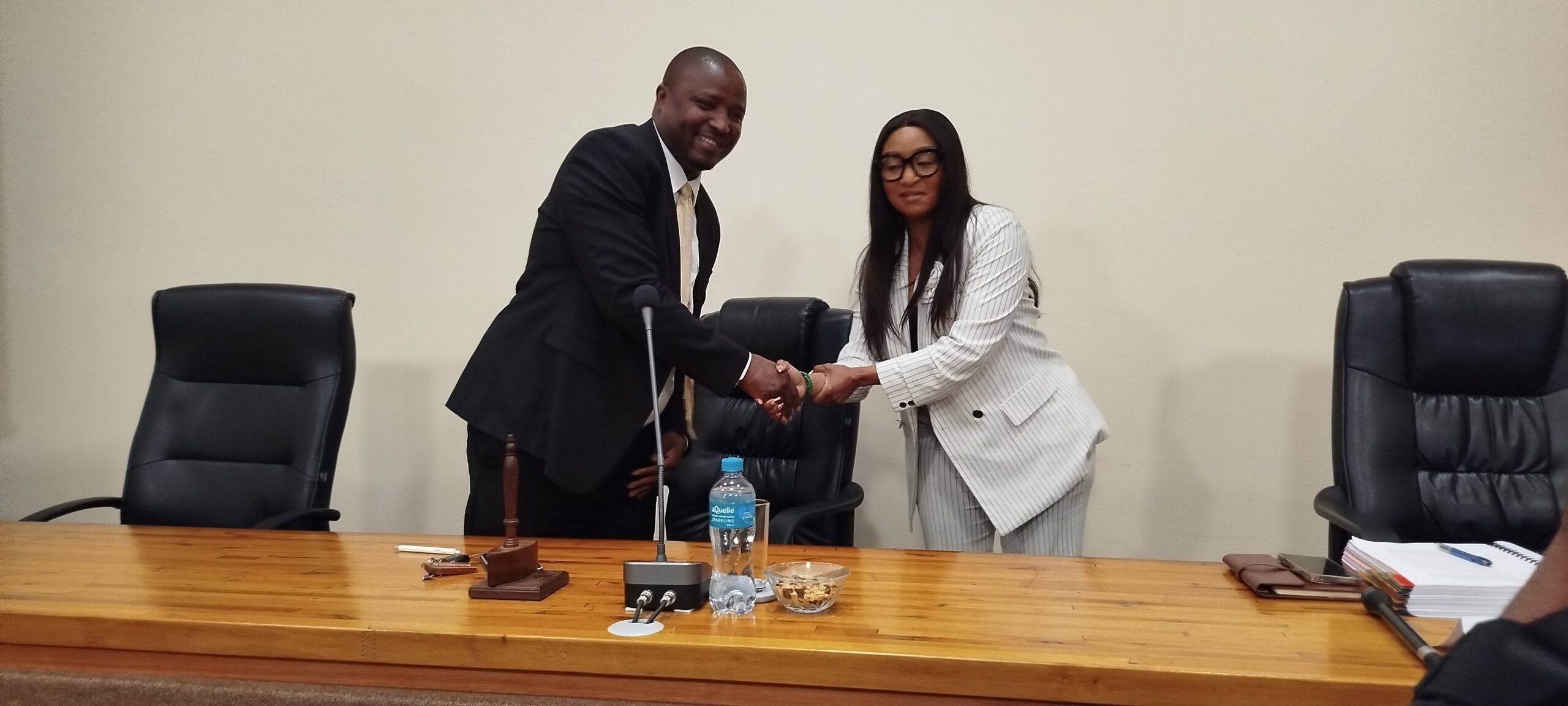
Mbabane :Mbabane’s ability to retain investors came under sharp scrutiny during the Municipal Council mayoral elections, where councillors were urged to urgently address concerns over a growing withdrawal of key institutions from the capital and stalled investment projects.
Speaking after the election process, Melusi Hlanze from the Ministry of Housing and Urban Development questioned why investors were increasingly bypassing Mbabane in favour of towns such as Matsapha and Ezulwini. His remarks highlighted frustrations over stalled projects and the city’s apparent failure to convert opportunities into tangible developments.
“Why are investors leaving Mbabane relocating to other towns?” Hlanze asked, pointing to past proposals that never materialised despite initial interest.
He referenced a major construction proposal once earmarked for the old bus rank, which ultimately did not take off. Similar ideas had been floated for strategic sites such as the Theatre Club and the Central Transport Administration (CTA) area, but these too failed to progress. Hlanze stated that the CTA is still there even today.


While Hlanze did not name specific companies, available data shows a pattern of high-profile institutions relocating out of the capital in recent years. The Central Bank of Eswatini moved ts headquarters to Ezulwini, while African Alliance relocated to Matsapha. The Eswatini Revenue Service and First National Bank (FNB) have established new headquarters in Ezulwini, alongside Tibiyo Insurance and the Eswatini Communications Commission (ESCCOM).
These developments, though not directly cited during the meeting, provide context to the concerns raised about Mbabane’s declining attractiveness as an investment hub.


Hlanze warned that failure to address these issues could have serious economic consequences, including a decline in property values. He cautioned that property prices could drop significantly if investment continues to shift away from the capital.
“People could wake up to find the value of their properties dropping drastically,” he said, stressing the need for urgent intervention.
He further challenged the council to reflect on its internal operations, suggesting that some matters could be resolved more decisively using existing standing orders. He also dismissed the notion that Mbabane has run out of space, urging councillors to interrogate what is creating that perception.
“Let us look around and ask what is making the city feel full,” he said.
Hlanze also called for unity among councillors, warning that factionalism could hinder development. He urged leaders to support good ideas regardless of their source, emphasising that the ultimate responsibility is to serve the residents of Mbabane.


Discussion about this post