



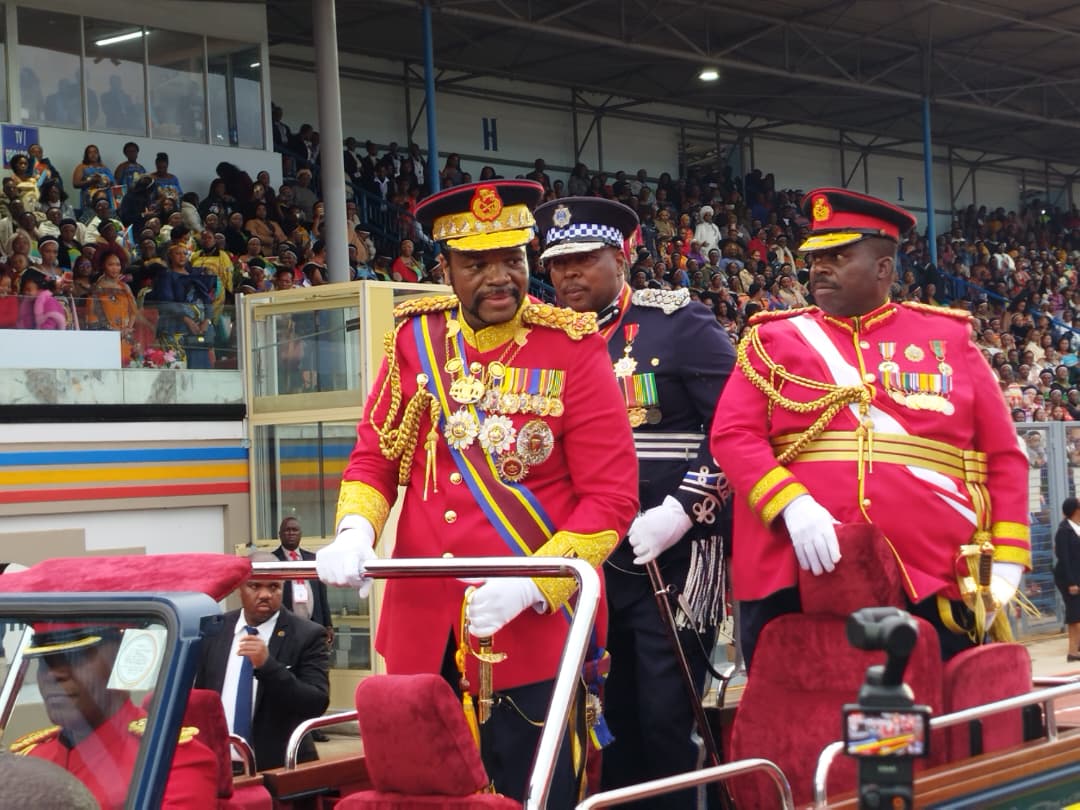
Lobamba : His Majesty King Mswati III has paid tribute to the enduring legacy of King Sobhuza II, describing it as the foundation upon which modern Eswatini has been built over the past four decades.
Delivering his address during the 40/58 Double Celebration marking 40 years on the throne and his 58th birthday, His Majesty King Mswati III said the country’s progress was deeply rooted in the leadership, foresight and cultural preservation championed by his predecessor.
“Today as emaSwati, we note and appreciate the role played by King Sobhuza II whose legacy shaped modern Eswatini. His reign was woven with achievements and cultural protection that define the heart of Eswatini,” he said.
His Majesty stated that the nation’s identity, unity and resilience were anchored in values passed down by forefathers, who laid a strong foundation of respect, cultural pride and national consciousness.


He highlighted the preservation of key cultural ceremonies such as Incwala and Umhlanga, noting that these traditions continued to play a central role in defining the country’s identity.
“Our forefathers laid a solid foundation of respect, identity and cultural pride, preserving sacred ceremonies such as the Incwala and the vibrant Umhlanga Reed Dance that continue to define who we are as a people,” he said.


His Majesty said participation in these national ceremonies had grown significantly over the years, contributing to increased cultural visibility and tourism.
He noted that the expansion of such cultural activities had also driven decentralised economic development, pointing to the transformation of areas such as Buhleni and Hlane into growing centres of activity.
Reflecting on his coronation on April 25, 1986, His Majesty King Mswati III recalled the commitment he made to the nation to serve, protect and uphold the country’s traditions.
“Since the coronation… I made a solemn promise to every liSwati: to follow in the footsteps of my predecessors, to serve, to protect, and to uphold the rich traditions and values that define our Kingdom,” he said.
His Majesty further emphasised that leadership was not defined by the length of time in office, but by the legacy created and the future prepared for the nation.
As part of the country’s historical milestones, he referenced the decision to reclaim the name Kingdom of Eswatini, describing it as a deliberate move to reaffirm national identity and heritage.
“As a country our journey is marked by the historic decision to reclaim our name… through which we reaffirmed and entrenched our identity, heritage, unity and pride as a people,” he said.
His Majesty King Mswati III also noted that the country had developed and adopted its own Constitution in 2005, describing it as a reflection of collective national will and a framework for adapting to changing times.
He said the continued evolution of the country would remain guided by its foundational principles and cultural values.


Discussion about this post