



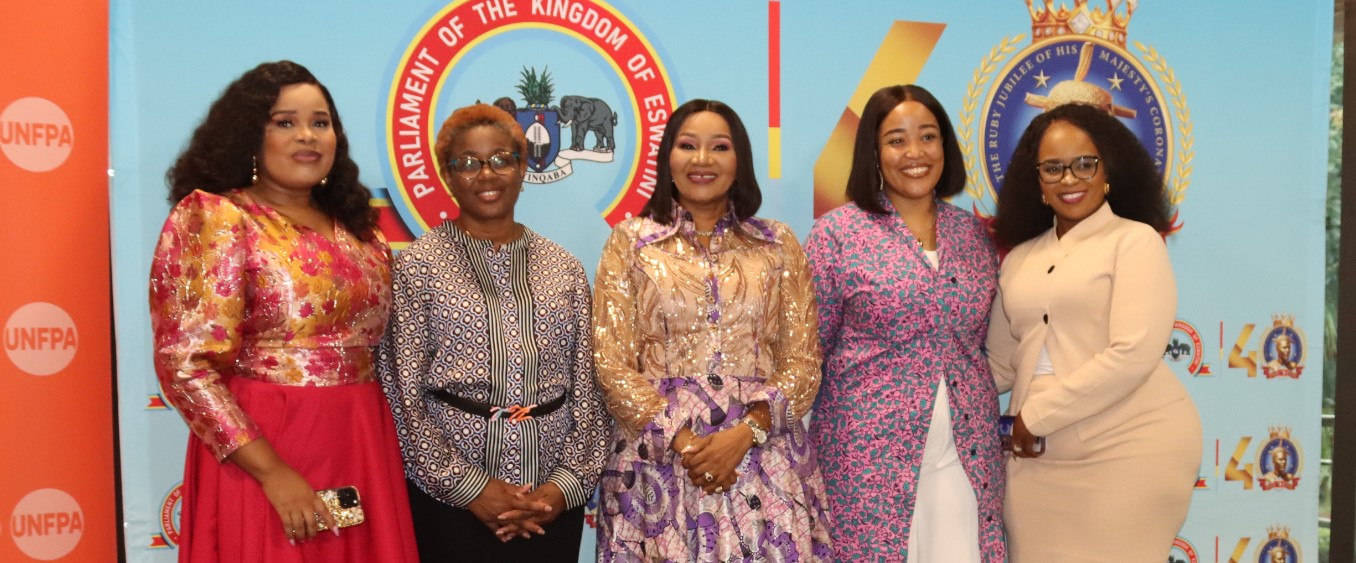
Mbabane – Efforts to advance women’s leadership in the Kingdom of Eswatini gained renewed attention during a conference that brought together lawmakers, government officials, development partners and civil society groups to examine barriers still facing women in politics and society.
The one day gathering took place on March 12 at Happy Valley Hotel in Mbabane as part of activities marking International Women’s Day. It was organised by the Women Parliamentary Caucus of Eswatini with support from the United Nations Development Programme and the United Nations Population Fund.
Discussions centred on strengthening women’s political participation, promoting gender responsive legislation, supporting economic empowerment and reviewing nationality laws affecting citizenship and statelessness.
Eswatini has recorded progress in recent years, with women occupying senior positions in several ministries and holding close to a third of seats in parliament. Despite the gains, statistics show that participation remains uneven and women continue to face social and economic obstacles that limit their full involvement in leadership spaces.
Gender based violence also remains a serious concern. Available data shows that 48.2 percent of women in the country experience physical or sexual violence during their lifetime.
Opening the conference, Senate President Pastor Lindiwe Dlamini said societies benefit when women are allowed to take part in leadership and decision making processes.
She said leadership should be driven by vision and commitment to serve communities, adding that women have repeatedly demonstrated their ability to provide stability and innovation in times of crisis.
Dlamini said investing in women’s leadership contributes to stronger governance and social development, while also strengthening economic growth in communities.
The meeting explored several themes aimed at equipping legislators with tools to influence national policy. One discussion focused on gender responsive budgeting and legislation, which looks at how laws and national budgets can better address the needs of women and girls.
Another session examined women’s political leadership, where participants discussed building alliances, strengthening negotiation skills and improving communication strategies that help women navigate political environments.
Delegates also reviewed the role women play in expanding national economies. Regional experiences were shared to illustrate how women in leadership and decision making positions contribute to inclusive economic development.
A separate discussion looked at nationality laws and statelessness, with attention on how legal frameworks affect women and children and the role parliament can play in reforming citizenship laws.
United Nations Development Programme Deputy Resident Representative Nessie Golakai Gould said women across the world continue to face barriers when trying to enter political life.
She said negative stereotypes, discriminatory laws, limited access to education and exclusion from political networks often restrict women’s opportunities to lead.
Golakai Gould also noted that financial constraints and campaign funding challenges affect women candidates, particularly those from rural communities.
Globally, women occupy about 26 percent of parliamentary seats, a figure that has grown slowly since the mid 1990s. The proportion of women serving as heads of state remains around 10 percent.
In Eswatini, women’s representation in parliament has increased from 22 percent in 2018 to about 29 percent.


Golakai Gould also spoke about emerging challenges that affect women in politics, including online harassment and the heavy burden of unpaid care work that limits time for public participation.
UNFPA Gender and Youth Analyst Zenanile Dlamini addressed the link between social norms and gender based violence during the discussions.
She said deeply rooted beliefs about gender roles continue to sustain inequality and violence against women.
According to UNFPA data shared at the meeting, 17.1 percent of women aged between 15 and 49 who have been married or in relationships experienced physical or sexual violence from a partner during the past year. Other statistics show that one in three girls faces sexual abuse before reaching the age of 18.
Dlamini said women leaders play an important role in bringing real life experiences into policy discussions and shaping responses that protect women and girls.
Women Parliamentary Caucus chairperson Senator Dr Linda Nxumalo also addressed participants, saying leadership that includes women allows institutions to better respond to the needs of the population.
She said inclusive governance ensures that public institutions serve every citizen and that national policies reflect the daily experiences of communities.
Nxumalo said lawmakers have a responsibility not only to pass legislation but also to promote values that advance equality and justice within society.

Discussion about this post