



Saudi Arabia has announced that the holy month of Ramadan will begin on Wednesday, 18 February 2026, after astronomers confirmed sighting the crescent moon on Tuesday evening.
The decision was made following reports submitted by moon sighting teams across the kingdom to the Supreme Court of Saudi Arabia, which then declared Wednesday as the first day of fasting. The announcement is often followed by several other Muslim majority countries.
Saudi Arabia’s Gulf neighbours, including Bahrain, Kuwait, Qatar and the United Arab Emirates, also confirmed that Ramadan will start on Wednesday.
However, religious authorities in Jordan, Oman, Syria and Turkey indicated that fasting would instead begin on Thursday, citing differing astronomical assessments.


The variation stems from how countries determine the start of the lunar month. Saudi authorities rely on direct visual sighting of the crescent, a practice dating back to the time of Prophet Muhammad. Observers positioned in areas with low light pollution scan the skies after evening prayers and report their findings to the Supreme Court.
Modern astronomy has made moon observation more precise, and some experts had argued that the crescent would not be visible on Tuesday. The Sharjah Academy for Astronomy, Space Sciences and Technology in the UAE and Oman’s Main Committee for Moon Sighting both stated earlier that visibility would only be possible on Wednesday night, which would place the first day of Ramadan on Thursday in those countries.


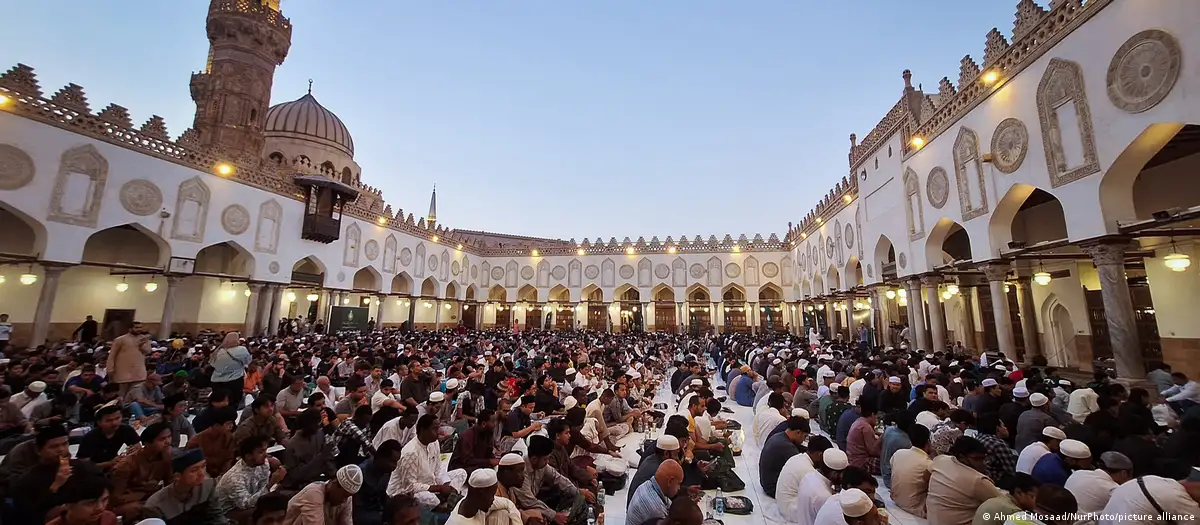
Ramadan begins with the sighting of the crescent moon and lasts 29 or 30 days. During this period, Muslims abstain from food and drink from dawn to dusk. The daily fast is broken with an iftar meal at sunset, while a pre dawn meal known as suhoor is taken before the fast begins.
The fast also includes refraining from smoking and sexual relations during daylight hours. Muslims observe the month as a time of heightened worship, reflection and charity, seeking greater “taqwa”, or consciousness of God. The month concludes with the celebration of Eid al Fitr.
In Eswatini, members of the Muslim community in Mbabane, Manzini and other towns are preparing for the first day of fasting in line with announcements from the countries they follow for moon sighting guidance, mainly Saudi Arabia or South Africa. Local mosques are expected to hold nightly Taraweeh prayers throughout the month.
Fasting hours differ depending on geographic location. Across the world, the dawn to dusk fast ranges between 11.5 and 15.5 hours. For most countries in the Northern Hemisphere, where nearly 90 percent of the global population resides, fasting hours will be slightly shorter this year and will continue to decrease annually until 2031, when Ramadan will coincide with the winter solstice, the shortest day of the year.
In the Southern Hemisphere, including countries such as South Africa, Chile and New Zealand, fasting hours on the first day are expected to last between 14 and 15 hours, though they will gradually shorten as the month progresses.
Ramadan shifts 10 to 12 days earlier each year because the Islamic calendar follows the lunar Hijri system, whose months last 29 or 30 days. Since the lunar year is about 11 days shorter than the solar year, Ramadan will occur twice in 2030, first on 5 January and again on 26 December.
Common greetings exchanged during the month include “Ramadan Mubarak” and “Ramadan Kareem”, wishing others a blessed and generous month.


Discussion about this post