



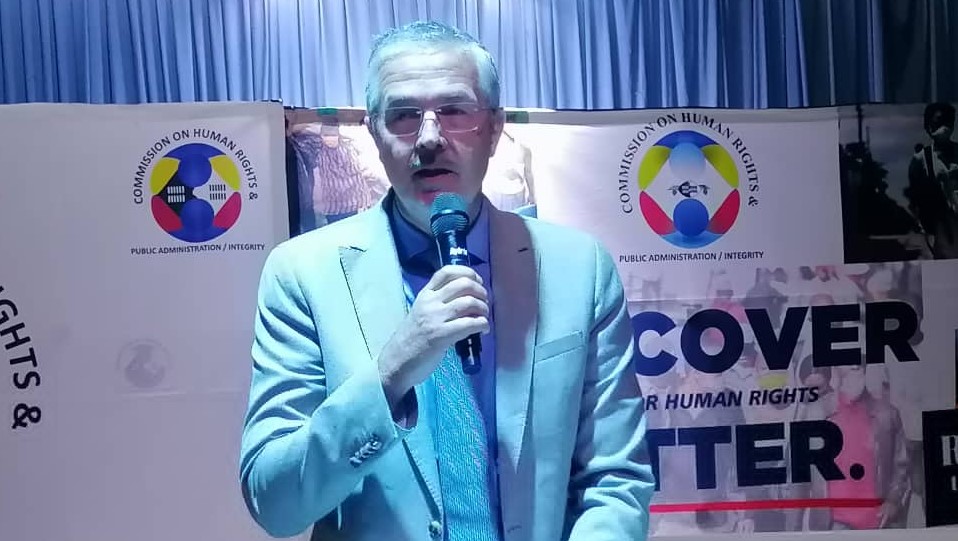
Mbabane – The European Union Ambassador to Eswatini, Karsten Mecklenburg, has urged the country’s authorities and communities to join efforts in strengthening the protection and promotion of human rights.
The Human Rights Day commemoration was held today at the Eswatini Theatre Club in Mbabane. Speaking at the event, Mecklenburg said human rights are central to peace, stability and development, and that respecting dignity and equality helps build resilient societies where citizens can reach their potential and contribute to national growth.
He pointed to rising human rights violations worldwide, citing ongoing abuses in Ukraine, the Middle East, and parts of Africa including the Democratic Republic of Congo and Sudan. He also noted that discrimination and restrictive policies continue to affect vulnerable groups, even in areas not affected by conflict.
Mecklenburg said that despite global and regional legal frameworks, such as the Universal Declaration of Human Rights, the African Charter on Human and Peoples’ Rights, and Eswatini’s 2005 Constitution, freedoms remain under threat and inequality persists.

The ambassador described the event as a platform for government ministries, civil society organisations, development partners, diplomatic missions, community groups and the Human Rights Commission to share experiences and engage in dialogue, which he said is crucial for holding leaders and institutions accountable.
He welcomed the recent tabling of the Human Rights Commission Bill and assured that the EU is ready to support Eswatini in enabling the Commission to fully execute its mandate.


Mecklenburg cautioned against taking human rights for granted, noting that many communities still face challenges in exercising freedoms such as expression, assembly and protection from gender-based violence. He added that awareness of human rights remains low in some traditional structures, leading to misunderstandings and resistance.
To address these gaps, the EU plans to launch a human rights awareness project focused on multi-stakeholder dialogue, in collaboration with the Human Rights Commission and civil society organisations.

Discussion about this post