



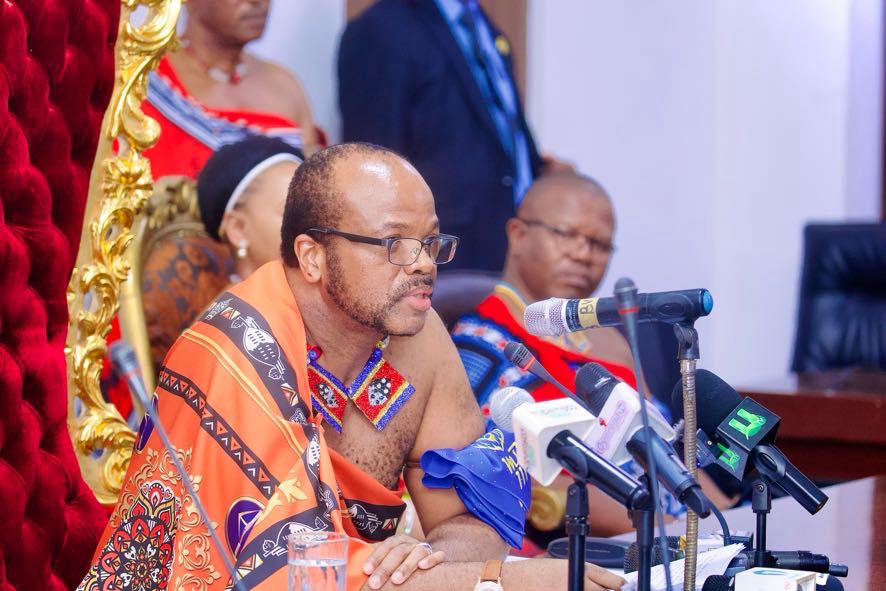
KUMASI, GHANA – Eswatini is working towards the creation of a formal Council of Chiefs, His Majesty the King announced while addressing Ghana’s National House of Chiefs in Kumasi.
The King was introduced to the gathering by Foreign Affairs and International Cooperation Minister Pholile Shakantu. He said the Council would serve as an institutional platform for traditional leaders to advise the state on matters related to custom, tradition, and cultural preservation. This development, he said, aligns with Chapter 14 of the Kingdom’s Constitution, which provides for such a structure.
Speaking to a packed chamber of Ghanaian traditional leaders, the King noted that Eswatini’s chiefs already play a vital role under the Tinkhundla system, where they administer communities, resolve disputes, and safeguard values such as ubuntu. He said the Council would further define and amplify that role, ensuring that the wisdom of the country’s traditional leaders continues to shape national policies.
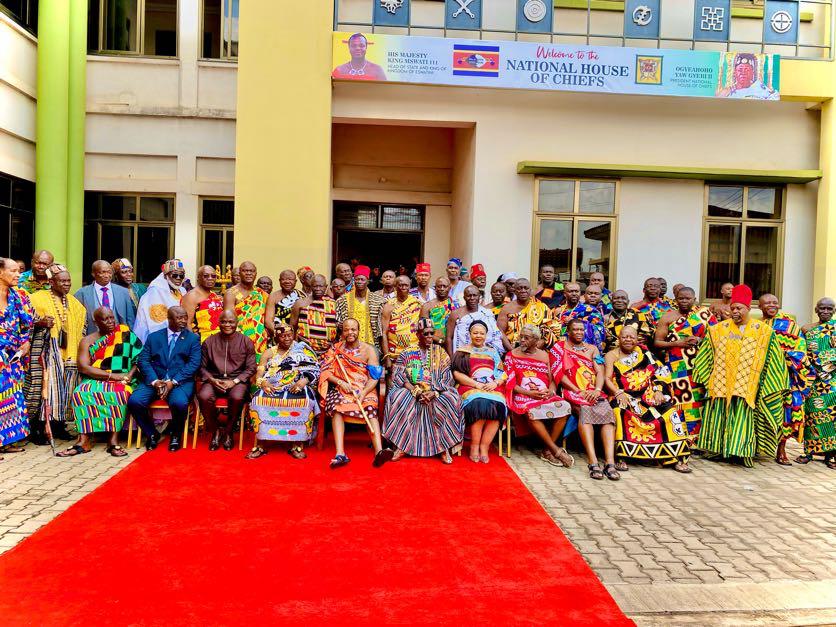
Several African countries, including Ghana, Botswana, South Africa, Uganda, and Nigeria, have similar bodies which integrate traditional leadership into state governance systems. Ghana’s National House of Chiefs is constitutionally recognised, while South Africa has provincial houses established by statute. Botswana’s Ntlo ya Dikgosi advises parliament, and Nigeria’s states have their own traditional councils.


Research by scholars such as Professor Carola Lentz has shown that chiefs maintain local legitimacy and trust, particularly in rural areas, helping bridge gaps between state and citizen. Her studies show that traditional leaders continue to influence development, resolve disputes, and sustain community values where formal governance systems may be less effective.
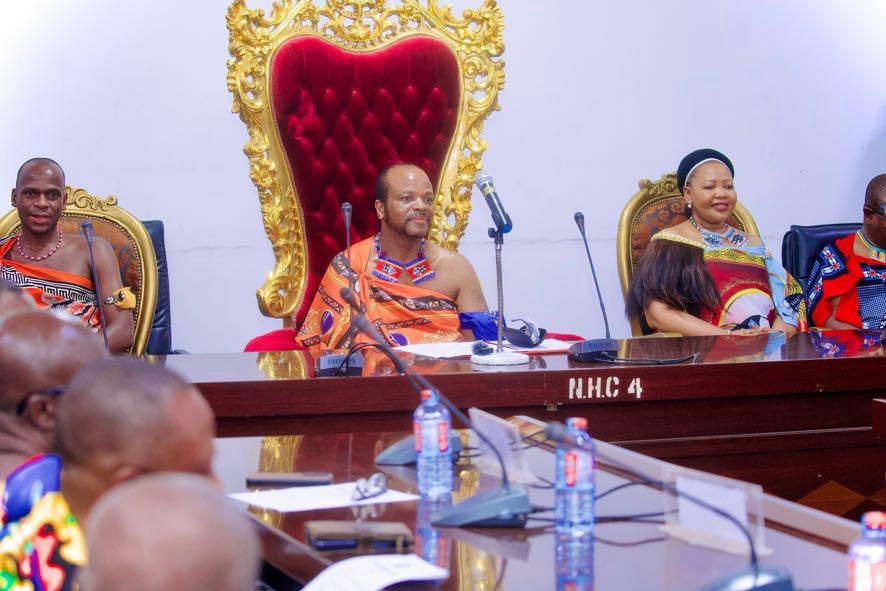
The King’s comments come as Eswatini seeks to balance modernisation with tradition. He said the Council will ensure the nation’s heritage is preserved and adapted, not erased, by globalisation.
He also paid tribute to Ghana’s first President, Dr. Kwame Nkrumah, and Eswatini’s King Sobhuza II for championing independence while working closely with traditional leaders to retain African governance values. He noted that the leadership of both men reflected a commitment to preserving cultural identity in the face of political change.


Turning to the role of women in tradition, the King drew attention to the Queen Mothers of Ghana and Eswatini’s iNdlovukazi (Queen Mother), whom he described as crucial figures in national leadership. He said the cultural strength of a kingdom is reflected not only in the presence of a king but in the leadership of its Queen Mother.
The King called for innovation in governance that is rooted in Africa’s cultural wealth, cautioning against the full adoption of Western models that risk sidelining traditional systems. He cited Eswatini’s cultural events such as Incwala, the Reed Dance, and Buganu ceremonies as living expressions of identity that must be protected.
He concluded by encouraging greater cultural exchanges between Eswatini and Ghana, with ongoing collaboration expected in areas such as education, tourism, and trade.


Discussion about this post