



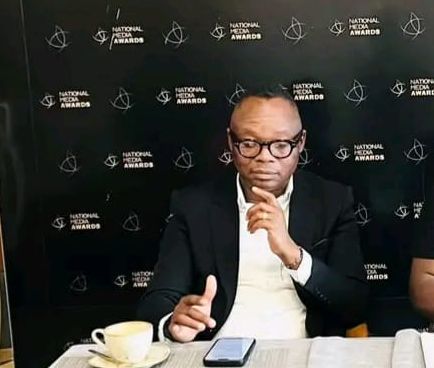
Mbabane – Eswatini Observer Acting Managing Director Mbongeni Mbingo says the country’s economic situation is bad despite statistics showing economic growth, arguing that the figures do not reflect the reality on the ground.
“They can show statistics that the economy is growing by whatever per cent, but the reality is that the economy is bad,” said Mbingo.
The statement carries added weight because it comes from Mbongeni Mbingo, Acting Managing Director of the Eswatini Observer and Chairman of the Eswatini Editors Forum. As a senior executive responsible for the newspaper’s business and operational affairs, his assessment offers a significant perspective on the economic challenges facing the country.
He was speaking during the launch of the second edition of the 2026 National Media Awards at Molly’s House, where he was responding to a journalist who called for measures to improve the welfare of journalists.


The discussion followed a question from a journalist who proposed that the organisers should engage sponsors to provide prizes that could make a meaningful difference in the lives of journalists. The journalist cited a colleague who won a laptop at last year’s National Media Awards and subsequently used it to carry out his work, demonstrating how such a prize could improve a journalist’s working life.
The discussion also exposed concerns about the financial challenges faced by journalists, with another reporter arguing that low salaries were forcing some media practitioners to sell prizes they had won.
The reporter said some journalists resorted to selling these items because their earnings were insufficient to meet their financial needs, raising questions about the ability of media professionals to sustain themselves despite working in an industry that informs the nation about its challenges.
Although Mbingo did not cite specific economic statistics during his remarks, official figures show that Eswatini’s economy recorded growth in 2025.
According to the Central Statistical Office’s Annual Gross Domestic Product Bulletin 2025, the economy expanded by 4.8 per cent in real terms, reaching a nominal value of approximately E96.6 billion. The growth was largely supported by the services sector. .
However, economic growth does not automatically mean that every household experiences an improvement in its financial circumstances. Employment opportunities, income levels and the cost of essential goods and services all influence how growth is experienced by ordinary emaSwati.
The cost-of-living pressures facing emaSwati have also intensified following increases in electricity tariffs, fuel prices and public transport fares in 2026. Electricity tariffs increased in April, fuel prices rose sharply in October, and bus fares were adjusted upwards, placing additional pressure on household budgets. These increases have affected the cost of essential services and daily travel, adding to the financial challenges faced by workers, including journalists.


The International Labour Organization reported in June 2026 that Eswatini’s unemployment rate declined from 35.4 per cent in 2023 to 33.5 per cent in 2025. The youth unemployment rate also edged down from 27.1 per cent to 26.8 per cent over the same period. Despite the improvement, unemployment remains a significant challenge. .
The wider poverty picture also highlights the challenges facing households. The United Nations Development Programme (UNDP) and the Oxford Poverty and Human Development Initiative (OPHI), in their 2026 Global Multidimensional Poverty Index update released on October 12, reported that 1.2 billion people across 108 countries were living in acute multidimensional poverty.
Of these, 617 million were children, while 83 per cent of people experiencing multidimensional poverty lived in rural areas. The report also found that the number of people living in multidimensional poverty had risen for the first time since the index was launched in 2010. .
In Eswatini, a 2026 UNICEF country programme document states that multidimensional poverty affects 46.6 per cent of children, rising to 51.8 per cent among children in rural areas. It further reports that 65.3 per cent of children live below the international poverty line. These figures are from the UNICEF document and were not cited by Mbingo during the awards launch.
The figures provide broader context to the economic concerns raised at Molly’s House during the launch of the 2026 National Media Awards, where journalists raised questions about low salaries, financial hardship and the need for practical support to improve their welfare.
For Mbingo, the central concern was the gap between economic growth reflected in statistics and the difficult economic conditions he believes remain evident on the ground.


Discussion about this post