



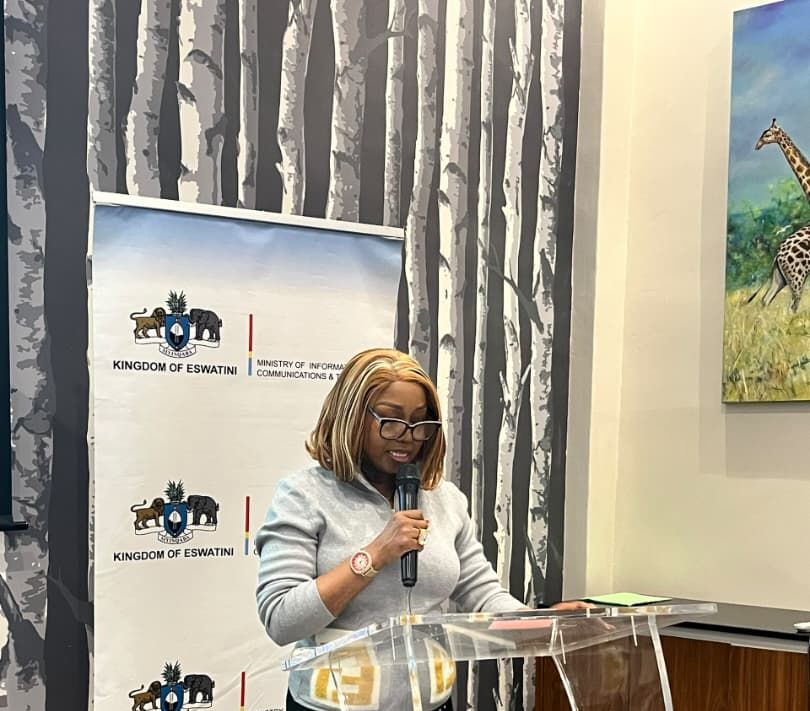
Mbabane – Minister of Information, Communications and Technology Senator Savannah Maziya has vowed to continue advocating for African women and girls to have a meaningful place in technology and digital transformation.
“I understands first-hand what it means to be discriminated against, left behind and treated as an afterthought” she said.
The Minister made the commitment on October 7, 2026, during the official opening of the Joint MICT–Smart Africa Co-Creation Workshop on the Co-development, Contextualisation and Piloting of Gender Impact Assessment Tools in Eswatini.
Speaking at the workshop, the Minister said her commitment to advancing women’s participation in technology would continue regardless of criticism, drawing from her personal experience as a woman, a Black person and an African.


“I understand discrimination. I understand being left behind. I understand being an afterthought. I understand what it is like not to be at the table when discussions about your own life are made,” said Maziya.
She said she would continue advocating for women, particularly African women, because they could not be excluded from discussions that shape their future.
“I will continue long after I do anything else to be able to look at the issue of women, especially the African woman being left behind,” she said.
Maziya said African women, particularly young women under the age of 35, should have a voice in discussions around technology and digital development, adding that they needed advocates to ensure their interests were represented.
The Minister said digital transformation should benefit everyone, stressing that gender considerations should be incorporated from the beginning of policy and programme development rather than being addressed as an afterthought.
“As Minister responsible for ICT, and as Chairperson of the SDG 5 Council on Gender Equality, I believe strongly that digital transformation must leave no one behind,” she said.
She said technology was increasingly changing how people accessed education, employment, financial services and government services, making it necessary to assess whether women and girls were benefiting equally.
Maziya said Eswatini had already taken practical steps to increase women’s participation in STEM, technology and the digital economy through initiatives such as the STEM Future Pioneers Mentorship Programme and the country’s partnership with the United Arab Emirates through She Powers Africa.
She said these initiatives were creating opportunities for women and girls to develop skills in artificial intelligence, cybersecurity, data science, software development, coding and other emerging technologies.
In 2026, Eswatini was also selected as the African pilot country for the She Powers Africa Digital Academy, which she said further strengthened the country’s commitment to preparing women for the digital economy.
Maziya said the workshop provided an opportunity to move beyond policy commitments and examine whether digital programmes were actually reaching women and girls.
The Gender Impact Assessment tools will help stakeholders assess who benefits from digital policies and programmes, who is being left behind, what barriers exist and what needs to be done differently.


She said Eswatini and The Gambia had been selected as pilot countries, giving the two countries an opportunity to learn from each other while contributing to wider African learning on gender inclusion in digital transformation.
Maziya challenged participants to bring their experiences, question existing assumptions and focus on solutions that could work within Eswatini’s institutions and national context.
“Gender equality cannot remain simply a policy commitment. It must be reflected in the way we design, implement and measure our digital programmes,” she said.
Smart Africa representative Emily Okomo said three connected instruments were being developed: a Gender Impact Assessment Tool, a Gender Policy Review Tool and a Gender Budgeting Tool.
Okomo said the tools would examine the likely effects of policies and programmes, implementation and results, as well as institutional systems, capacity, budgeting and accountability.
She said the tools would be tested on selected digital policies, programmes or institutions in real settings before experiences from the two pilot countries were jointly reviewed.
The tools would then be refined and validated, with practical guidance and recommendations developed for continued national use.
Okomo said success would ultimately be measured by whether the tools improved decision-making, strengthened accountability and made digital transformation more inclusive.


Discussion about this post