



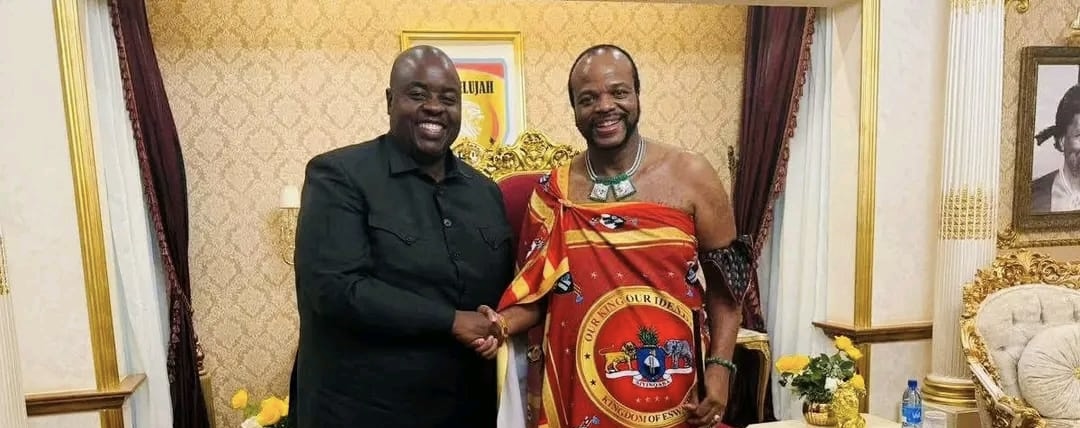
Mbabane – Zimbabwean businessman Wicknell Chivayo, who earlier this year pledged about E3 billion towards a proposed 300MW solar project in Eswatini, has died in a helicopter crash in Zimbabwe.
Chivayo and his wife, Lucy Muteke, were among six people killed when the private helicopter crashed in the Maronderarural area, about 72 kilometres east of Harare, on Wednesday afternoon, September 30, 2026. Police confirmed that six people were aboard the aircraft, while Chivayo’s family confirmed his death and that of his wife.
The businessman’s death comes just months after he established a high-profile relationship with the Kingdom of Eswatini, following a meeting with His Majesty King Mswati III in June. During the visit, Chivayo was granted Eswatini citizenship and presented with a diplomatic passport, with the development linked to his philanthropic activities and interest in investment and infrastructure development.
Chivayo subsequently committed about E3 billion towards the development of a 300MW solar power project in the Kingdom through his company, Intratrek Holdings. The proposed project was to be developed as an independent power producer on 120 hectares of land made available for the development.


The investment was presented as part of Chivayo’s plans to support energy security and economic development in Eswatini. His death now comes before the proposed project could reach the construction stage, leaving the status of the investment unclear.
According to eNCA, the helicopter left the Chivayo family home in Gandami before crashing and bursting into flames. The aircraft went down at about 5pm local time in the Maronderaarea.
Regional media reports said the six occupants included Chivayo, Muteke, two pilots and other passengers. Police initially confirmed the crash and the number of occupants but had not immediately released the identities of all the victims.
Chivayo was the founder of Intratrek Zimbabwe and had built a high-profile business career around energy, infrastructure and other investments. His public profile also grew through his philanthropic activities, including donations to churches, schools, healthcare initiatives and individuals in Zimbabwe.
His works
Chivayo became particularly known for using his wealth to support individuals, religious organisations, schools, sports and healthcare initiatives across Zimbabwe.
His contributions included the donation of ambulances to support healthcare services, as well as financial assistance towards medical treatment for individuals who could not afford specialised care.


In education, Chivayo supported infrastructure development at schools. Among the projects associated with his philanthropy was a US$1 million donation to Dudley Hall Primary School in Norton, his former school, towards the construction of two student dormitories and the purchase of a school bus.
His support also extended to churches, where he donated money, vehicles and buses to religious organisations and church leaders. He became known for providing substantial financial assistance to congregations and religious institutions, including the purchase of vehicles for church-related activities.
Chivayo also supported Zimbabwean musicians, entertainers and other public figures with cash and vehicles. His donations were frequently announced through social media, where he publicly documented his acts of generosity.
Sports was another area of his philanthropy. He provided financial support to football organisations, including Highlanders Football Club, which acknowledged his continued financial support. On the day of his death, the club said he had made another contribution towards strengthening its commercial and marketing structures.
His philanthropic activities were not limited to large organisations. Chivayo regularly responded to individual appeals for assistance, providing money, vehicles and other forms of support to people facing financial difficulties.
His public giving became such a prominent part of his identity that he frequently referred to his philosophy of helping others, while supporters described him as a businessman who used his wealth to assist communities and individuals.
In Eswatini, however, his most recent prominence was tied to the proposed solar investment and his newly established relationship with the Kingdom.
His June visit to Eswatini followed a private audience with King Mswati III at the Royal Palace. Chivayo said the discussions covered industrialisation, energy security, infrastructure development and private-sector investment.
The Eswatini Government subsequently confirmed that Chivayohad been granted citizenship and presented with a diplomatic passport, while announcing his commitment to the proposed solar project.
Chivayo’s death therefore leaves unanswered questions over the future of the proposed 300MW solar project and the investment plans he had publicly associated with his growing relationship with Eswatini.

Discussion about this post