



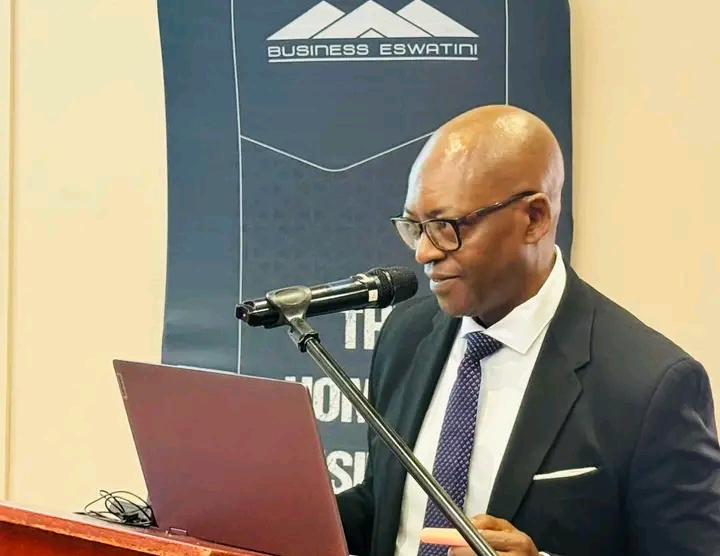
Mbabane- Eswatini’s economy is currently the fastest-growing in the region, according to the Chief Executive Officer of Business Eswatini (BE) E. Nathi Dlamini.
The CEO made the assertion during the 1st Annual Future of Finance Summit on Wednesday at the Hilton Garden Inn, Mbabane, raising the question of why the growth being reflected in economic figures was not necessarily being felt by ordinary people.
Finance Minister Neal Rijkenberg, responding to the same concern, said the country had moved from an average growth rate of about 2.7 per cent over the two decades before COVID-19 to around five per cent in recent years.
Rijkenberg said the improvement in growth had, in part, been supported by government taking on loans to finance projects and push the economy into what he described as a new growth phase.

“We have managed to get the growth up by doing, like, taking on a few loans and trying to push the economy to be able to get into a new growth kind of phase,” he said.
The minister said the current growth figures were real and that the country was in its third year of averaging around five per cent growth.
However, the stronger economic performance comes at a time when government borrowing remains a concern, with Rijkenberg revealing that the country’s debt-to-GDP ratio could increase from about 45 per cent to 50 per cent.
He said government’s newly adopted medium-term fiscal framework would seek to bring the ratio back to around 45 per cent over the five-year period.
The framework, according to Rijkenberg, would force government to prioritise projects that could be financed while leaving out those that could not be accommodated within available resources.
He said government considered a debt-to-GDP ratio of about 45 per cent to be a sustainable position, while a ratio approaching 60 per cent could place the country under distress if economic growth did not improve sufficiently.
The discussion highlighted the gap between headline economic growth and the financial reality experienced by households.
Rijkenberg said people could continue to feel financially pressured even when the economy was growing, partly because of personal debt and the rising cost of maintaining their lifestyles.
He said increased access to credit had encouraged individuals to take on more debt, while social pressure had also contributed to households spending beyond what they could comfortably afford.
“Even if we get a pay increase, you find it doesn’t take the pressure. The pressure is always worse,” he said.
The minister, however, acknowledged that economic growth alone would not resolve the country’s biggest economic challenge, pointing to unemployment as a major concern.
“We’ve got an unemployment crisis,” Rijkenberg said, calling on government, the private sector and other stakeholders to work together to strengthen the economy and address unemployment.


The comments come as Eswatini seeks to sustain the higher growth levels recorded in recent years while managing the debt accumulated to support government spending and economic activity.
For businesses, the key question remains whether the improved headline growth will translate into increased investment, production and job creation, particularly as the country grapples with high unemployment.


Discussion about this post