



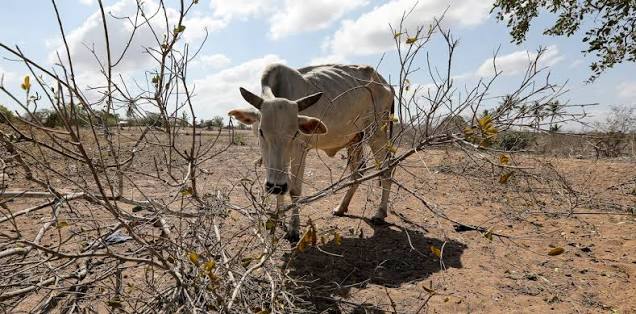
Mbabane– Eswatini’s livestock farmers are facing a worrying question as the country emerges from a devastating Foot-and-Mouth Disease (FMD) crisis: could cattle that are worth thousands of emalangeni once again be forced onto the market for as little as E1 500 if El Niño brings another severe drought?
The concern is growing in the Lubombo Lowveld, where farmers still remember the painful effects of the 2015/16 El Niño drought. The drought left grazing areas dry, water sources depleted and livestock in poor condition, forcing desperate farmers to sell cattle cheaply just to survive.
For some farmers, the memory is not only about animals that died, but also about household wealth that disappeared when healthy cattle lost their value.
The timing has made the latest warning even more worrying. Farmers are only beginning to recover from the economic effects of FMD, which restricted the movement and sale of livestock and disrupted access to important markets.
Now, with a developing El Niño expected to bring hotter and drier conditions from late 2026 into the first quarter of 2027, farmers fear that another crisis could hit their herds before they have fully recovered.
A painful memory
The 2015/16 drought remains one of the darkest periods for livestock farmers in the Lowveld. More than 80 000 cattle were reported to have died across the country as water and grazing became scarce, while farmers in areas such as Malindza were forced to find emergency ways of keeping their animals alive. Some had to buy expensive hay from South Africa, while others watched their cattle become thinner and less valuable as the drought continued.
For farmers who could no longer afford feed or transport water, selling livestock became a survival strategy. Cattle that could normally fetch around E7 000 were sometimes sold for between E1 500 and E2 000, depending on their condition.
The desperate sales meant farmers were not simply losing animals; they were losing savings, food security and a source of income that had taken years to build.
The crisis was severe enough to require a major response from Government and development partners. More than 30 000 bales of hay were distributed, while thousands of litres of water were transported to communities affected by the shortage.
Boreholes were drilled and rehabilitated, livestock water was provided and measures were introduced to help farmers sell animals before they became too weak to have any meaningful market value.
“I have rebuilt, now I fear losing again”
For Malindza farmer Musa Shabalala, the drought is not a story he wants to experience twice. Shabalala lost all his livestock during the 2015/16 drought and remembers how little some of the animals were worth when they were finally sold. Some cattle fetched as little as E1 500, a painful price for animals that had represented years of investment and a family safety net.
After losing everything, Shabalala slowly started rebuilding his herd and now has 15 cattle. The recovery has taken years, making the prospect of another severe drought especially frightening for him.
Some of the cattle are also linked to the lobola paid for his daughter, meaning their loss would carry a financial and family cost beyond the immediate value of the animals.
His experience reflects a wider fear among farmers who see cattle as more than livestock. A herd can provide food, pay school fees, meet household emergencies and serve as a form of savings when other sources of income are limited. If drought again forces farmers to sell weak animals at heavily reduced prices, they could be pushed backwards just as they begin recovering from the FMD disruption.
Cattle at risk
Sixty-year-old Malindza farmer Sipho Tsabedze, who owns more than 20 cattle, also remembers what happened when the drought reduced grazing and water. His concern is that prolonged heat and dry conditions could once again leave farmers with a difficult choice: spend money they may not have on feed and water, or sell cattle before their condition deteriorates.
For Tsabedze and other farmers, the issue is not simply whether rain will fall. It is whether there will be enough water and grazing to keep cattle healthy throughout the dry period. A shortage of pasture can quickly affect the condition of animals, while poor body condition can reduce the price farmers receive when they eventually take their cattle to market.
Malindza farmer Nolwazi Dlamini faces a similar risk with a herd consisting of 33 cattle and 27 goats. Her livestock form part of the household’s wealth and provide an important safety net when money is needed. Another prolonged dry period could therefore put pressure not only on the animals, but also on the ability of households to meet their daily needs.
The new El Niño threat
The latest climate outlook has raised concern across Southern Africa, with a developing El Niño expected to influence weather conditions from late 2026 into early 2027. The anticipated pattern includes higher temperatures, longer dry spells and reduced rainfall during parts of the October-to-April rainy season. For livestock farmers, this could mean less pasture, greater pressure on water sources and increased costs of keeping animals healthy.
The threat comes after Eswatini has already spent significant resources fighting FMD. The disease was confirmed in Shiselweni on May 12, 2025, ending the country’s FMD-free status that had been maintained without vaccination since 2001. The outbreak later spread to other regions, affecting cattle and pigs and leading to restrictions on livestock movement and trade.
Government has since vaccinated more than 453,000 cattle, representing about 82 per cent of the national herd, and announced that there were no active FMD cases by July 2026. However, surveillance, biosecurity and movement controls remain important as the country works towards regaining its FMD-free status and restoring access to international beef markets.
This time, the warning is earlier
Unlike the previous drought, farmers are receiving warnings before the full effects of the anticipated weather pattern are felt. The Ministry of Agriculture and Prime Minister Russell Dlamini have urged farmers to prepare by planting early, choosing fast-maturing and resilient crops, diversifying production and improving water harvesting and conservation.
Livestock farmers have also been advised to protect their animals by practising rotational grazing, managing herd sizes according to the available carrying capacity and establishing firebreaks. Farmers are being encouraged to consider selling older or weaker cattle while they are still in good condition rather than waiting until a crisis forces them to accept whatever price the market offers.
But for farmers who have already lost income through FMD restrictions, preparing for another crisis may be easier said than done. Buying feed, transporting water, drilling boreholes or maintaining livestock infrastructure requires money. The question is whether farmers have enough financial strength left after the FMD crisis to prepare for a drought that has not yet reached its worst point.
Two crises, one herd
The greatest concern is that FMD and El Niño could affect the same source of household wealth in different ways. FMD reduced farmers’ ability to move and sell livestock, while a severe drought could reduce the physical condition and market value of the animals themselves. A farmer who survived one crisis may therefore enter another with fewer savings, fewer market opportunities and less ability to absorb losses.
The E1 500 cattle sales of the last major El Niño drought remain a warning of what can happen when farmers are forced to sell at the worst possible time. If cattle become weak because of a shortage of grazing and water, the farmer’s bargaining power can disappear quickly.
What began as an investment worth thousands of emalangeni can become a desperate sale made simply to keep the household going.


For farmers such as Shabalala, Tsabedze and Dlamini, the hope is that early preparation will prevent history from repeating itself. The country now has the advantage of an early warning, experience from the previous drought and lessons from the recent FMD crisis.
The real test will be whether those lessons can be turned into action before the first desperate farmer is forced to ask for E1 500 for a cow that was once worth much more.
As El Niño returns to the regional climate conversation, the question facing Eswatini’s livestock sector is therefore bigger than whether cattle will survive the heat.
It is whether farmers who have spent years rebuilding their herds will be able to keep their livestock valuable, protect their household wealth and avoid another cycle in which drought turns thousands of emalangeni into a painful E1,500 sale.


Discussion about this post