



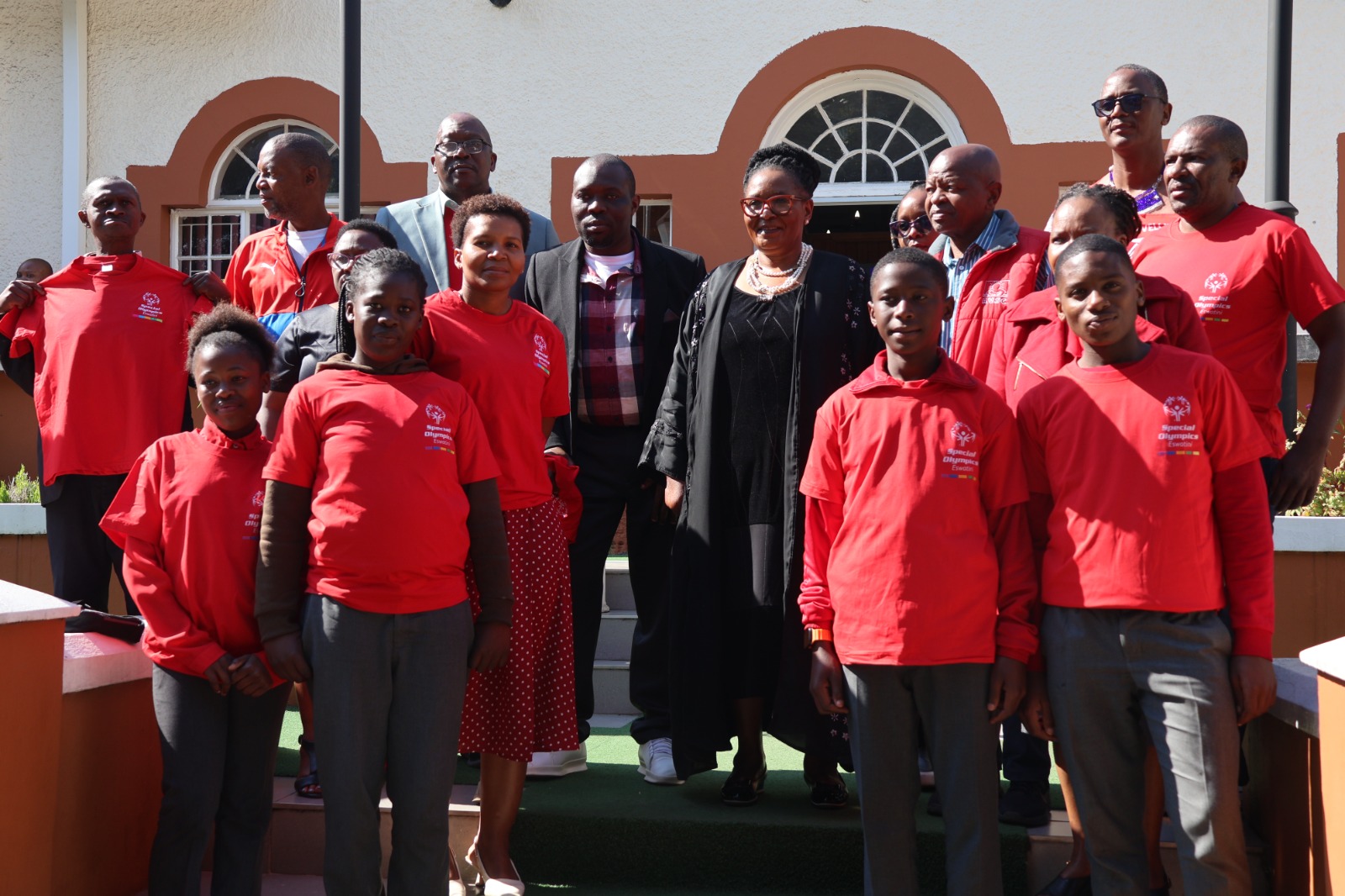
Mbabane– Sport has emerged as a key driver in Eswatini’s efforts to promote disability inclusion, with government highlighting the growing role of programmes that provide athletes with intellectual and developmental disabilities opportunities to compete, develop skills and participate fully in society.
Deputy Prime Minister Senator Thulisile Dladla made the remarks during the launch of the Special Olympics Global Week of Inclusion 2026 in Mbabane, where she said sport was no longer only about competition, but had become a platform for empowerment, social integration and breaking barriers faced by persons with disabilities.
Dladla said the Government of Eswatini remained committed to advancing disability inclusion through partnerships and programmes that expand access to sporting opportunities.
She said the Special Olympics movement had demonstrated how sport could transform lives by building confidence, leadership skills and a sense of belonging among athletes with intellectual disabilities.

“For many persons with intellectual disabilities, sport becomes the gateway to education, employment, independent living and meaningful participation within their communities,” she said.
The DPM highlighted the Eswatini National Disability Plan of Action (2024-2028) as a guiding framework in ensuring that persons with disabilities participate equally in sporting and recreational activities.
She said the plan focuses on improving accessibility of sporting facilities, strengthening partnerships with sporting bodies and educational institutions, and increasing opportunities for athletes with disabilities at all levels.
Dladla also praised the Special Olympics Unified Sports model, which brings together athletes with and without intellectual disabilities to train and compete as teammates.
She said the model was helping change perceptions about disability by encouraging communities to focus on abilities rather than limitations.


“When young people play together, they learn together. When they compete together, they grow together,” she said.
The DPM said the inclusion agenda required collective responsibility from government, families, communities, schools, the private sector and development partners to ensure that persons with disabilities were not left behind in national development.

Discussion about this post