



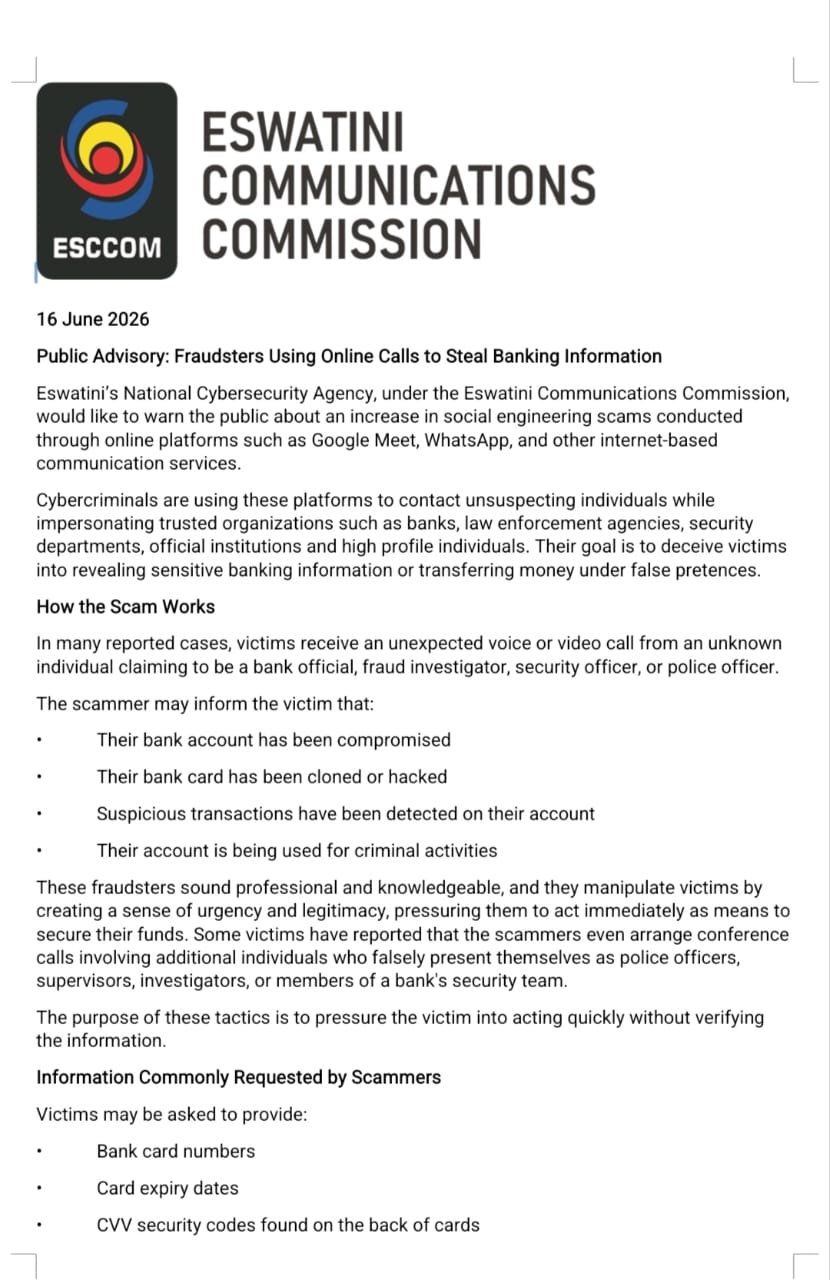
MBABANE – The Eswatini National Cybersecurity Agency (ENCA), operating under the Eswatini Communications Commission (ESCCOM), has issued a public warning over a growing number of sophisticated online scams targeting bank customers through platforms such as WhatsApp, Google Meet and other internet-based communication services.
In a public advisory issued on Tuesday, the agency said cybercriminals were increasingly impersonating trusted institutions, including banks, law enforcement agencies and other official organisations, in an effort to trick unsuspecting victims into disclosing sensitive banking information or transferring money.
According to the agency, scammers typically contact victims through voice or video calls, falsely claiming to be bank officials, fraud investigators, security personnel or police officers. They often allege that a victim’s bank account has been compromised, that suspicious transactions have been detected, or that the account is being used for criminal activities.
The fraudsters are said to use convincing and professional tactics designed to create panic and urgency, pressuring victims into acting without verifying the information. In some instances, victims have reported being placed on conference calls with multiple individuals posing as police officers, supervisors or members of a bank’s security team.


ENCA warned that the ultimate objective of these scams is to obtain confidential information such as bank card numbers, expiry dates, CVV security codes, one-time passwords (OTPs), internet banking credentials and other personal details. Once obtained, the information can be used to carry out unauthorised transactions and gain access to victims’ accounts.


The agency stressed that legitimate institutions, including banks, police services and regulators, will never request sensitive banking information through phone calls, video calls, emails or social media platforms.
Members of the public have been urged never to share banking details during a call, regardless of who the caller claims to be, and to immediately terminate any conversation in which sensitive information is requested.
ENCA further advised consumers to independently verify any claims by contacting their bank through official channels and to remain cautious of unexpected calls received through online communication platforms.
Individuals who may have already shared banking information have been urged to contact their banks immediately, monitor their accounts for suspicious activity, change affected passwords and report the incident to both the police and relevant cybersecurity authorities.
Acting Chief Executive Officer Fikile Gama called on the public to remain vigilant and work together to safeguard the country’s digital environment.
“Let us all work together to Secure Eswatini and Be Safe Online,” said Gama.


Discussion about this post