



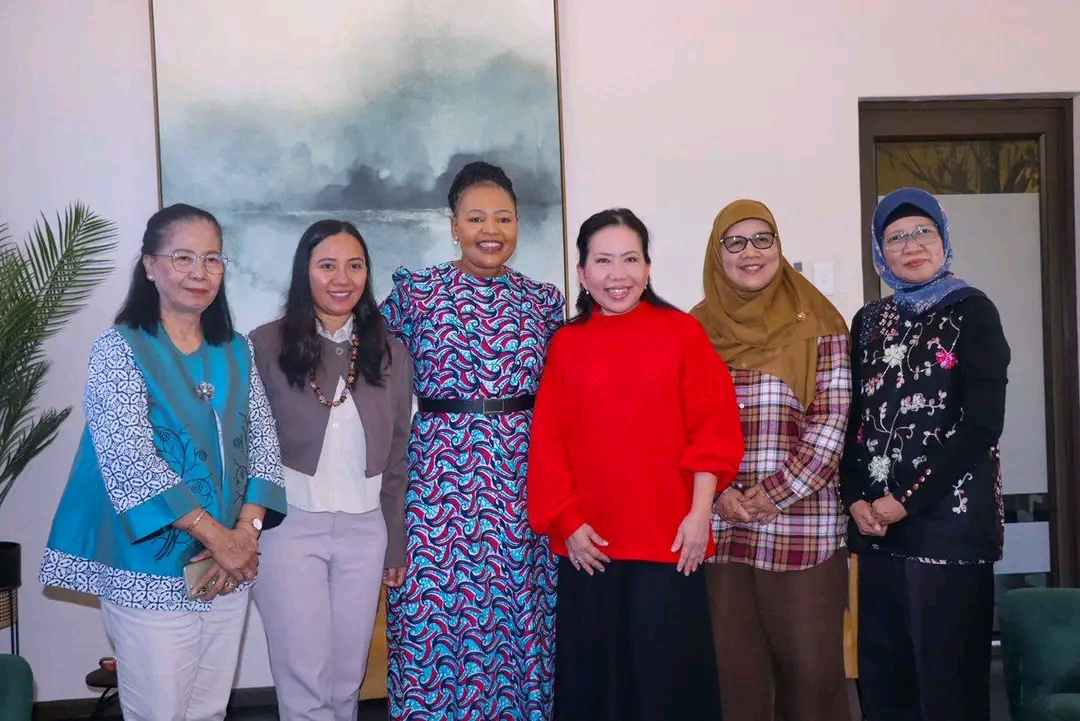
Minister of Foreign Affairs and International Cooperation Senator Pholile Shakantu has met with a high-level Indonesian delegation to strengthen cooperation between Eswatini and Indonesia in agriculture, natural product exports, research and academic exchange.
According to information released by government, the meeting, held in Mbabane on Friday, brought together representatives of Indonesia’s Universitas Airlangga and wellness industry partners as the two countries explored opportunities to expand collaboration in agricultural value chains and value-added products.
The discussions follow the launch of the Ginger and Turmeric Research, Production and Value Addition Initiative at the University of Eswatini’s Luyengo Campus on June 10, where Prime Minister Russell Mmiso Dlamini witnessed the signing of a Memorandum of Understanding between Government, the University of Eswatini, Universitas Airlangga and private sector partners.
According to government, the initiative seeks to position ginger and turmeric as strategic commodities capable of contributing to national development through research, agro-processing, export growth, value addition and job creation.


During Friday’s engagement, the Indonesian delegation proposed broadening cooperation beyond ginger and turmeric to include other indigenous products with export potential, particularly marula oil and avocado.
The delegation said the commodities had strong prospects in global wellness and natural product markets, including Thailand, Europe and Nigeria.
They emphasised the need to industrialise the full value chain, covering cultivation, harvesting, processing and certification, to unlock greater economic benefits.
Shakantu welcomed the proposals and highlighted the importance of translating bilateral cooperation into practical programmes that benefit ordinary emaSwati.
She said the Ministries of Agriculture, Commerce and Education would engage the delegation on matters falling within their respective mandates to ensure a coordinated approach.
The minister further stressed the need for an inclusive model that incorporates smallholder farmers and enables them to participate meaningfully in emerging value chains.
According to discussions during the meeting, the Ministry of Agriculture is well positioned to connect the delegation with farming communities capable of supplying between one and two tonnes of ginger per month to support the initiative’s objectives.
The Indonesian delegation also revealed that a pilot programme using enzyme-based organic fertilisers to produce ginger in greenhouse conditions was already under way at the University of Eswatini.
Beyond agricultural production, the programme incorporates opportunities for academic cooperation through student exchange initiatives and scholarships.
The delegation highlighted Indonesia’s Government-to-Government scholarship scheme as well as a university scholarship programme that offers up to 15 places annually to students from across Africa.
Shakantu expressed support for the initiative and pledged to facilitate collaboration among relevant government ministries to ensure the partnership delivers tangible benefits.


She said the goal was to ensure that farmers, women entrepreneurs and students are able to benefit from the opportunities arising from the growing relationship between Eswatini and Indonesia.
The meeting forms part of ongoing efforts by both countries to deepen cooperation in areas that can contribute to economic growth, skills development, innovation and expanded access to international markets for Eswatini-produced goods.


Discussion about this post