



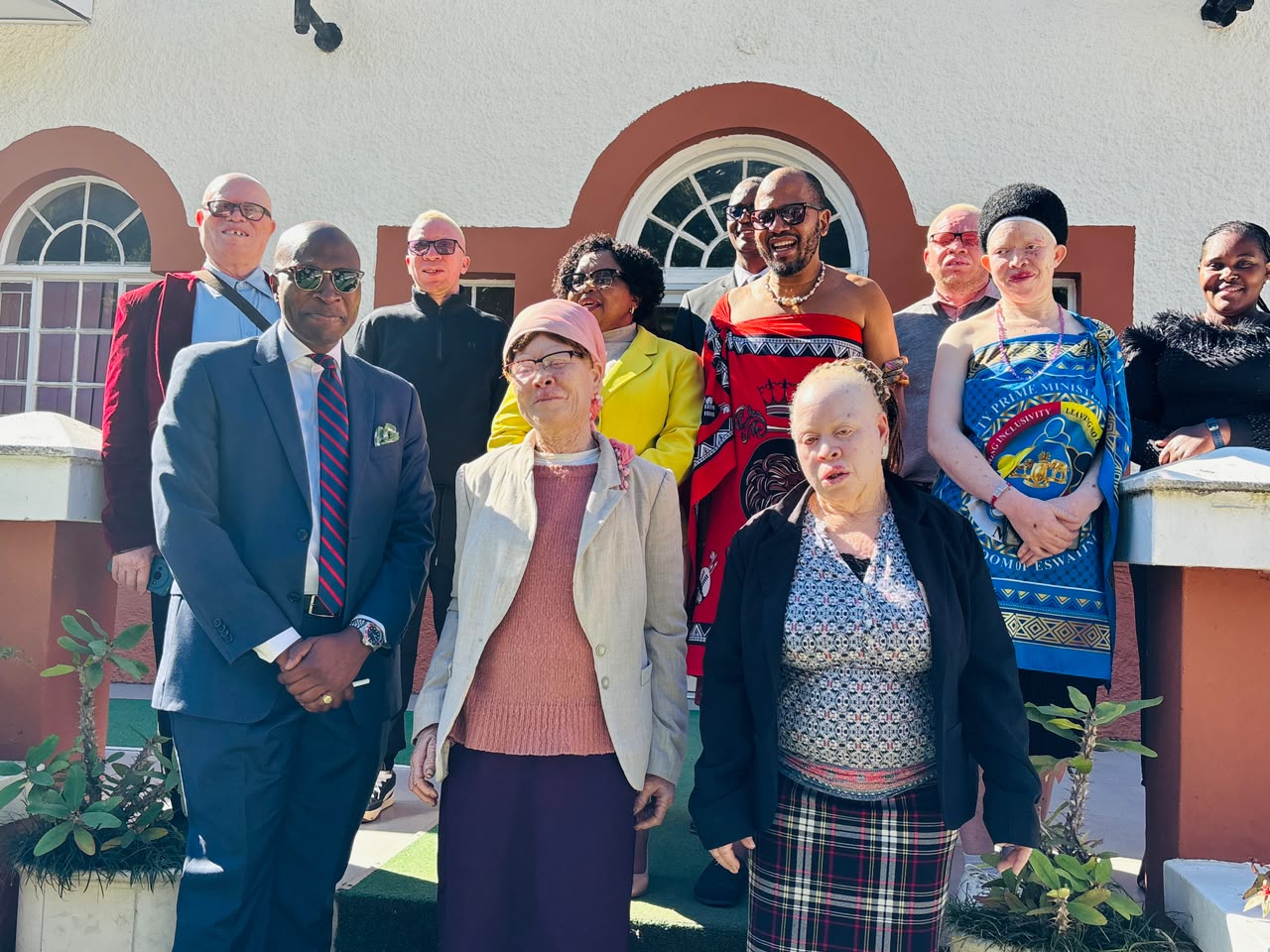
Mbabane– The Government of Eswatini says it remains committed to creating an inclusive society where persons with albinism can fully participate in social, economic, cultural and political life without discrimination or exclusion.
Acting Deputy Prime Minister Jane Mkhonta-Simelane made the remarks during the commemoration of International Albinism Awareness Day (IAAD) 2026 held at the Deputy Prime Minister’s Office on Friday under the theme, “Proudly in My Skin: Celebrating All Skin Tones.”
Mkhonta-Simelane said the government recognises the contribution of persons with albinism to national development and continues to pursue measures that promote equality and inclusion.
She said although progress had been made in advancing the rights of persons with disabilities, including persons with albinism, a number of challenges remained. These include stigma, stereotypes, discrimination, bullying, barriers to education and employment, as well as health complications associated with prolonged exposure to ultraviolet radiation.


“The Government of Eswatini acknowledges these realities and remains committed to addressing them through inclusive policies, social protection programmes and partnerships with stakeholders,” she said.


Mkhonta-Simelane thanked EmaSwati for accommodating persons with albinism and taking measures to reduce their exposure to direct sunlight, noting that excessive exposure can result in skin damage and increase the risk of skin cancer and other skin diseases.
She explained that prolonged exposure to the sun can cause rough and thickened skin, which may later develop into more serious health conditions.
The Acting Deputy Prime Minister also provided an update on a housing commitment made by Deputy Prime Minister Thulisile Dladla during the International Albinism Awareness Day commemoration held at Mayiwane in 2025.
At the event, Dladla pledged that five houses would be allocated to persons with albinism through the government’s housing programme for vulnerable groups. Mkhonta-Simelane said two of the houses had since been completed and handed over to beneficiaries, while construction of the remaining three houses was still underway.
Meanwhile, Swaziland Association of Persons with Albinism (SAPA) President Philemon Gama raised concerns about the stigma and discrimination that persons with albinism continue to face in the country.
Gama also called for sunscreen with a Sun Protection Factor (SPF) of 50 to be made available at all health facilities to improve access for beneficiaries who rely on the product to protect their skin from harmful ultraviolet rays.
International Albinism Awareness Day is observed annually to promote the rights, inclusion, safety and wellbeing of persons with albinism and to raise awareness about the challenges they face in society.


Discussion about this post