



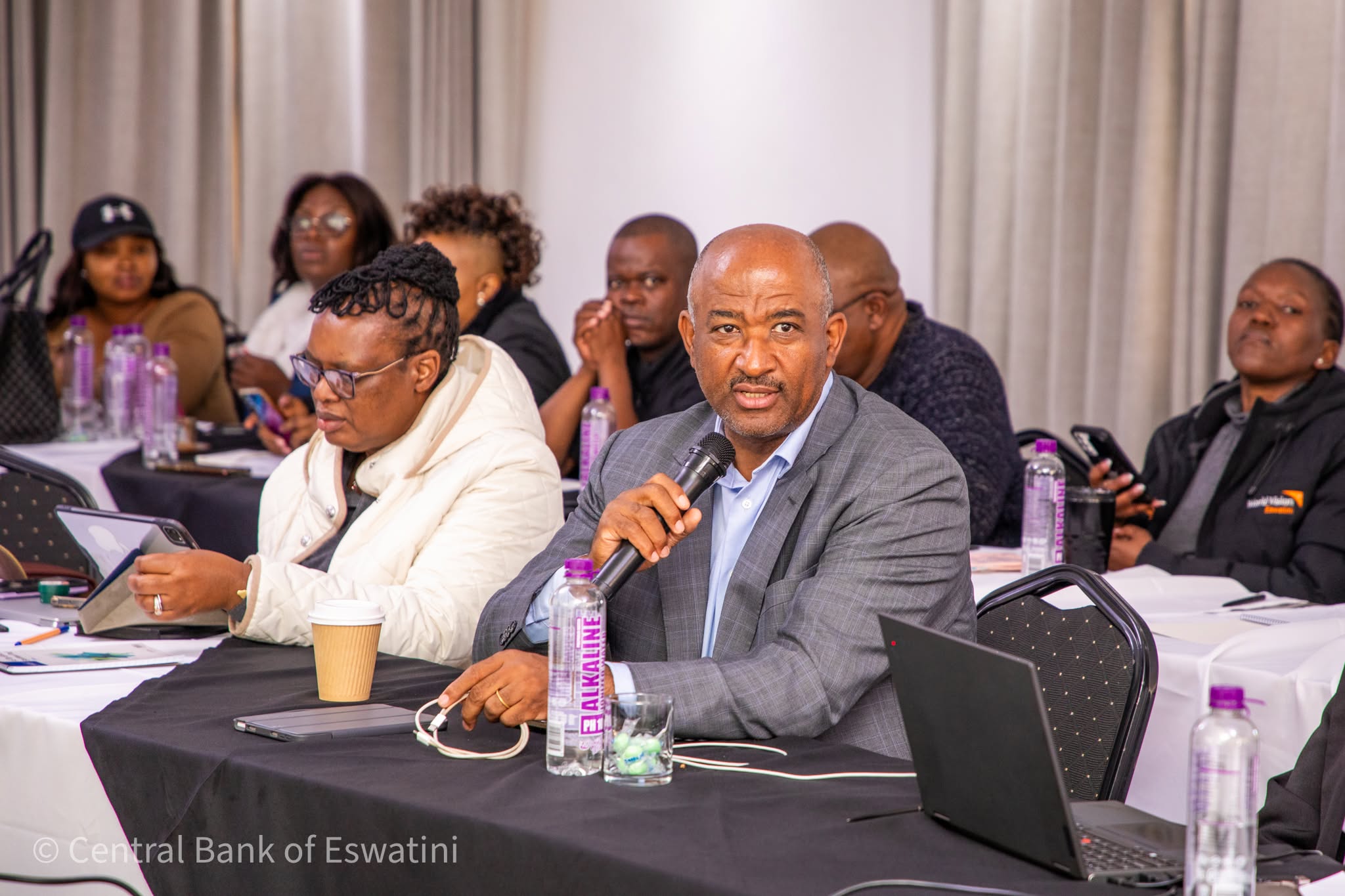
Mbabane – Central Bank of Eswatini Governor Dr. Phil Mnisi has assured the nation that Eswatini Bank remains stable and operational despite challenges that prompted the regulator to deploy a consultant to support a structured transformation programme. The Governor calls for calm and said there is no need to panic amongst the customers of the bank. He said, he himself is the customer of the Bank.
Addressing concerns raised by Lwazi Dlamini from the Rubicon Media and Mbongeni Mbingo, Swazi Observer Managing Editor, Mnisi provided extensive clarification regarding the Central Bank’s intervention at the indigenous financial institution.
The Governor stressed that contrary to public speculation, Eswatini Bank is not collapsing and continues to meet critical regulatory requirements monitored by the Central Bank.
Dr. Mnisi explained that the Central Bank receives weekly reports from all licensed banks, allowing regulators to monitor liquidity, cash reserves and other key indicators used to assess the health of financial institutions.


Structural Challenges
Despite being compliant, the Central Bank of Eswatini as a regulator identified several structural challenges requiring intervention before they become more serious.

When a bank operates, it borrows money from depositors (paying interest) and lends that money out to borrowers (charging a higher interest)
In banking, a costly deposit (or high-cost deposit) refers to funds for which a bank pays a high rate of interest to the depositor, such as Certificates of Deposit (CDs) or large institutional accounts. For the bank, these are expensive because they increase the overall cost of funds thus effect the bottom line of the bank.
Non-Performing Loans
A non-performing loan is a bank loan that is subject to late repayment or is unlikely to be repaid by the borrower in full. Non-performing loans represent a major challenge for the banking sector, as they reduce profitability. The Governor noted that Eswatini Bank is experiencing the same problem . The positives in the Eswatini Bank is that the non performing loans are concentrated among specific clients and loan portfolios, In other works most of the non perfoming loans are for a specific industry not all the customers of the bank.
He continue to say as a regulator and local requirement, 5% is the acceptable figure in non performing loans, but for the Eswatini Bank is now above 20% of the loan book , which it can have devastations effects if not attended to
Optimization of the Bank IT platforms


The Governor said the regulator is also assisting the bank with optimization of its IT programs. He said the risk of failing to optimize a bank’s IT platform creates severe operational, financial, and reputational risks. Outdated or inefficient systems expose the institution to critical vulnerabilities, ranging from massive security breaches to high maintenance costs and an inability to compete with agile fintechs.
Key risks faced by the bank on non optimization of its IT platforms include:
Cybersecurity Vulnerabilities: Legacy and unoptimized systems often lack modern encryption and security protocols, making them prime targets for data breaches, ransomware, and devastating financial fraud.
System Downtime and Outages: Outdated infrastructure struggles to handle high transaction volumes, leading to critical service disruptions that freeze customer accounts, block payments, and trigger heavy regulatory penalties.
Escalating Operational Costs: Maintaining obsolete hardware and patching inefficient software drains resources. It requires specialized, expensive IT personnel and diverts budget away from digital innovation.
Competitive Disadvantage: Inability to integrate modern APIs limits a bank’s ability to offer real-time payments, seamless mobile banking, and personalized services, causing customers to migrate to digital-first competitors.
Governance issue
Dr Phil Mnisi has committed the regulator in assisting Eswatini Bank on its governance issues. He didn’t elaborate much on this subject but general, a governance issues in banks refer to failures in the board of directors and senior management’s ability to oversee operations, set risk tolerance, and balance stakeholder interests. These failures often lead to excessive risk-taking, compliance violations, and systemic vulnerabilities
In addition, the consultant is reviewing whether the bank’s operational structure adequately supports business growth and customer acquisition.
Despite these challenges, Dr. Mnisi emphasised that the Central Bank deliberately chose a supportive approach instead of placing the institution under administration.
“We decided not to use a curator or administration route because the numbers are still looking good,” he explained.


Discussion about this post